Why People Don’t Hear – 3 Actions To Help

  • I did not see this coming.
  • How can you let me go?  Just last week you said I was doing well.
  • It is too late for a counter offer.  The decision has been made.

I have seen lots of different situations in 20 years of working in and around organizations.  It was not until recently that I stopped being surprised by situations in which people did not see the news they should have heard.  We could discuss the endless reasons why, but that would not stop it.  Here are three ways to make most of the confusion go away.

  1. Write it down: Verbally telling people their performance is not up to par is only half the task.  When asking for more or defining minimum expectations it has to be written down.  Limit yourself to a page, but write it down.  If it is positive, do the same thing.  I am confident that 100% of the time verbal feedback is misinterpreted.
  2. Never deliver ANY news (good or bad) without scheduling a next step:  Bad news:  Take this and think about it for 48 hours and then lets get back together and make plans for  what will fix this situation.  Good news:  You are very valuable to this organization and I would like to come up with a list of projects/roles we should be working towards over the next 3-5 years.  Give it some thought and lets sit back down in a month and do some planning together.  People need time to process bad news.  Good news needs to be celebrated, then processed.   Next steps ensures the processing time is valuable.
  3. Ask them what they heard:  It is important to check for understanding in either situation.  In the delivery of good and bad news leaders usually talk too much because of nerves.  That is normal, but it is always a good check to end with – I have talked a lot, and it is important that some key points were clear.  What are you taking away from this conversation?  If they cannot repeat the main points you should repeat them (even if they are written down).

Assumptions are dangerous and we all have a hard time telling / hearing certain messages.  Follow these simple steps and make the confusion go away.

Do you have any helpful hints to add based on your experience?

I can’t afford leadership training right now . . . what does that mean?

I see a great trend happening, organizations starting to get back to the routine of developing leaders – both current and future.  It is good for people and for leaders.  It is a nice trend.

My only concern is the mindset that focus = money in the minds of many leaders.  I know real priorities receive budget and headcount, but let me offer some competing thoughts.

  • Importance = time
  • Importance = presence

Let me explain.

Your best people are not looking for more compensation or awards, they just want new challenges, engaged teammates, and a chance to do what they love.  Uncertain of my compensation claim?  Read Drive by Daniel Pink or chapter 7 in Sway by Ori/Rom Brafman. Not buying into what high potentials need?  Read trU Tips #2 that I published.

Instead of starting with a pay per use leadership program or hiring a Director of Talent Management, step back and ask yourself “Are we doing the basic things that will drive the right development conversations regardless of the economy?”  Here is a guide for your self assessment. 

Developing your leaders for today and tomorrow is not about spending money, it is about investing time into:

  • Conversations that let people know they matter
  • Conversations that help you understand what people want /need
  • Conversations that help create a target for people to strive for
  • Conversations that let people know that you are watching, willing to help, AND that you care about their success

Great talent management is about investing time. 

Budget does not replace time.  If you can only do one – – – start with time.

Start: Performance Conversations Stop: Performance Evaluations Here is a template.

Evaluations too often end in a grade. The grade overshadows the richer part of the discussions like:

  • What does the next year look like?
  • What problems do I need your help to solve?
  • What things do you want to do more of?
  • What priorities would you set for our team?

trU Tips 13 is based on the feeling held by many that their performance evaluation is not working. In some cases it is just not being done because their is no raise to be given. Want to hear more? Interested in comparing your solution to a template I have successfully used with a client?  Read trU Tips 13.

Tweet

Breathing Rate vs Talent Management: What is healthy?

I learned a new fact yesterday – On average, people in the US take 17 breaths a minute.  In Africa, that number is 6 breaths a minute.

Conclusion?  Our steady state is not a relaxed state.  Normal isn’t healthy.

How does this connect to how effectively companies leverage their greatest resource – people?  A trend I see is to begin to re-hire the talent management roles that were cut during the recent downturn.  A good thing – but reactive.  Use the statistics above to think about your organization right now:

Here is what talent management looks like at 17 breaths a minute:  

  • An employee engagement initiative is under way.
  • HR people hounding overworked leaders to get performance evaluations done.
  • Top performers getting generous conteroffers after announcing their intent to leave.
  • Poor performers stay in key roles > 4 months.
  • The most critical project happening is the implementation of a learning management system.

Here is what talent management looks like at 6 breaths a minute:

  • Performance Conversations happen with leader and follower input, no surprises, and follower leaves with a development plan they are ready and equipped to own.  (here is al ink to what I mean by follower)
  • CEO hears key people update(2x a year) from each leader and sees proof that they are being challenged, developed, supported, and cared for.
  • Regular one on ones are happening down to at least the manager level, preferably the professional contributor level.
  • No painful departures.

People initiatives happen because we forget about the healthy habits.  Talent management is about developing a homeostatic state.  It is about Building Rhythm.

How is your organization breathing?

Can You Hire and Lead the Ignorant?

In a meeting recently I was with a group of people deliberating the hiring of a leader for a not for profit organization.  One observation was a lack of experience in a fairly important area.  A wise member of our group pointed out that it could be a good thing because ignorance = fresh eyes.  We all agreed that it was a good choice, but only if we all committed to supporting this new leader and connected her with a mentor.  We committed.

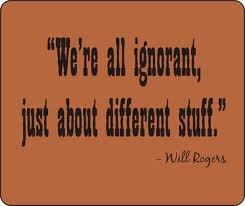
I like the word ignorance.  I like using it in front of groups because people snicker, almost like it is some sort of soft cussing word.  I have to remind people that it just means I don’t know.  Not I can’t know or I will never know . . . just I don’t know.

Here are some rules for hiring ignorance:

  1. DO IT if you see passion and gifts that get you excited about having this person thinking with you AND you are committed to #2.
  2. DO IT if you are ready to actively support (mentor/coach) for 6-12 months and forgive some mistakes.
  3. DON’T DO IT if your industry is too complex/specialized, you are too busy, and your team is too talented to be patient with a learner.  You might read this as sarcasm – but I really mean don’t do it.  If any of these three things are true or perceived to be true it is not a good place to shed ignorance.
  4. DON’T DO IT if you sense a comfort with the ignorance – if there is not hunger to leave that state.  Look somewhere else.

Ignorance is actually the basis of a good development question for leaders and followers alike. 

  • What do you feel ignorant about right now? 
  • What would it mean to have that feeling go away?
  • What is one thing I could do to help make it go away?

Carry that word around with you for a couple days and see what you notice.

Written a note lately?

Yesterday I received a letter in the mail that said ‘thank you’ for something I had done.  I read it once, then a second time later in the evening, and started to throw it away when I realized I needed to keep it.  So I put it with some other letters I had received previously.  As I looked at the stack I realized some had been in my possession for over 10 years.  The written word has something special about it.  I read a statistic one time that said 3% of thank yous were written and over 80% of those notes were still being saved 12 months later. 

Written one of these lately?

A staple in any leadership development program is to write a note to someone thanking them for something they did that had real value.  A habit for any leader should be to have a stack of cards in their office and write 2 per month.  Here is the card I have used for 5+ years and having them ready removes the excuse of I will do it tomorrow when I have something to write on.

I always look at writing a thank you as making a deposit into a trust account.  There will be a point in time when I will have to say I am sorry for doing something that hurts a relationship.  My mental goal is thank you notes >= sorry statements.  If I am sorry > thank you then withdrawals are greater than deposits, and it is a bad trend. 

If you control this equation by never saying I am sorry as a leader then you win, but there will be a price to pay.

In my house there is a standing joke that anything Dad has that is older than the kids is special.  So far that list includes my marriage, some tools, some sporting equipment, a few t-shirts, underwear, and thank-you notes.  I know – too much information. 🙂

Watch yourself this week – How often did you say thank you?  How often did you say I am sorry?  . . . . and write just one note!

Friday Fun – An example of making a transition fun AND special

People like to hear their own name.  This is a bit of wisdom that a mentor once shared with me and I have never forgotten it.  Nothing irritates me more than a quiet or non introduction of a new person.  Assuming all people will find their way misses an opportunity to provide a great start to someone who is looking for a way to connect with their team.

Enter my friend, who missed an opportunity to be a circus clown, trading it for a career as a Marketing Director.  Time has taught him to bring his unique brand of humor to his job.  He gave me his approval to share an email on how his team  announces new team members / changes in roles:

I am happy to announce that James Greene will be moving from part-time intern to a 3-4 month long full-time internship with our company.  While you may know James as the squishy orb guy or the resident ladies man; he actually has been working as our Pay-per-click (PPC) specialist, which is a critical component of our Marketing team that spends around 20% of each division’s budget.  James will continue to manage our PPC working for Kathy, he will also be adding the second phase of the call center trial.  Expect to see him on a shifted schedule up to midnight in the office during the week and potentially weekends.  Please welcome James to his new role. 

A few little known facts about James:

  • Attended THE Michigan State University, received a degree in Marketing (Sales emphasis)
  • Grew up in Marquette, MI
  • There is an “e” at the end of his last name.  Oddly, at age 12, he dropped the extra “e” in Jamese.
  • Has one younger brother
  • He can guess any ladies age with an accuracy +/- one year. 
  • Enjoys playing most sports, but especially Golf, Tennis, Jarts, and Basketball
  • His Dad loves big campfires. 
  • He can’t get enough music in his life and is an avid guitar player (a wanna be hipster)
  • He is Butler Bulldog Brad Stephens’ evil twin – separated at birth?  (after this he showed a picture of the new team member next to Brad Stephens – striking resemblance!)

Of course there are limits in what to say and how sarcastic or inventive to get.  The key point – there is a chance to make someone feel special and make a job change an event to celebrate!  The best part of this story is the IT department did an announcment using this format the next week.  Good ideas have a way of being adopted by others.

Here is another method I have used to speed up the get to know each other process. 

Have any other ideas?  Comments to this post are welcome.

Leadership and Followership: A simple habit around Building Trust

I teach a class that brings leaders and followers into a room and they learn about great leadership and followership together.  During a class a couple of weeks ago, when we were talking about Building Trust, I asked the following questions:

Followers:  What do you think the leaders need from you to Build Trust?

Leaders:  What do you need from your followers in the area of Build Trust?

The general answers from the followers (on what leaders needed from them to Build Trust) leaned towards work getting done.  Statements were made like “Doing what you say you will do” and “Following through on your work”.

When I asked the leaders a similar question, the first answer was from someone new to leadership.  He raised his hand and said “Telling me that I am doing things well, along with letting me know what I am doing wrong.”

It is in moments like these that both sides of the performance equation realize they do not always understand each other. 

It is in these moments that just a little sharing helps us understand what we need to provide to others to help them be successful.

Followers:  What if you committed once a week to seek out your leader and ask them “What do you need from me this week?

Leaders:  What if you did the same, and said thank you when you saw your people looking out for you.

Initiatives become necessary because we forget about simple habits that help create success for people and teams.  Commit to this simple habit.

The truth can hurt, and it can inspire

At the retirement celebration of a pastor who had served a congregation for 30 years, he shared this story.

Halfway through seminary two professors pulled him aside with the same message “Based on your effort, you don’t deserve to be here”.  Instead of stopping there, they went on to say “But we know you belong here, so if you want to stay here this is what you need to do . . .  and we will help you.”  He made the changes, went on to a wonderful career, and touched many lives.

Too often accountability starts and stops with getting skilled at having the tough conversations.  Of telling people what they are not doing.

What about challenging them to an unseen, yet imagined, potential?

How much time do we take to see the value of the person beyond the task?

What is the cost of asking – What do you need to be successful?  Then providing it.  Imagine the potential impact!

Leadership is about asking the question, painting the picture, and assisting in the journey.  Great followership is about listening, accepting, working, and appreciating.

How many people will be including you in their story 30 years from now?

Knowing Someone Changes How We Treat Them

I joined the board of a great organization that cares for seniors and at my orientation they shared this story.

In building a new facility display cases were placed by each room.  Filled with pictures and items for residents of adjacent rooms, they were meant as landmarks to make finding rooms easier.  This practice had proven effective even with dimentia cases.  They received a surprise.  Employees and others observed a higher quality of care because these residents became people with an 80+ year history that was known to all those around them.  In one case, it explained why a resident veteran who had been a POW tried to crawl out a window because of loud noises.  Instead of medicating the resident they provided comfort. 

History gives us context for current decisions we see people make.

When a friend acts irrational we know the history – and work through it.

What a stranger acts irrational we judge the action – and walk away or around it.

When we ask and listen it sends a powerful signal – we care.

Under stress, we too often forget to stop and listen to stories.  We see ourselve as busy.  Others see us as cold and uncaring.

Here is a tool I use to jumpstart the work relationship building process.  Instead waiting to hear the question “Tell me about yourself”, I give this info and ask for the same in return.  It is just a start, but it is a good start.

One last story . . . I used this tool to kickoff a planning session for a leadership team.  The next day the CEO called the HR leader and quietly asked for a list of names of all family members for each executive on his team.

Some things are important no matter how old we are.  Knowing someone changes how we treat them – and how they treat us.