Talent – What your CEO is reading today

I shared with a group of human resources leaders last week my trick for finding out what others think about the terms I like to use.  Are you ready for some brilliance?  Here it is . . . . . . . I Google it.  Sometimes the clearest answers are right in front of us.  My aha . . . .  moment came as I prepared to talk to HR leaders from Wisconsin about talent management.  I Googled the term Talent Management Michigan, the top five hits were sites related to managing actors and models.

Today(10/24/2011) you have an opportunity to get a sense for what your CEO is hearing about talent management because there is a special section in the Wall Street Journal called Leadership: Human Resources.  One of the reasons I had an aha . . .  – there is no headline has the word Talent in it. (a good reminder for us as HR leaders that we sometimes speak a different language).  It is a great read and offers an opinion on the talent shortage that made me go hmmm . . .   . The opinion is around whether we have a talent shortage or are we scoping jobs to big and paying too little for people to do the jobs?  Hmmm . . . .

Two things to do with this:

1.  Use it as a conversation starter.  Is there anything in the article that addresses a problem you know a leader is facing?  Pass the article on and offer to sit down to problem solve with them.

2.   Pass it on to a Senior Leader in your group.  Leaders love to be equipped to prepared for tough questions from peers or in a position to drive tough discussions.  You have heard me talk about followership – it is a good follower practice to make sure leaders see things their peers will likely be talking/asking about.

WISHRM2011 – How to support development plans?

(note:  Whenever I speak to groups I provide cards to them in case they have a question I cannot answer during our conversation(fyi:  I call all my presentations ‘conversations’).   My commitment is that I will blog answers in 2 weeks.  This question was submitted to me after my Talent Scorecard presentation at the 2011 Wisconsin SHRM Conference in Madison.  I do not edit questions – because my commitment is to answer what is asked.)

Question:  How do you recommend supporting momentum once development plans are established?

In our time together the Talent Scorecard revealed that development plans are not being created for employees in general and high potentials.  There are 3 foundational things that need to be established are part of building the habit of creating development plans.  The foundational keys to a great development plan are: (fyi:  I will use the term follower – if you are wondering why see this post)

  1. It comes out of a great performance conversation.  By great I mean that the leader and follower sit down and agree on a couple of areas that are job related and one goal that is from the individual.  The individual goal is something focused on long term growth or pursuing an interest.  They earn the right to have a longer term goal by performing their job well and proving they can balance daily work and taking on some other assignments.
  2. The Follower owns the plan:  The individual leaves the meeting committed to pursuing the projects, classes, conversations, or whatever else needs to happen as part of the plan.  It is truly their development plan, and understand that they need to update their leader and initiate conversations around help they might need along the way.
  3.  The leader owns the support:  Support includes quarterly “How is it going?/What can I do questions?”  If there is money for travel/time away from work they commit to providing it.  If one of the development items is involvement in a project in another area or partnering with another leader to solve a problem, support might be just keeping their ears open for opportunities.  They also must be responsive if asked for help.

Finally, What can HR do to support this?  If the three things happen above, then HR should not find itself in the role of oversight.  I would say in the first year a good check-in would be to meet with leaders to review the plans and have the “What worked?/What could we do differently? discussion.

In my experience, the most difficult part of this whole process is writing the goals.  I would hate for the leader to get frustrated and say ‘good enough’ and the follower to feel kind of adrift.  One way I have seen myself bring value to this conversation is to help people imagine different ways to address development needs that fit within the constraints of the situation (time, budget, etc).  Remember that 90% of learning happens outside of a class, so often formal education is the easy and least effective way to address a need. 

I think HR could provide lots of value by telling the leaders to get close in their conversation, then feel free to send people to us to help refine the plan prior to having the leader do a final sign-off.  For some leaders, you might even find yourself spending a little time with them before the performance conversation helping them identify some recommended areas to focus on.  Again, this fits into the partner role HR should be playing without putting us in an oversight/ownership role.

I know there are some HR professionals reading this, so I welcome any other comments.

Boss Watching: 3 Actions to Manage it

I was listening to a webinar from a seasoned OD/Leadership professional and she threw out a word that made me smile.  Her statement was – The #1 hobby in the office is boss watching.”

I was once reminded that people watch leaders.  After one of those month-long stretches of dealing with several difficult situations in a row I met one of our team members in a hall and greeted him with a smile and a “Hello Charlie”.  He provided a similar reply, and then added “it is good to see you smile.  I have not seen that from you in 3-4 weeks.”  It had been a tough month for me, and he had noticed.

Remember that 90+% of communication is nonverbal.  Leaders that are in a hurry provide information to the people around them in sound bits and actions.  It is also natural to gather information and fill in the blanks.  I think back to a game played with children where we make a circle and start by wispering a message in the ear of the person next to us.  The message returning is always different.   Our actions and non verbal cues are like little whispers to our teams.

Here are three purposeful ways to deal with boss watching:

  • Onboard well:  Tell new people up front what your nonverbals are around busy/buried with work, and when it is okay to interrupt.  If people know your habits and you know theirs it will be easier to understand/interpret messages.
  • Meeting Habit:  Weekly updates with your team should include a quick around the room What is on my plate this week? to address what stressors everyone is dealing with.
  • Make it clear – ASK!  If you hear a rumor that could have been generated from boss watching, address it openly.  Your script should sound like this:  “I have heard . . . . . . . . and know that I have been acting like . . . . . this week, so I can see how my actions could feed that.  Here is what is happening . . . . . .    If you ever wonder about such things please ask.”

What story are your actions  telling?

Here is a way to have some fun with this.  At your next team meeting ask three questions: How do you know when I am having a good day?  How do you know I am having a bad day?  What are my habits at work?  Just blame it on a leadership blog that talked about boss watching. 🙂

Why People Don’t Hear – 3 Actions To Help

  • I did not see this coming.
  • How can you let me go?  Just last week you said I was doing well.
  • It is too late for a counter offer.  The decision has been made.

I have seen lots of different situations in 20 years of working in and around organizations.  It was not until recently that I stopped being surprised by situations in which people did not see the news they should have heard.  We could discuss the endless reasons why, but that would not stop it.  Here are three ways to make most of the confusion go away.

  1. Write it down: Verbally telling people their performance is not up to par is only half the task.  When asking for more or defining minimum expectations it has to be written down.  Limit yourself to a page, but write it down.  If it is positive, do the same thing.  I am confident that 100% of the time verbal feedback is misinterpreted.
  2. Never deliver ANY news (good or bad) without scheduling a next step:  Bad news:  Take this and think about it for 48 hours and then lets get back together and make plans for  what will fix this situation.  Good news:  You are very valuable to this organization and I would like to come up with a list of projects/roles we should be working towards over the next 3-5 years.  Give it some thought and lets sit back down in a month and do some planning together.  People need time to process bad news.  Good news needs to be celebrated, then processed.   Next steps ensures the processing time is valuable.
  3. Ask them what they heard:  It is important to check for understanding in either situation.  In the delivery of good and bad news leaders usually talk too much because of nerves.  That is normal, but it is always a good check to end with – I have talked a lot, and it is important that some key points were clear.  What are you taking away from this conversation?  If they cannot repeat the main points you should repeat them (even if they are written down).

Assumptions are dangerous and we all have a hard time telling / hearing certain messages.  Follow these simple steps and make the confusion go away.

Do you have any helpful hints to add based on your experience?

Start: Performance Conversations Stop: Performance Evaluations Here is a template.

Evaluations too often end in a grade. The grade overshadows the richer part of the discussions like:

  • What does the next year look like?
  • What problems do I need your help to solve?
  • What things do you want to do more of?
  • What priorities would you set for our team?

trU Tips 13 is based on the feeling held by many that their performance evaluation is not working. In some cases it is just not being done because their is no raise to be given. Want to hear more? Interested in comparing your solution to a template I have successfully used with a client?  Read trU Tips 13.

Tweet

Great Teams are Like Great Family Vacations

I just returned from a two week family vacation spanning 3940 miles and 9 states – all in a car.  It was great! . . but not all the time.  Somewhere in the drive across one of our beautiful, but LONG western states it hit me what a great family/team I was traveling with.  It also hit me that successful family vacations and successful teams have lots of similarities.  Here are a few: 

  1. Commitment to make the best of it – When the car starts it has begun and no amount of complaining changes it.  Great teams and families disagree.  Debate, complain, argue, maybe scream . . but when the car starts, it is time to make it work. 
  2. Something for everyone – Asking the question in the beginning What would you like to do? changes the journey.  When people get to do certain activities they want to do, it makes non-grumbling participation easier for other have to do activities. (for our kids have to do = museums)  This also helps with #1.
  3. Find tasks that fit talents – Everyone has something to contribute.  Older kids carry more.  Planners do research and put shopping lists together.  Everyone helps pack and unpack.  The youngest makes people laugh.  Everyone having a role ensures everyone is working together.
  4. Accept imperfection – Even the greatest leader will have an If I have to stop this car! moment.  Don’t let it define the event.  Followers acknowledge it and leaders apologize for it.  Both work to get beyond it.
  5. Create quiet time for engagement – Emails, texting, and all the other distractions are ways to escape.  Turn things off and focus on being together.  It changes things for the better.

There are probably a few more, but every like every vacation – every blog must have an end.

Want to practice leading a team this summer.  How about leading a vacation differently.

Breathing Rate vs Talent Management: What is healthy?

I learned a new fact yesterday – On average, people in the US take 17 breaths a minute.  In Africa, that number is 6 breaths a minute.

Conclusion?  Our steady state is not a relaxed state.  Normal isn’t healthy.

How does this connect to how effectively companies leverage their greatest resource – people?  A trend I see is to begin to re-hire the talent management roles that were cut during the recent downturn.  A good thing – but reactive.  Use the statistics above to think about your organization right now:

Here is what talent management looks like at 17 breaths a minute:  

  • An employee engagement initiative is under way.
  • HR people hounding overworked leaders to get performance evaluations done.
  • Top performers getting generous conteroffers after announcing their intent to leave.
  • Poor performers stay in key roles > 4 months.
  • The most critical project happening is the implementation of a learning management system.

Here is what talent management looks like at 6 breaths a minute:

  • Performance Conversations happen with leader and follower input, no surprises, and follower leaves with a development plan they are ready and equipped to own.  (here is al ink to what I mean by follower)
  • CEO hears key people update(2x a year) from each leader and sees proof that they are being challenged, developed, supported, and cared for.
  • Regular one on ones are happening down to at least the manager level, preferably the professional contributor level.
  • No painful departures.

People initiatives happen because we forget about the healthy habits.  Talent management is about developing a homeostatic state.  It is about Building Rhythm.

How is your organization breathing?

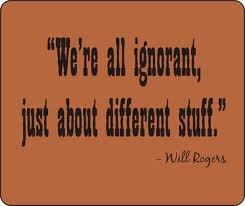
Can You Hire and Lead the Ignorant?

In a meeting recently I was with a group of people deliberating the hiring of a leader for a not for profit organization.  One observation was a lack of experience in a fairly important area.  A wise member of our group pointed out that it could be a good thing because ignorance = fresh eyes.  We all agreed that it was a good choice, but only if we all committed to supporting this new leader and connected her with a mentor.  We committed.

I like the word ignorance.  I like using it in front of groups because people snicker, almost like it is some sort of soft cussing word.  I have to remind people that it just means I don’t know.  Not I can’t know or I will never know . . . just I don’t know.

Here are some rules for hiring ignorance:

  1. DO IT if you see passion and gifts that get you excited about having this person thinking with you AND you are committed to #2.
  2. DO IT if you are ready to actively support (mentor/coach) for 6-12 months and forgive some mistakes.
  3. DON’T DO IT if your industry is too complex/specialized, you are too busy, and your team is too talented to be patient with a learner.  You might read this as sarcasm – but I really mean don’t do it.  If any of these three things are true or perceived to be true it is not a good place to shed ignorance.
  4. DON’T DO IT if you sense a comfort with the ignorance – if there is not hunger to leave that state.  Look somewhere else.

Ignorance is actually the basis of a good development question for leaders and followers alike. 

  • What do you feel ignorant about right now? 
  • What would it mean to have that feeling go away?
  • What is one thing I could do to help make it go away?

Carry that word around with you for a couple days and see what you notice.

Written a note lately?

Yesterday I received a letter in the mail that said ‘thank you’ for something I had done.  I read it once, then a second time later in the evening, and started to throw it away when I realized I needed to keep it.  So I put it with some other letters I had received previously.  As I looked at the stack I realized some had been in my possession for over 10 years.  The written word has something special about it.  I read a statistic one time that said 3% of thank yous were written and over 80% of those notes were still being saved 12 months later. 

Written one of these lately?

A staple in any leadership development program is to write a note to someone thanking them for something they did that had real value.  A habit for any leader should be to have a stack of cards in their office and write 2 per month.  Here is the card I have used for 5+ years and having them ready removes the excuse of I will do it tomorrow when I have something to write on.

I always look at writing a thank you as making a deposit into a trust account.  There will be a point in time when I will have to say I am sorry for doing something that hurts a relationship.  My mental goal is thank you notes >= sorry statements.  If I am sorry > thank you then withdrawals are greater than deposits, and it is a bad trend. 

If you control this equation by never saying I am sorry as a leader then you win, but there will be a price to pay.

In my house there is a standing joke that anything Dad has that is older than the kids is special.  So far that list includes my marriage, some tools, some sporting equipment, a few t-shirts, underwear, and thank-you notes.  I know – too much information. 🙂

Watch yourself this week – How often did you say thank you?  How often did you say I am sorry?  . . . . and write just one note!

Leadership and Followership: A simple habit around Building Trust

I teach a class that brings leaders and followers into a room and they learn about great leadership and followership together.  During a class a couple of weeks ago, when we were talking about Building Trust, I asked the following questions:

Followers:  What do you think the leaders need from you to Build Trust?

Leaders:  What do you need from your followers in the area of Build Trust?

The general answers from the followers (on what leaders needed from them to Build Trust) leaned towards work getting done.  Statements were made like “Doing what you say you will do” and “Following through on your work”.

When I asked the leaders a similar question, the first answer was from someone new to leadership.  He raised his hand and said “Telling me that I am doing things well, along with letting me know what I am doing wrong.”

It is in moments like these that both sides of the performance equation realize they do not always understand each other. 

It is in these moments that just a little sharing helps us understand what we need to provide to others to help them be successful.

Followers:  What if you committed once a week to seek out your leader and ask them “What do you need from me this week?

Leaders:  What if you did the same, and said thank you when you saw your people looking out for you.

Initiatives become necessary because we forget about simple habits that help create success for people and teams.  Commit to this simple habit.