
8 Questions To Ask Before Starting Succession Planning

Succession planning is a great conversation.

For the organization, it puts plans in place to be used in case of a sudden departure of a key person.  It also identifies talent gaps that can be discussed and dealt with before they become emergencies.

For your best people, it creates a vision of the future for them and identifies ways to challenge/develop them over the coming years.

Then there is you, the executive.  Maybe not such a great process.  You are putting plans in place for after you are gone.  You are sharing the talent you have worked hard to hire and develop with the rest of the organization by allowing them to be considered for key roles in other areas.  Do we avoid these conversations?  The numbers would say yes.  First number – only 35% of the CEO’s in the United States have succession plans.  Second number – personally only 45% of us have wills.

Talent management is about great conversations.  Here are eight questions to ask a leader before starting a succession planning effort:

  1. I am excited about this process.
  2. I think this is an important process to do each year.
  3. I have talked to all my direct reports about what they want to do in the future.
  4. I have done this before and I feel comfortable/skilled at the process.
  5. I will make the time (10-20 hrs) to do this work over the next 2 months.
  6. I am willing to accept input from other peers on my succession list . . . and I will use it.
  7. I am willing to allow key players from my team to be on succession plans for other groups.
  8. I feel good about setting up my groups/the organization to be successful after I move on.


Here is a link to this form with a number scale attached.

By naming our reasons for being reluctant, we can at least talk about them.  By letting those reason stay hidden there is very real potential to erode trust on the team and leave great talent(people!) unchallenged and unclear about what opportunities exist for them in the future.

I would opt for the great talent management/succession planning conversation started by these 8 questions.
3 Simple Habits To Help Strengthen Teams

Are there things about you that people do not know?  We all know the answer to that question – but is anything on that list that others need to know?  Maybe you love to problem solve.  Maybe you led a team of 20 people at one point in your career.  Maybe there is some part of the business you want to learn more about.  Maybe you get 150 emails a day and prefer phone calls.

Are there things about you that others see and you do not?

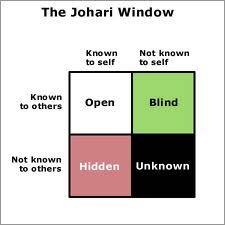
Several years ago a friend shared some feedback with me that we still laugh about. He told me that whenever he told a story, I usually followed up with a better one. I did not realize it – but watched myself for a few days and there it was – the proof.   It was funny, and I was unaware of it.   In JoHari Window language, it was a BLIND SPOT.Talent Management tool - JoHari Window

If you are not familiar with it, here is a link to a short YouTube video that explains it.

Talent management is about having great conversations.  When we talk, we develop relationships with the people around us, and at the core of those relationships is knowledge that we bring to every interaction.

Here are 3 tips to continually develop your team and teamwork.

TIP 1: As part of any team meeting spend 5 minutes asking/answering these questions:

  • This week – What are two wins?  What is keeping me up at night?

These questions are almost guaranteed to  keep a steady flow of HIDDEN items that will be valuable for the team to know.

TIP 2: When you have an off-site and you are looking for ways to get people sharing/laughing – have everyone answer the following questions for themselves and their teammates.  Next, go around the room and have others share first, seeing if they matched answers with the individual.

  • What is one thing I am really good at doing?
  • How do you know I am having a good day?
  • How do you know when I am stressed?
  • How do you know I am listening / not listening?

After this, watch the JoHari Window video and ask the questions:  What came out in our last discussion that could be considered HIDDEN? A BLIND SPOT?  What is the impact of having that information in the OPEN area for you?  For this team?  What is one way we can be more purposeful about these conversations?

TIP 3: I often use a tool called the Team Member Fact Sheet to get people talking.  Using it as a tool to get to know new teammates or test the knowledge of existing teams.

Talent management is about great conversations.  Go have one!

Succession Planning: Why We Don’t / 3 Reasons We Should

“I can do succession planning, but I am not going anywhere.”  These words were spoken to me by a senior leader 4 years ago.  A year after he said these words his job changed and he switched divisions.  More recently he left the organization for another role.  He was good with numbers, but not great at predicting the future.  Then again, who really is?

I added succession planning to the Talent Scorecard because it is a critical area to address in a talent management strategy within an organization.  However, it is not as important as performance conversations / one on ones / development plans.  Here is a link to trU Tips #11 where I introduced the scorecard and the online version I created for people to evaluate their own situation.

Single biggest barrier to succession planning: Our discomfort with the question “What is the plan after I am gone?”.  Talking about our mortality is uncomfortable and avoided.   Want proof?  How about the number only 45% of Americans have a will – which is the succession plan for an individual.  As it turns out, corporate succession plans must be more uncomfortable because only 35% of organization have a succession plan for their CEO.

Succession planning is not about us (ie: Our ego, power, wealth) – it is about others.  So here are three reasons to do it:

  1. It is part of being a leader: The ability to face a difficult situations and help a team work through it is a critical part of leadership.  Succession planning is about leadership.
  2. It says “You are more important than me” – the ultimate trust building action: Does this need more explanation?  Look at Jim Collins level 5 leader description in Good to Great.  There are lots of benefits for people feeling and SEEING this – email me if you want a list.
  3. It builds the same courage in others: What CEO would argue that it is not important to have plans for the most critical people and most critical roles in their organization?  The CEO going first removes one BIG excuse from the list other leaders will have not wanting to do it.

Much of talent management and the activities/processes that go with it fall under the description of simple, but not easy.

A parenting expert once gave me a line in response to a child telling me something is too hard.  The response.  Yes, it is hard.  But we can do hard. I think that same line fits with succession planning.  If we want people around us that do not shrink away from hard, then we need to be willing to go first.

What are some barriers you have experienced or compelling reasons you have used that you would add to this list?

Follower: How Often Should I Get Feedback?

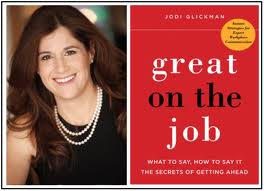
I am in the process of reading/reviewing Jodi Glickman’s book Great On The Job – What To Say, How To Say It – The Secrets of Getting Ahead.  Jodi has an impressive list of college clients, two being Harvard and Cornell, that bring her in to prepare their students for success on the job.  As I go through it I will share some thoughts that make me go Hmmmm . . .  This posting is based on one of those moments.

I think our society is confused when it comes to feedback.  We lighten it with kids, with the intention of preserving their self esteem.  We worry about Millennials because the research says they need more.  In fact, at the height of the economic meltdown a study was done about what motivates people and managers said “positive feedback/thank you”, while their people said “making progress on my work”.  So what is the bottom line for feedback?

Jodi Glickman addresses the topic with new/soon to be new graduates in a way that anyone can benefit.

First, she shares a window – asking for it once a year is not enough and once a month is too often.

Secondly, she shares a very simple method for setting up the situation so the feedback can be given and has value for both the leader and the individual.  The two steps are:

  1. Phase I:  Preparation
  2. Phase II:  The Conversation

While both are good steps, I love Phase I.  Too often I see people jumping into a deep conversation with a peer or leader with no preparation for the person being asked to give it.  It usually ends with something generic like “It was great”.  Glickman’s quote about feedback that should be posted on cubicles everywhere is:

. . . the goal of the feedback is not to make you feel good.  The goal is to make you better at your job. (p. 129)

The author points out the best way to setup a good feedback session is to plant the seed before asking for feedback.  For example, if your focus is presentation skills, maybe planting the seed would sound like this:  “Julie, I am really trying to focus on my presentation skills, so could I ask a favor?  I’d welcome some feedback on my presentation after our client meeting next week.  If you could jot down some thoughts, I will setup some time for us to talk the following week.”

This builds off a core belief I have around Building Rhythm(from my trUPerformance™ model) in how we talk about our work, our priorities, and our needs.  Inherent in the one one one template I use with clients is the routine nature of our conversation and the predictable topics so feedback is continually mined (both positive and negative) without having to ask for it.

Talent management is about great conversations.  This book is loaded with tips on how, as a follower, to make those happen.

The final review of this book is coming next month, but so far I have really enjoyed the content and the way it is presented.

Leadership Rounding – A great example of how leading leaders is different

Going from a Director to a Vice President is a big jump – because all of the sudden how you lead becomes different.  It is often hard to explain this to people, but at some point they feel it through critcism for Never being around, and in their frustration they say something like I was just there last week or maybe even You never invite me!

I have blogged often about followership – which is knowing the priorities/challenges of your own leader and being purposeful about meeting those as you communicate and work towards meeting your own needs/priorities.  Here is a video from Quint Studer (The Studer Group) that talks about leadership rounding in healthcare.  Most of you are not in healthcare, but it is a great example of a message that needs to be heard by the executive and the leaders that report to them.  It does an amazing job of laying out the fears/frustrations of an executive and how some simple moves by front line leaders can help maximize the impact of a visit from a senior leader and help your own people connect with them in a way that will have lasting impact on your own team.

Check it out – and schedule a viewing with some leaders.  It is a great investment of 28 minutes.  Talent management is about having great conversations – this will start a great conversation.

3 Questions to Answer BEFORE Hire=Yes

A Forbes article was highlighted in LinkedIn Today email (by the way, if you don’t subscribe you should) – and it offered up a three question interview.(link to full article)  The three questions are:

  1. Can you do the job?
  2. Will you love the job?
  3. Can we tolerate working with you?

Of course, practically speaking this is impossible and a bad idea to try and get to a three question interview – but it makes for good internet clicking.  However, it does bring me back to some advice a seasoned HR leader once shared that there are three questions that need to be asked before hiring anyone:

  1. Are they willing?
  2. Are they able?
  3. Are they manageable?

It makes for a great conversation and a great decision.  On the flip side of these questions, candidates need to ask themselves a similar subset.  I preach talent management is about great conversations, so here are these questions adapted for the candidate:

  1. Am I willing (Can I get excited about this role/this team/this organization?)
  2. Am I able (Will I be doing what I do best most of the time?)
  3. Am I manageable by this leader/organization? (Will they be able to get the best out of me and am I willing to help them be successful?)

*fyi – answers to all of these questions require self awarness.  My trUYou™ model helps with this.

We talk about transparency in talent management, one way to create that is to work off the same set of final questions.  That, in itself, could be the basis of a great conversation.

Assessments: 4 Traps and 1 Truth

This is a series of extra discussions around an upcoming trU Tips related to using assessments in your business.  It will come out next week.  If you are interested in receiving this special trU Tips, please sign up for the mailing list here.

I am a big fan of using assessments (personality profiles like DiSC, Myers-Briggs, Birkman Method, etc.)  in business.  In working in and around dozens of start-ups/growth organizations, I see the pace and amount of work hindering the time needed to really get to know someone through a selection process.  Assessments do not replace that time, but help to start meaningful conversations around cultural fit, manageability, and onboarding that will be valuable.

There is the trap of being sold a solution vs making a good buying decision based on your situation and resources, so here are some things I have learned about the use of assessments in business.

Trap 1:  It will fix your selection issues: By nature, leaders want things fixed yesterday.  The biggest fix you can apply to your selection process is time and purposeful discussion to make sure you are getting the right person and actually leading the process as the hiring manager.  Assessments, used consistently for a period of time (6 months) will start to help, but it is not a quick fix.  It is an expensive band aid for a leader being too busy to talk to new people.

Trap 2:  Eventually you can do it yourself and you will not need me: True about 10% of the time.  For a very simple tool like DiSC yes, but plan on paying training $ every 1-2 years as your expert moves to other roles or gets busy.  Remember that to become an expert it takes 30+ assessments and doing them regularly (5-10 a month).  Much of the ‘expertise’ is also built from watching people work over a 1-2 year period after taking the assessment.  Some tools are so complex that it probably takes longer/more frequent work to be an expert.

Trap 3:  Ours is the best: It is important to believe that to sell things, and you will hear lots of great reasons to buy any tool.  In trU Tips #18 I will address ways to be a great buyer vs being sold on a solution that does not work.  If you are feeling the pain of a weak selection process, it is easy to buy the confidence of a good salesperson.

Trap 4:  You can also use it to help teams, leaders in transition, and other high risk/value (ROI) situations: Kind of true, but see Trap 2.  To make any action plan stick, will take outside coaching/consulting for 3-6 months after any session.  Probably worth it for leadership groups, but those costs should be part of the ROI discussion from the beginning.  The second mini-trap is thinking the HR leader can be this person.  They are too busy, too close to these people, and often not wired for this kind of work.

Truth:  It is better than nothing: This will not be part of a sales pitch, and since Brad Smart in his book Topgrading put the cost of a bad leadership hire at 14.6x annual earnings, making one better choice will probably help.  This will likely not appear in the sales presentation you receive (Imagine the tag line:  Your hiring process will suck less if you use this assessment 🙂 ), but it is the truth.

Do you have any other traps or tips to add based on your experience?

Choices. (career and talent management)

Choices. 

It is the word that sums up the goal for our own career development and what every person (young or old) works for.  It is also the goal of helping people find success in their role (called talent management) and in our organizations.  When I sit down with clients or friends to talk through development of leaders or managing a change initiative (especially when jobs are going to change) – my mind and questions wander back to the lens I always use to analyze their talent management habits or change plans:  How effectively is their plan creating a conversation?

Ultimately for people to buy into and successfully help your organization get to a different place, there are four questions they(we) need to bring to the conversation.  This is what makes talent management / change management personal.trUYou: our model for developing self-awareness

  1. What do I know about me?  (here is a link to my model for this – trUYou™)
  2. How do my talents, skills, experience and needs match my role and the roles I am looking at?
  3. Can I work for the person leading this group?  How do I feel about the list of tasks I am being asked to ship?
  4. Am I willing to help them be successful, regardless of my answer to question 3?

This Friday I am doing a key note address for a Junior Achievement Job Shadow Day.  I use 3 different size bikes (that students will ride) and cash to drive home a point – you have choices to make.  It is not always an easy journey, but it has some great rewards.  Here are videos I posted of one of my presentations.  Part 1    Part 2    Part 3

Funny thing – if I were to stand up in front of a bunch of seasoned professionals, I would give the same speech.  It is one of those messages that needs to be learned/relearned throughout our professional lives.

Choices are good.

A great question to end your week (or your meeting)

It was a situation I had been in many times before.  Presenting to a group (this being a group of students at Grand Valley State University) and enjoying the interaction.  I was talking about my business/journey, talent management, and connecting back to their topics of diversity and ethics.  I did what every speaker does during a session, I paused and asked “Are there any questions?”.  Quickly a hand shot up in the back from a student who had been engaged all night.  Then he changed my week with one question:

“Through all of your startup, What are you most proud of?” 

Know that my week had not started well, and I had been second guessing this commitment to speak.  My mind quickly went to the faces of a team I had just been talking with that were bringing a different level of energy to their leadership.  I thought of a friend who had recently shared he was adding a one on one with his regimen and using my scorecard.  I thought of the energy my family had put into helping me get started.  I am not sure what I shared, but it was only a portion of the great thoughts that entered my head.

The trajectory of my week changed at that moment.

I love this question.  It makes people think of successes, of relationships they cherish, and of things in their lives that went right.

Try this at a meeting or offsite somtime with your team.  I have even seen it done where people are asked before to bring in an artifact (picture, items, etc.) that identifies something they are proud of.  It will lead to smiles and intimate knowledge of what makes people tick. 

So as you end your week, take a couple of minutes to ponder and answer the question “What am I most proud of?”

Onboarding Equation . . and 4 Ways to Influence it

I am reading a book called Emotional Equations by Chip Conley.  As a recovering engineer, I am still attracted to simple ways to understand a complex event – and for anyone who has spent time in a science class, that is what an equation represents.

So here is an equation:  Disappointment = Expectations – Reality

The fundamental event of hiring and effectively onboarding a new person is captured in this equation.  It is no wonder that 40% of leaders from outside organizations fail within 18 months (Watkins – The First 90 Days).  We all have stories of experiencing or observing the moment when the This is not what I signed up for panic hits.

A key part of managing talent coming into your organization or transitioning into a new role is managing this equation.  Here are two ways to better manage this equation for new people:

  1. Name it in orientation:  EVERYONE will feel this at some point, so openly talk about it and have a few people share when it happened for them AND how they worked through it.  (great reason to have a panel discussion of newer employees at some point)
  2. Make connections for them Day 1 so they do not feel alone:  Assign someone in the department or another department as a mentor and guide (someone who can empathize with this person).  It takes 6-12 months to become comfortable/productive in a new role, so this person should stick around (especially if the leader is not good at this).

For a person transitioning into a new role:

  1. Create a plan for success:  On day 1, use a development plan template to talk about why they got the role (their talents/successes), what success looks like, and what they need to be successful.  This provides the individual with a target, some encouragement, and a framework for revisiting the how is it going question and make adjustments as necessary.
  2. Assign a friend/mentor:  For individual contributors or managers give them a mentor (or the leader should do weekly one on ones for 6 months).  For an executive get them a coach.  The ROI for a coach is in avoiding the cost of a bad transition (team turnover, mismanaged budget, etc.).  It will pay for itself, and there is plenty of research to back that up.

Talent management is about great conversations.  Talking about this equation is a great conversation for a person in transition.