
Follower: How Often Should I Get Feedback?

I am in the process of reading/reviewing Jodi Glickman’s book Great On The Job – What To Say, How To Say It – The Secrets of Getting Ahead.  Jodi has an impressive list of college clients, two being Harvard and Cornell, that bring her in to prepare their students for success on the job.  As I go through it I will share some thoughts that make me go Hmmmm . . .  This posting is based on one of those moments.

I think our society is confused when it comes to feedback.  We lighten it with kids, with the intention of preserving their self esteem.  We worry about Millennials because the research says they need more.  In fact, at the height of the economic meltdown a study was done about what motivates people and managers said “positive feedback/thank you”, while their people said “making progress on my work”.  So what is the bottom line for feedback?
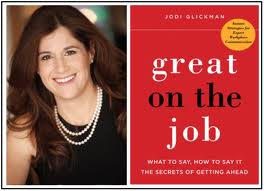
Jodi Glickman addresses the topic with new/soon to be new graduates in a way that anyone can benefit.

First, she shares a window – asking for it once a year is not enough and once a month is too often.

Secondly, she shares a very simple method for setting up the situation so the feedback can be given and has value for both the leader and the individual.  The two steps are:

  1. Phase I:  Preparation
  2. Phase II:  The Conversation

While both are good steps, I love Phase I.  Too often I see people jumping into a deep conversation with a peer or leader with no preparation for the person being asked to give it.  It usually ends with something generic like “It was great”.  Glickman’s quote about feedback that should be posted on cubicles everywhere is:

. . . the goal of the feedback is not to make you feel good.  The goal is to make you better at your job. (p. 129)

The author points out the best way to setup a good feedback session is to plant the seed before asking for feedback.  For example, if your focus is presentation skills, maybe planting the seed would sound like this:  “Julie, I am really trying to focus on my presentation skills, so could I ask a favor?  I’d welcome some feedback on my presentation after our client meeting next week.  If you could jot down some thoughts, I will setup some time for us to talk the following week.”

This builds off a core belief I have around Building Rhythm(from my trUPerformance™ model) in how we talk about our work, our priorities, and our needs.  Inherent in the one one one template I use with clients is the routine nature of our conversation and the predictable topics so feedback is continually mined (both positive and negative) without having to ask for it.

Talent management is about great conversations.  This book is loaded with tips on how, as a follower, to make those happen.

The final review of this book is coming next month, but so far I have really enjoyed the content and the way it is presented.

Laugh First – Then we can talk about importance of affirmation . . .

A friend sent me this video.  It is short, so spend 60 seconds and watch it.  http://www.youtube.com/watch?v=qR3rK0kZFkg

Many of you probably do not remember Senator Al Franken on Saturday Night Live, but he also did an affirming character called Stuart Smalley.  Here is the punch line to every Stuart Smalley bit – http://www.youtube.com/watch?v=-DIETlxquzY.

There are two things that hit me about the first video.

First, it is good to laugh.  It lowers blood pressure, decreases stress, and increases creativity – just to name a few benefits.  For a team, it helps reset the tone so individually we can be at our best going into a discussion, a big project, or a verbal battle to ensure we make a great decision.

Secondly, I am still amazed at the impact of any exercise where teammates share the things they value about each other.  I remember one individual after a 3 to 1 activity (receiving three positives from a teammate / 1 area to work on) say “I am a little shamed to admit it because it makes me sound like a %#*!&, but it felt good having people remind me what I am good at.”  Become the mirror for someone else.

Sometimes to be at our best and to get the best out of our team (ie.  talent management) – we just need to hit reset.  Enjoy the laughter, and find a way to make it contagious for a few minutes at your next team meeting.

Do You Know How to Start and End a Conversation?

I am in the process of reading/reviewing Jodi Glickman’s book Great On The Job – What To Say, How To Say It – The Secrets of Getting Ahead.  As I go through it I will share some thoughts that make me go Hmmmm . . .  This posting is based on one of those moments.

I watch the eyes, because they always tell the truth. 

Have you ever experienced the glazed, lifeless stare that happens within 10 seconds of starting a conversation with someone?  It is most often the result of them being in the middle of something and me being too urgent to simply ask “Is this a good time?”

Jodi Glickman shares her secrets to opening and closing a conversation under a section she refers to as The Basics.  How to avoid the lifeless stare is addressed up front.  It made me chuckle when she talked about the feedback she received initially from two trusted friends that this section was too basic.  I loved it!  When I talk to people about talent management I stress the partnership between a leader and a follower, and the transparency that has to exist for the relationship to work.  Being specific about What I need is critical, and recognizing that this is not the right time to talk is equally as critical.  In the era of open office doors/no doors at all and cell phones that make everyone accessible 24/7, it is important to be able to say not the right time.

One of the unique pieces of her approach was the ending.  In it she shares two steps:

  1. Thank you
  2. Forward momentum


I love the concept of forward momentum.  Think of it – we have talked and here is where I am going next.  Imagine if every interaction led to some sort of forward momentum?  In talent management: forward momentum = ownership = engagement = great followership

An exercise: What percent of your conversations today lead to forward momentum?


Time – What does your graph look like?

When I saw the graph above(from a Seth Godin blog – here is the link) I immediately thought about my business.  How do I spend my time?  Which pieces should I spend more time on?

Several years ago I created a leadership development program to help prepare leaders to launch sales offices in other states.  As part of the program, each leader was to receive a 360 evaluation nine months after the launch.  I did this mainly because I had a feeling that bad habits were going to develop during launch because there was so much to do and resources were scarce.  When the first 360 came back – what was the message?  Time.  Spending too much on little things and not enough focused on big things (growing sales, etc.).  Even great leaders get sucked into the little things.

Are you always out of time?  Try this – spend 2-3 days tracking your time, then spend 15 minutes reviewing your results by answering three questions:

  1. What are the priorities for our business / my team?
  2. How much time am I spending on those priorities?
  3. What one change could I make to become more focused on those priorities?

Our time is something WE all control.

What are some things you have done in the past to take control of your time?

Friday Fun – The cumulative effect of Happy moments . . .

In his interview about happiness in HBR, Daniel Gilbert makes the following statement:  “…the frequency of your positive experiences is a much better predictor of your happiness than is the intensity of your positive experiences.”  It is not the big initiatives, but the cumulative effect of the little things we do at work and at home to generate smiles that makes the biggest difference.  While we are thankful for some research – Did we really need some PhD to tell us that?

So what can we do with this?

Every culture treats humor differently.  For example, I am not sure a That Was Easy button or a zany sound effects box would work in a bank.  What about comments about what people are wearing, or smiles received or handing a sucker to a customer with a smile?  Anything where we purposely create one of those moments that Gilbert talks about will make a difference.

Maybe a good Friday goal would be to generate 6 smiles in other people.

Here is my first try:  A great video about how making people smile caused a shift in their behavior.  It made me smile, and is just good clean fun.  Take a look.


Three Ways to Make Recognition a Habit, 1 Thing to Avoid

On one of the first days at my new job I was handed a box.  It was large enough to fit 50-100 8.5 x 11 inch folders, and it was a nice shade of green with a pattern that told me someone had put some thought into the design of this box.  Then I was told what it was – my Recognition Toolbox.  I opened it, and was surprised at how little was inside.  The contents consisted of a few thank you notes, some process sheets for getting gift cards and other rewards, and some post-it notes with a positive slogan printed on them.

Before creating a box – here are three habits that will get you the better outcomes and save some printing costs:

  1. Dedicate 5 minutes at meetings: Start every meeting with everyone sharing a star performer from the week, with the action plan being “how did you recognize them”.
  2. Regular ‘listening’ time for leaders / Also known as one on ones: Sometimes great reminders come from extreme cases.  There is a study shared in the book SWAY (p. 120) about what factors influenced how convicted felons felt about the judicial process.  In the end, it came down to one variable (and it was NOT whether they were found guilty):  How much time had their lawyer spent with them.  People feel better about their jobs, their companies, etc. when leaders spend time with them.
  3. Dedicated visibility time: Plug 30 minutes into your schedule Monday am and Friday pm (or even after weekly/monthly meetings) to just walk around armed with simple questions like:  What’s occupying your mind this week?  What was a high point for this week/weekend?  What do you wish had happened differently?

None of these fit into a box, but they are habits that, when done over time, will make a measurable difference in how people feel and will keep you (the leader) better connected to the business.


Introversion (TED video) and trUYou

At the most recent TED conference in California there was a great presentation about introversion by Susan Cain, who recently published a book on the topic.  It has been watched 1 million+ times already and is a good message.  The title is The Power of Introverts.

I preach talent management as being a conversation, and I like this video because understanding our tendency to think more vs talk is important.  Having a conversation means two people showing up and talking/listening in equal parts.  Susan also makes the distinction that introverts can do public speaking (after all, she is presenting), but it is an activity that taps her energy stores, not fills them.  Her power is in thinking problems through by listening to others share their expertise, researching, and drawing on her own experience.  A great gift for a team, but often hard to tap into.

Here is my add-on to the video:

  • For Introverts – Speak up.  The world, your company, the planning for your neighborhood party will go on without you because you are surrounded by people that have a more natural style to talk and influence.  It is not easy, but with the world moving faster, you are at risk of being marginalized more now than 10 years ago because your leaders/peers have more noise in their lives.  Whispers do not cut it anymore – and a tweet, text, or email is too often just a whisper.
  • For leaders of introverts – How hard have you tried to listen?  To set them(introverts) up to be successful?  At any point in team discussions do you stop the free for all and just go around the room and give everyone 45 seconds of input?  Do you meet one on one with everyone regularly so listening is a habit?  Does your challenge (speak up) come with encouragement and purposeful moves to help them step out?

This is not the only thing a person needs to know about themselves, but it is a good start because how we communicate (or not) is one big measure the world will use to measure us.  Here is a link to a tool I use called my trUYou model. It is a guide for what we need to know about us.  Introversion/extroversion is one piece to us, but it is pretty important.

Want to know how introverted or extroverted you are?  Try this free Jung Typology Test (basically the same as the Myers-Briggs).

Tracking Our Happiness – My experience + an exercise for leaders

So I am at Day 4 of measuring my happiness as I participate in the Happiness Research project of Matthew Killingsworth (my last post referenced his article in the Jan/Feb 2012 Harvard Business Review – which I will call HBR from this point on).  One of my blog readers followed suit and shared that the 3x a day reminders were making him angry – which made me smile, so the study is working for me.  I am guessing we will balance each other out in the research. 🙂

Here is what I have noticed:

  • The goal is not about being happy all the time, that is impossible.
  • When I stop to think about it, it makes a difference on how I feel.
  • I get annoyed by the emails – then I remember I asked to be part of it, so I laugh at myself and do it.

This might be a fun experience with a group of managers.

First: Present the opportunity to a group of people and ask for 3 volunteers to participate and own reporting back (sorry, they must have iphones).

Second: It is about a 15 day study, so (as the organizer) email them every 3 days and ask them to send you a quick email (1-2 minutes) answering the question “What a-ha moments have you had in the last three days being part of this study and watching your happiness?”

Third: Set aside an hour with the whole group to process the topic.  As preparation, ask the group to read the article The Science Behind the Smile from HBR Jan/Feb 2012.  For the three volunteers – ask specific questions about what were some of the things that impacted them from the outside (what they were doing? other people? events?) and how what they were doing had an impact?  The agenda might look like this:

1.  Share what you learned (3 peopole) – 15 minutes

2. Brainstorm / Discussion:  What we do as individuals to achieve more happiness today?  Draw a line and ask what we learned that we could/should do more of to increase happiness?  What jumps out at me when I look at this list? (go around the room)? – 15 minutes

3.  Brainstorm / Discussion:  What do we do as leaders do to increase the happiness in our workplace today?  What are some things we could do?  What jumps out at me when I look at this list (go around the room) – 15 minutes

4.  Wrap-up:  What is one thing I am going to do differently for myself or my team? Be specific, and partner people up as partners for success – 15 minutes

FYI – Remember talent management is about conversations, not training.  Leaders getting together to share observations/experiences, make little changes on how they manage themselves/others, and partnering to support each other is like training – but better, and less expensive. 🙂


Assessments for Individuals – How they stack up

This is a series of extra discussions around an upcoming trU Tips related to using assessments in your business.  It will come out next week.  If you are interested in receiving this special trU Tips, please sign up for the mailing list here. 

All assessments are not created equal.  Here is a document I published that summarizes my opinion of nine assessment tools that I have used or taken in my career.  Most of the big ones are covered, and I have excluded 360 tools because that is a whole different topic.  The right tool for your depends on what you want to accomplish,  your budget, and several other factors. 

Here is a summary of some of my recommendations.

Leadership Transitions?  The tool I use in my practice is the Birkman Method.  It’s unique approach for measuring differentiating between usual behaviors and needs is unique, and the stress behaviors that it identifies when needs are not met.  It is a very powerful tool for transitions and also can easily be used for performance issues and career coaching.  It is the best that I have found, but probably more important is the process involved in assessing risks and priorities.  I have recently been introduced to an onboarding assessment that looks more at organizational factors vs personal style that is very powerful.  More to come on this. . .

Team Development? I use Birkman, and as a result it is the tool that I would use with clients.  The tool that I really like in this area is the Kolbe because of how it summarizes energy for a team and presents it back.  There are many drawbacks to using the Kolbe that I highlight in my matrix, but it creates a great conversation within a team.

Fun Team Development/Team Building?  I have used StrengthsFinder with over 400 people and over a dozen teams.  It is inexpensive and can offer insight into a variety of career or job related questions.  For the money, I would recommend it or DiSC® because of the cost and ease of access to experts if there was a desire to use it across an organization.

Any opinions?  I would welcome them and sharing of tools that I might have overlooked.  trU Tips 18 will be out tomorrow focused on this issue.  Sign up here if you would like to hear more.

3 Questions to Answer BEFORE Hire=Yes

A Forbes article was highlighted in LinkedIn Today email (by the way, if you don’t subscribe you should) – and it offered up a three question interview.(link to full article)  The three questions are:

  1. Can you do the job?
  2. Will you love the job?
  3. Can we tolerate working with you?

Of course, practically speaking this is impossible and a bad idea to try and get to a three question interview – but it makes for good internet clicking.  However, it does bring me back to some advice a seasoned HR leader once shared that there are three questions that need to be asked before hiring anyone:

  1. Are they willing?
  2. Are they able?
  3. Are they manageable?

It makes for a great conversation and a great decision.  On the flip side of these questions, candidates need to ask themselves a similar subset.  I preach talent management is about great conversations, so here are these questions adapted for the candidate:

  1. Am I willing (Can I get excited about this role/this team/this organization?)
  2. Am I able (Will I be doing what I do best most of the time?)
  3. Am I manageable by this leader/organization? (Will they be able to get the best out of me and am I willing to help them be successful?)

*fyi – answers to all of these questions require self awarness.  My trUYou™ model helps with this.

We talk about transparency in talent management, one way to create that is to work off the same set of final questions.  That, in itself, could be the basis of a great conversation.