
TrustBUSTER™ #3 – Slow to extend trust to others (and Why onboarding matters)

TrustBUSTER™ #3 – Slow to extend trust to others

I was facilitating a team building conversation with a group of twelve people.  Half of them knew each other well and the other half were new team members who were working in regional offices.  For the trust part of the session I asked each person to answer three questions and we went around the room to share answers.  The three questions were:

  1. Trust – do you give it automatically or do people have to earn it?
  2. If you give it – how do they lose it?  OR  If people have to earn it – how do they earn it?
  3. Bonus question:  What are “forgiveness factors for you” – ie.  If these factors are in place you will forgive trustBUSTING behavior.

There were two A-HA moments.  The first was when someone shared her surprise that everyone did not share her answer to the first question.  She thought everyone required people to earn trust.  The second moment was from my perspective at the front of the room.  I saw many of the new people taking note of what their new peers said about trust.  For them, the information being shared was helping them understand how to establish solid relationships in a new organization. 

So what is the impact of being slow to trust others?  I like to focus on transitions(leadership and job) because this behavior will be most evident in the building of a new relationships. 

For a new leader, people will sense your lack of trust because of the questions you ask and actions like taking work away from them or micromanaging.  If they do not know why you are staying so close their likely response will be to lower their trust in you.  This begins the slippery slope of eroding morale and engagement.  It can be fixed, but it will take lots of effort on your part. 

A good move for a leader is just to be open about it.  It could be as simple and direct as saying “I need to see the work your capable of so that I understand what skills you have and what you need from me in terms of support and development.”  By putting it on the table your motives become known and might even provide a way for your new people to manage you by keeping you in the loop on things.  Remember, your people will judge you based on your actions NOT your intentions.

For a new employee, your peers need to get to know you and being slow to extend trust will slow the building of new relationships.  You will need to trust somebody.  When I hired people with low trust (we assessed this as part of the interviewing process) I made specific moves during the selection and onboarding process to earn their trust.  Things like never missing a committed deadline, over communicating, and being transparent about what was happening.  If there is not a onboarding process in place to support your need to build trust quickly, find a way to fulfill your own needs to build those relationships.

For anyone, transparency is the best policy to counteract this behavior.  If you are open it can be handled.  A good onboarding program greatly lessens the effect of this because trust is being built from the beginning and this should cease to be an issue.
TrustBUSTER™ #1 – Talking behind the backs of teammates

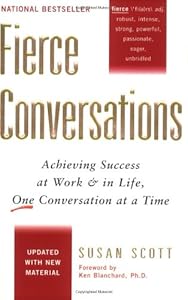
Cover of "Fierce Conversations: Achieving...
Cover via Amazon

TrustBUSTER™ 1:  Talks negatively about teammates behind their backs

Every leader has he said/she said stories where someone says something out of the earshot of another that is perceived as negative.  It is no wonder that Patrick Lencioni’s first two dysfunctions in his book The Five Dysfunctions of a Team are the absence of trust and inability to manage conflict.  So how can you prevent this in your team?

Susan Scott makes the point in her book Fierce Conversations that “As a leader, you get what you tolerate.”  Complaining requires a talker and a listener.  If you listen and let it go you are tolerating it.  The best way to stop it is to have zero tolerance for it.  When you hear it, encourage  the person to address their concerns directly with the person or drop it.  If it continues then it needs to be dealt with as a performance issue.

In addition, recognize that most teams and individuals are not skilled at directly giving or receiving negative feedback, which forces disagreements to be internalized or appear as complaints that are passed around people and not directly to them.  Make attainment of this skill a priority for your team.  Even just reading and discussing the book Fierce Conversations by Susan Scott will go a long way towards helping people learn the skills that will help bring complaints into the open.

Emails in CAPS – Here is how NOT to send them

He entered my office with a look on his face that was both quizzical and bothered.  He was wondering why he was here.  In front of me was an email with no four letter words, no inappropriate nouns or adjectives, but lots of capital letters.  He was 24 years old, a hard-driving and successful sales person, and he saw capital letters as a way of conveying how passionate he felt about what he was saying.  Of course, the person who had received this and everyone on his team viewed this as yelling.  He made it through that conversation, but only lasted about three more months in the organization.

In a recent post by Jason Diamond Arnold (see post: http://ht.ly/35a5N)  he chronicles the process of using restraint and time to pull the emotion out of an email so that it does not result in damage to a relationship.  It is a good message and a reminder of how to know when you have crossed the line and show some restraint by NOT hitting the send button.

Let me go one step further – NEVER send an email where the message contains anger, frustration, disappointment, disillusionment, or has the sole purpose of holding someone accountable for actions.   Write it, read it, think about it (I recommend 24 hours), and in the end if the feeling is still there get on the phone or walk over and deal with it.   I have a file full of email arguments that are great material for Dilbert, but would make you shake your head because they all involve executive level leaders.

If you are a leader and find yourself wanting to write one of these emails to your company/department – here is an alternative.

  1. Write the email
  2. Share it personally with your leadership team – what you see, why it frustrates you, and what you want to see.
  3. Ask for their input – Are your observations accurate?  What might you be missing?  What will it take to correct this?
  4. Listen
  5. Listen (this is an important step so I thought I would bring it up twice)
  6. Thank them for their input – and make a decision on next steps – If moving forward with a message to the organization is important, enlist the help of someone else to craft a message and agree (as a team) what the follow-up will be from everyone in the group.

Correcting mistakes or redirecting the actions of many is important to the success of your organization.  But there is a right way and a wrong way to do it.  Emotionally charged emails are the wrong way.  stop it!  (see – no caps, and you still get the message)

Great Followership is a Choice – Why It Matters . . .

I live in Michigan, and if you have read anything about the economy you know we are close to last when states are ranked in terms of economic health.  We have a long journey in front of us.  As we wait for a new governor to start and demand for new/old products to grow I cannot help but think that I am tired of waiting.  Really, what am I waiting for?  We often look to leaders to fix things or make things better, waiting for the right rallying cry or piece of legislation.  In waiting, we make a choice to let someone else figure things out.

Sometimes it is important to recognize what we have many things to be thankful for, and then make the choice to make it better.  I believe this is one of those times.  Here are a few illustrations of  what I mean.

  • A sunny day is a gift.  Going outside to enjoy it is a choice.
  • Children are a gift.   Putting your paper down to listen to them is a choice.
  • Having a job is a gift.  Getting enjoyment and fulfillment from that job is a choice.
  • Having people around you to help you find a job is a gift.  Preparing for the interview and being confident in who you are is a choice.
  • Having a great boss is a gift.  Trusting and supporting that boss is a choice.
  • Being asked your opinion by the CEO is a gift.  Giving a truthful answer is a choice.
  • Your talents are a gift.  Choosing a path/role/project to share those talents is a choice.
  • A paycheck is a gift.  Choosing to smile when you open it is a choice.

The election is over, but we should not wait for new leaders to improve our outlook and get things moving.  As followers, we have a choice.  The ironic thing about becoming a great follower – if we do it really well we end up being leaders.

Joy: Why It Should Matter to the CEO

I just finished reading Born To Run by Christopher McDougall.  I won’t give you a whole book report, but one part of the story is etched in my brain.  The story is based around a tribe in Mexico called the Tarahumara and their amazing ability to run many miles (50 to 100 plus) at a time.  Legendary running coach Joe Vigil was watching two Tarahumara runners late in a 100 mile race they would eventually win, and it struck him that they were smiling.  Vigil had spent 50 years studying runners and attempting to define the physiological keys that would make people faster, only to discover the last piece to the puzzle for him was character.  As it is stated in the book “Vigil’s notion of character wasn’t toughness.  It was compassion.  Kindness. Love.”  The Tarahumara had never forgotten their love of running, and the joy they felt oozed out of them even after 50+ miles.

Joy is the  key ingredient in opening our hearts, minds, and bodies up for a whole new level of performance.  In Daniel Pink’s book A Whole New Mind he makes a case for the presence of play and laughter in the workplace and the impact it has on innovation and engagement.  What happens when we lack joy in our work? Dr. Stuart Brown wrote in his book Play: How it Shapes the Brain, Opens the Imagination, and Invigorates the Soul that younger people suffer the same “crisis of the soul that comes from pouring every moment of your time and every ounce of your being into other’ expectations.”

As a leader, take a pulse of your organization by walking around.  Are people smiling?  Do they approach you to say hello or do they wait for you to say it?  Watch people in your lobby being greeted.  Is there any warmth?  At 5pm, how many cars are left in the parking lot?  How often do you hear laughter?  When you ask the question Why do you work? what kinds of answers do you hear?  How would you answer that question?

Imagine what a day at work would be like if we celebrated just being there.  What if we brought a little of the Tarahumara to work.  Imagine the difference it would make in everything that we do.  The best news for the bottom line – joy is free.  The best news for everyone – joy is a personal choice.

B Players: 3 Things Leaders Can Do to Energize Them

Good News!  Getting B players more energized, engaged, and acting like an A player is not an expensive initiative.  The reality?  It will take a time commitment from leaders.  Here are three moves you can make today to raise the energy level and commitment of  your B players.

1.  Communicate, Communicate, Communicate: Leaders need to spend time monthly talking about the performance of the business, quarterly talking about the near term goals, and yearly reviewing the goals and vision for the business.  B’s are out there looking for leadership, some clear direction, authenticity, and something to get excited about – so give it to them! 

2.  Regular One on One Time: As leaders, we look at our solid players and give thanks they are low maintenance.  When the demands on our time increases the common response is to take them for granted and slip into a more no maintenance mode.  Nothing says you are valued more than time, and people need to feel valued before they will get excited .  What if you sat down monthly with your B’s and started asking questions like:

  • What challenges are you/the team experiencing this week?
  • What questions are you hearing from people about the business?
  • What do you see out there that needs fixing?
  • What questions do you have for me?

After you ask a question just listen.  If having regular one on one time is new be patient.  It might take several weeks or  months for people to open up because they need to see your commitment to them.  If you listen and follow-up on any commitments you make trust will increase and engagement will follow.

3.  Help Them Set Goals:  B’s are generally doing the core part of their job very well.  Use the yearly evaluation time or one on one time to affirm their value, offer support to help them grow to meet personal goals, and invite them to help fix a few things or guide some change.  B’s are not looking for a 60 hour work week so they might appear hesitant.  If they have some personal constraints that restrict them from giving the business extra time get creative.  Whether it is testing a new system, meeting with customers coming in for a visit, or taking a new person under their wing to help them learn – there is untapped potential with these solid team members.

Remember, LOW maintenance is not NO maintenance.  Pay a little attention, be authentic, and invite them to jump in.  What would be the impact on your business if 50% of your B players poured some extra energy into solving one problem, finding one more customer, or identifying and implementing one efficiency improvement?

Is it possible to hire all A players? Three Realities

It makes great headlines to talk about hiring “A” players.  Guy Kawasaki makes the statement that “People need to hire people smarter than they are”, but the reality is “A players hire A players; B players hire C players.”  In his book Topgrading, Brad Smart outlines an approach that is designed to ensure 90% of your hires will be A players in the role they are hired into.  Few would argue that having great people doing the right things is critical for a business to be successful.  To start this discussion, here are three realities for hiring A players.

1.  Organizations have a tendency to transform A’s into B’s and C’s: What keeps A’s acting like A’s?  The Gallup organization did extensive research that resulted in identifying 12 questions(Q12) to measure engagement, among other things.  The first three questions say a lot about what keeps A’s acting like A’s:  1)  I know what is expected of me at work  2)  I have the tools and resources I need to do my job  3) I have an opportunity to do what I do best everyday.  At the core of keeping A’s acting like A’s is communication.  This includes keeping them informed about changes in the business and listening to their questions/needs/opinions.

2.  Hiring people ‘smarter than they are’ is hard.  It takes a tremendous amount of self-confidence and cultural support: This starts with the CEO, and their willingness to allow their executive team to lead, which might result in them not have all the answers all of the time.  A key challenge to hiring smarter people is delegating the work (because they are better able to do it) and giving them space to make decisions.  This will put leaders in a position to not know all the decisions being made all the time.  So, the CEO needs to provide some space to bring information back and leaders need to be comfortable saying and allowing the comment “I don’t know, but let me look into that.”

3.  Hiring – Do people really have the time to be that rigorous? Hiring the best people for a job takes a clear understanding of the role (job description), a vision of how this role will impact the direction of the company (operational/strategic objectives), and time to really get to know the candidates.  In Topgrading, Brad Smart outlines a rigorous process that could easily take 6+ hours per candidate.  Teaching managers the reason for these three pieces and the importance of spending time to find great people is critical.

If you are a CEO trying to attract and keep the best talent, it is worth a 2-3 hour discussion with your team to explore this topic and find ways to fine tune your hiring and onboarding of  people so they are successful.   Some questions to consider in that process:

  • How do you define A players, B players, and C players?
  • What do you see as impediments in your own organization to hiring A players?
  • What are practical ways you have seen to make sure A’s do not get turned into B or C players? What are you doing?  What should you be doing?
Some other good reads:

Want to Keep Your Best People? Learn to Grow Garlic! Let Me Explain . . .

Have you ever lost a good person because they did not see a future at your company or they did not feel valued?  Then did you wonder “How could they think that?”  Maybe you even went so far as to tell them after they announced they were leaving, but it was too late.

Keeping people is a big and often complicated topic.  To simplify it I often share a rule given me by a  manufacturing supervisor from Tennessee almost ten years ago.  His wisdom?  “Intentions without actions equals SQUAT.”  My rule for making sure people know they are valued – invest in them through your actions.  Let me share an analogy.

I like to grow vegetables.  My new experiment is garlic.  It takes time to grow a full head of garlic from a single clove when you live in Michigan.  The process starts in the fall, when you plant a single clove so it can put down some roots before winter.  If everything works, next June I will have 20-30 full heads of garlic.  My investment in the process is pretty simple:  a little money, time, and patience.

So how does growing garlic relate to developing people?  As a leader you are likely busy with the urgent issues of today.  If you want people to feel valued and show commitment to what needs to be done, they need your time, patience, and support.

Here are five steps to cultivate your people garden:

  1. Evaluate where the person is today (current performance, talents, experience)
  2. Define where they want to be / the organization needs them to be in the future
  3. Make a plan to get them ready(new skills, experiences, mentoring, etc) for what they want/what the organization needs
  4. Revisit the plan every quarter to see how they are doing
  5. Get to work

I believe most leaders care about their people.  I also see lots of situations where these same leaders do not show in their actions what they feel.    Taking time to help your people think about and plan for their future shows a real commitment to their success.  What is the cost of such an activity?  A good development discussion takes about 5-7 total hours (2-3 for the leader / 3-4 for the individual).  If you add in three one hour(quarterly) follow-up meetings, the yearly time investment for a single person is approximately 13 hours.  The ROI?  What would it cost your business to replace a good employee?  What would the lost productivity or stalled projects cost your team if you were short a person for 3-4 months?

Spend 5 minutes making a list of the actions you do daily, monthly, and quarterly to show your people you value them?  If this is not on it – add it!

7 Leadership Lessons from Dave Bing

People from outside of Michigan may not recognize the name Dave Bing, so let me share some highlights of his career.

  • 7 time NBA All-Star
  • In 1996 named one of the 50 Greatest NBA Players of All-time
  • Entrepreneur – Founder/Owner of Bing Steel
  • Current Mayor of Detroit, Michigan

So it can be said that at many levels he is a successful person.  I had the opportunity to hear Mayor Bing talk today at the Grand Rapids Economic Club, and in thirty short minutes he had a lot to say.   The first thing I heard that stuck with me was his introduction.  He has been called “The right man for one of the most thankless jobs in America.”(Time Magazine)  Some statistics that illustrate what he faces in his job:

  • He assumed ownership of a city that was $330M in debt
  • There are 50,000 empty homes in Detroit
  • Detroit has a recently installed $100M computer system that does not work
  • Illiteracy is running between 40-50% for the residents of Detroit

All that being said, Dave Bing shared some great advice that all leaders need to hear.

  1. Be prepared . . . and be prepared to be overwhelmed – He shared that he went into office thinking that he was ready for this job because of his business and sports background.  He quickly realized that the problems he faced (see list above) were beyond what he was ready for at the time. 
  2. Leaders are Reslient – see #1
  3. Lead with Questions – One of the first things he did was to spend time asking this question of the people in his city, What is the role of government?
  4. Focus on Building Trust – He found many people did not trust the city government.  He realized he could not get the change that was needed without that trust from residents, corporations, and other key allies.  It became his #1 priority.
  5. Focus on Setting Priorities – The priorities he has set for fixing Detroit are Fiscal Health, Crime, Blight, and Education.  His agenda is clear and he is focusing resources and people on fixing these things.
  6. Focus on Accountability – Set performance expectations, work with people to help them achieve these goals, and be ready to make a change if the performance goals are not met.  An example, he has replaced his Police Chief twice because crime is a focus of his agenda and the performance goals were not being met.
  7. Leadership is about making tough decisions – He has to ask/urge people to move from their homes in areas of the city that are largely made up of abandoned homes and into areas where there is a concentration of people so the city can focus their services and resources.  You think your job is hard?

I agree with Time Magazine.  I would add that he is a man/leader worth following.  If you don’t know Dave Bing you should get to know him.  Read more