
TrustBUSTER™ #1 – Talking behind the backs of teammates

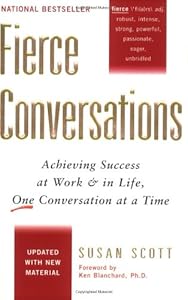
Cover of "Fierce Conversations: Achieving...
Cover via Amazon

TrustBUSTER™ 1:  Talks negatively about teammates behind their backs

Every leader has he said/she said stories where someone says something out of the earshot of another that is perceived as negative.  It is no wonder that Patrick Lencioni’s first two dysfunctions in his book The Five Dysfunctions of a Team are the absence of trust and inability to manage conflict.  So how can you prevent this in your team?

Susan Scott makes the point in her book Fierce Conversations that “As a leader, you get what you tolerate.”  Complaining requires a talker and a listener.  If you listen and let it go you are tolerating it.  The best way to stop it is to have zero tolerance for it.  When you hear it, encourage  the person to address their concerns directly with the person or drop it.  If it continues then it needs to be dealt with as a performance issue.

In addition, recognize that most teams and individuals are not skilled at directly giving or receiving negative feedback, which forces disagreements to be internalized or appear as complaints that are passed around people and not directly to them.  Make attainment of this skill a priority for your team.  Even just reading and discussing the book Fierce Conversations by Susan Scott will go a long way towards helping people learn the skills that will help bring complaints into the open.

TrustBUSTERs – Any of these sound familiar?

Trust is something that is foundational to healthy leaders, healthy companies, and healthy relationships.  But it is hard, especially in times where managers change yearly, communication is sporadic, and a self-preservation mindset still exists from the recent economic slump.  In my experience dealing with companies that are growing or working with limited resources, I see lots of people working quickly and reacting more than thinking things through.  When we are in that mode, our behaviors often erodes trust because we are defaulting to our most natural mode of behavior.  Under stress, we have a diminished ability to flex our work style to best fit the situation or person.  It is rarely intentional, but our actions send a negative message.  In his book The Speed of Trust, Stephen M.R. Covey makes the observation that “We judge ourselves based on our intentions, but we judge others on their actions”. 

I call these actions TrustBUSTERS.  What if we knew the Top 3 TrustBUSTERS for everyone we worked with and we were aware of the three things we did most often?  How would that impact the trust on our team?  Here is the list of TrustBUSTERS :

  • Talks negatively about teammates behind their backs
  • Unwilling to admit mistakes and apologize
  • Slow to extend trust to others
  • Does not communicate and explain changes/decisions well
  • Tells a lot, listens very little
  • Criticizes decisions AFTER the team has discussed them and the decision has been made
  • Values individual success over team goals
  • Shows little/if any concern about me as a person
  • Does not consistently follow through on commitments
  • Asks team to make sacrifices ($ / time), but does not make same sacrifices

Have any to add?

Emails in CAPS – Here is how NOT to send them

He entered my office with a look on his face that was both quizzical and bothered.  He was wondering why he was here.  In front of me was an email with no four letter words, no inappropriate nouns or adjectives, but lots of capital letters.  He was 24 years old, a hard-driving and successful sales person, and he saw capital letters as a way of conveying how passionate he felt about what he was saying.  Of course, the person who had received this and everyone on his team viewed this as yelling.  He made it through that conversation, but only lasted about three more months in the organization.

In a recent post by Jason Diamond Arnold (see post: http://ht.ly/35a5N)  he chronicles the process of using restraint and time to pull the emotion out of an email so that it does not result in damage to a relationship.  It is a good message and a reminder of how to know when you have crossed the line and show some restraint by NOT hitting the send button.

Let me go one step further – NEVER send an email where the message contains anger, frustration, disappointment, disillusionment, or has the sole purpose of holding someone accountable for actions.   Write it, read it, think about it (I recommend 24 hours), and in the end if the feeling is still there get on the phone or walk over and deal with it.   I have a file full of email arguments that are great material for Dilbert, but would make you shake your head because they all involve executive level leaders.

If you are a leader and find yourself wanting to write one of these emails to your company/department – here is an alternative.

  1. Write the email
  2. Share it personally with your leadership team – what you see, why it frustrates you, and what you want to see.
  3. Ask for their input – Are your observations accurate?  What might you be missing?  What will it take to correct this?
  4. Listen
  5. Listen (this is an important step so I thought I would bring it up twice)
  6. Thank them for their input – and make a decision on next steps – If moving forward with a message to the organization is important, enlist the help of someone else to craft a message and agree (as a team) what the follow-up will be from everyone in the group.

Correcting mistakes or redirecting the actions of many is important to the success of your organization.  But there is a right way and a wrong way to do it.  Emotionally charged emails are the wrong way.  stop it!  (see – no caps, and you still get the message)

Looking to Have an Engaged Workforce? . . . Don’t Forget the Turkey

~Yes!  Another Turkey!
Image by ~Sage~ via Flickr

An enlightened leader just told me a great story.  After experiencing 2 years of difficult times, a recent quarterly employee meeting was dedicated to looking to the future and celebrate furtunes starting to turn for the organization.  There were four parts to the presentation:  Vision/Strategy, Financials, Quality, and an HR update.  While the first three received polite attention, the last piece received thunderous applause.  Why?  Because the announcement was made that the holiday tradition of giving each employee a frozen turkey was back after a two-year absence. 

The learning?  Never underestimate the value of the little things.

The action?  Don’t go and add a turkey giveaway to your organizational traditions.  Do continue to focus on communicating to all levels of your organization.  But never underestimate the appreciation people have for the little things.  A personal thank you, an early quit to spend time with family, flowers to show concern or appreciation, or just a few extra minutes to learn some facts about someone beyond their name.

For a leader, casting vision, communicating priorities, updating people on where the company is financially, and sharing news from different parts of the business is important.  But also remember to hand out a few turkeys between powerpoint slides and annual reports.

Great Followership is a Choice – Why It Matters . . .

I live in Michigan, and if you have read anything about the economy you know we are close to last when states are ranked in terms of economic health.  We have a long journey in front of us.  As we wait for a new governor to start and demand for new/old products to grow I cannot help but think that I am tired of waiting.  Really, what am I waiting for?  We often look to leaders to fix things or make things better, waiting for the right rallying cry or piece of legislation.  In waiting, we make a choice to let someone else figure things out.

Sometimes it is important to recognize what we have many things to be thankful for, and then make the choice to make it better.  I believe this is one of those times.  Here are a few illustrations of  what I mean.

  • A sunny day is a gift.  Going outside to enjoy it is a choice.
  • Children are a gift.   Putting your paper down to listen to them is a choice.
  • Having a job is a gift.  Getting enjoyment and fulfillment from that job is a choice.
  • Having people around you to help you find a job is a gift.  Preparing for the interview and being confident in who you are is a choice.
  • Having a great boss is a gift.  Trusting and supporting that boss is a choice.
  • Being asked your opinion by the CEO is a gift.  Giving a truthful answer is a choice.
  • Your talents are a gift.  Choosing a path/role/project to share those talents is a choice.
  • A paycheck is a gift.  Choosing to smile when you open it is a choice.

The election is over, but we should not wait for new leaders to improve our outlook and get things moving.  As followers, we have a choice.  The ironic thing about becoming a great follower – if we do it really well we end up being leaders.

Startup – 4 Critical Things You Need From The Team You Build

Starting up a business is a crazy time, and a key part of this time is bringing people around you that will help you hit your goals.  Officially your goal might be a revenue number, but unofficially startup is also about getting lots of things done without hurting yourself or those around you.  It is hard, which is why so many new businesses fail to survive.  One researcher concluded that after three years 46% of startups are gone. (see numbers)

The good news is there are people around all of us that are willing to get involved.  As you identify your team it is crucial to define what you will need from them as you start your business.  Here are four needs I have found to be critical, and each one should have a name(s) next to them for you.

1. Help managing the fear: Don Rainey, a venture capitalist in Washington DC named getting used to constant fear as the #1 way starting a business will change you (read blog posting).  Find advisers and partners that understand fear and that you trust enough to be open with.  They should also be people who will push you to get unstuck when fear is holding you back from moving forward.  Managing fear is ultimately your job, but ongoing support from others is critical.

2. The knowledge/experience to help win: Every business needs a little bit of luck, but don’t depend on it.  If there is knowledge you need and don’t have –  find it.  If you are a single person company, find the network or get the experience before you start.  If you are going to market with an idea or product you created, get sales and marketing help. If you really understand your own strengths and weaknesses this part is easy because your business plan tells you the work you have to get done, you just have to get the help to fill in the key gaps.  Move your ego over and get help.

3.  Brave problem solvers: I like the word brave because it creates the picture of a hero who overcomes fear to get into action mode and wins.  Looking back at any startup, there are an abundance of stories where bumps were encountered and unforeseen problems had to be solved.  A great question for entrepreneurs is “Share a problem/challenge you encountered and what you did to overcome it?”  When hiring people in the beginning you will need to hire problem solvers – not problem identifiers or problem creators.  Whether it is through their commitment to learning, sheer will to win, or passion to fix things, they need to see problems as an opportunity to do something special.

4.  Someone to celebrate with: There will be victories.  In those victories are opportunities to high-five, eat some good food, or share a smile.  Having people close enough to your business to know the lows and recognize the work that went into the highs is important.  It might be an employee that likes to cook or a friend who likes to throw a party.  Jim Collins called this momentum gained by reaching and recognizing goals the flywheel effect.  Celebrating successes will allow you to feel the momentum.

So what kind of leadership do they need from you?  See the above list and ask yourself “What can I do as a leader to make sure that need is met?” It is probably worth some future blog space to explore this question a little bit more.  If you have any ideas to add to what I have shared feel free to comment.

Joy: Why It Should Matter to the CEO

I just finished reading Born To Run by Christopher McDougall.  I won’t give you a whole book report, but one part of the story is etched in my brain.  The story is based around a tribe in Mexico called the Tarahumara and their amazing ability to run many miles (50 to 100 plus) at a time.  Legendary running coach Joe Vigil was watching two Tarahumara runners late in a 100 mile race they would eventually win, and it struck him that they were smiling.  Vigil had spent 50 years studying runners and attempting to define the physiological keys that would make people faster, only to discover the last piece to the puzzle for him was character.  As it is stated in the book “Vigil’s notion of character wasn’t toughness.  It was compassion.  Kindness. Love.”  The Tarahumara had never forgotten their love of running, and the joy they felt oozed out of them even after 50+ miles.

Joy is the  key ingredient in opening our hearts, minds, and bodies up for a whole new level of performance.  In Daniel Pink’s book A Whole New Mind he makes a case for the presence of play and laughter in the workplace and the impact it has on innovation and engagement.  What happens when we lack joy in our work? Dr. Stuart Brown wrote in his book Play: How it Shapes the Brain, Opens the Imagination, and Invigorates the Soul that younger people suffer the same “crisis of the soul that comes from pouring every moment of your time and every ounce of your being into other’ expectations.”

As a leader, take a pulse of your organization by walking around.  Are people smiling?  Do they approach you to say hello or do they wait for you to say it?  Watch people in your lobby being greeted.  Is there any warmth?  At 5pm, how many cars are left in the parking lot?  How often do you hear laughter?  When you ask the question Why do you work? what kinds of answers do you hear?  How would you answer that question?

Imagine what a day at work would be like if we celebrated just being there.  What if we brought a little of the Tarahumara to work.  Imagine the difference it would make in everything that we do.  The best news for the bottom line – joy is free.  The best news for everyone – joy is a personal choice.

Is it possible to hire all A players? Three Realities

It makes great headlines to talk about hiring “A” players.  Guy Kawasaki makes the statement that “People need to hire people smarter than they are”, but the reality is “A players hire A players; B players hire C players.”  In his book Topgrading, Brad Smart outlines an approach that is designed to ensure 90% of your hires will be A players in the role they are hired into.  Few would argue that having great people doing the right things is critical for a business to be successful.  To start this discussion, here are three realities for hiring A players.

1.  Organizations have a tendency to transform A’s into B’s and C’s: What keeps A’s acting like A’s?  The Gallup organization did extensive research that resulted in identifying 12 questions(Q12) to measure engagement, among other things.  The first three questions say a lot about what keeps A’s acting like A’s:  1)  I know what is expected of me at work  2)  I have the tools and resources I need to do my job  3) I have an opportunity to do what I do best everyday.  At the core of keeping A’s acting like A’s is communication.  This includes keeping them informed about changes in the business and listening to their questions/needs/opinions.

2.  Hiring people ‘smarter than they are’ is hard.  It takes a tremendous amount of self-confidence and cultural support: This starts with the CEO, and their willingness to allow their executive team to lead, which might result in them not have all the answers all of the time.  A key challenge to hiring smarter people is delegating the work (because they are better able to do it) and giving them space to make decisions.  This will put leaders in a position to not know all the decisions being made all the time.  So, the CEO needs to provide some space to bring information back and leaders need to be comfortable saying and allowing the comment “I don’t know, but let me look into that.”

3.  Hiring – Do people really have the time to be that rigorous? Hiring the best people for a job takes a clear understanding of the role (job description), a vision of how this role will impact the direction of the company (operational/strategic objectives), and time to really get to know the candidates.  In Topgrading, Brad Smart outlines a rigorous process that could easily take 6+ hours per candidate.  Teaching managers the reason for these three pieces and the importance of spending time to find great people is critical.

If you are a CEO trying to attract and keep the best talent, it is worth a 2-3 hour discussion with your team to explore this topic and find ways to fine tune your hiring and onboarding of  people so they are successful.   Some questions to consider in that process:

  • How do you define A players, B players, and C players?
  • What do you see as impediments in your own organization to hiring A players?
  • What are practical ways you have seen to make sure A’s do not get turned into B or C players? What are you doing?  What should you be doing?
Some other good reads:

B players aren’t all coasting – Some are waiting. So lead . . . (video)

Here are some extra thoughts on how to use your existing time and performance evaluation process to get your B players more engaged.  B players are not necessarily coasting or hiding, many are waiting.  Waiting for someone to ask them to help.  Waiting for someone to give them some feedback, to say it is okay to not want a promotion, and to recognize they have lots of value to the organization.

Do NOT hide behind the performance evaluation form or process as being a barrier to having a great conversation with your people.  It is NOT the form.

[youtube=http://www.youtube.com/watch?v=2kW8m9b5keM]

B players have lots of value – How to tap into it

*this is an excerpt from a frequent publication by The trU Group called trU Tips.  To view past topics click here.

What I’m hearing

A friend and mentor sent me this question “You’ve given advice on how to handle the strongest and weakest performers on a team, but what about the B players?”

What it means

First, let’s quickly define who the B players are: they’re the people who get the work done, have limited aspirations or potential to move higher in the organization, and likely have a nickname around an adjective like “Steady Eddy,” “Reliable Ruth” or “Dependable Dave.” Having these people around is priceless yet frustrating because they do their jobs but often aren’t looking for more work.

We hide people in this category, so just saying “B player” is often misleading. A client described a person on his team who was solid, knowledgeable and dependable — and everyone in the office was afraid of her (including her boss) because she was also domineering and abrasive. Yet she was a solid performer in his eyes. We HIDE too many people in the “B” area because they are “valuable” or “knowledgeable,” all while creating fear in peers and negatively impacting the team. So I would expand the definition of “B player” into three categories:

  • B-plus: Content in their current roles but willing to share their vast knowledge to mentor new people. They contribute to teams looking to innovate and optimize what work is being done.
  • B: Solid contributors who are not interested in or capable of growing others at this point in their careers. They generally build positive relationships with teammates and consistently get things done.
  • B-minus: Solid to exceptional contributors who get the work done but build few, if any, positive relationships with people around them. They do not cultivate expertise in the group, but give direction instead.

What you should do

People need to hear the truth, and the performance evaluation process is the perfect place to challenge B players — who likely comprise 50 to 60 percent of your workforce — but in a different way than you would A or C players. Don’t rewrite your form, but include the following items as post-it addendums if needed:

  1. Three to five things you see them doing extremely well.
  2. A list of adjectives that come to mind when thinking about what they accomplish but how they accomplish it. Include words that describe how others perceive them.
  3. One request, in the form of a goal, that they could accomplish that would help the overall strength of the team —mentoring, permanently fixing a process, cultivating a key customer relationship, etc.

That third item can provide you with an opportunity to divide your B players up a little and challenge them to move the team forward.

B and B-plus players have a place on the team. They have ideas, and may respond to challenges in a way that will surprise you. Those who fall into the B-minus category have to be put on notice, and as the leader you need to be bold enough to have that conversation.

Want to hear more?  View the video supplement on YouTube.