
Talent Wars – How to not fight them

I am not much for going through walls, I usually look for a way around them.

It a recent study released by the Northern California Human Resource Association, the following statistics were shared:

93% believe there is now or will soon be a talent shortage
44% report full leadership support for the New Reality
78% said retention is a high priority this year

When I hear the words high priority this year, I automatically think initiative.  I can hear the front-line business leaders now – “HR wants us to do something new this year . . . “.

So a slew of new priorities and initiatives are happening to deal with the talent shortage and make retention a high priority.  We get in the talent wars because we join the same battle everyone else is fighting – post the job, recruit for the job, hope they can do the job, hope they stay, hope the skilled people mentor the new people effectively, and hope people tell us when they want to do more.  Here are some questions to help you think about how you are fighting this war:

  • Do you have a list of key jobs and are you adding names to it every couple months that you would hire today if you had an opening?
  • Is every candidate greeted by the nicest person in the company?
  • Do you allow yourself to smile during the interview?
  • Do you always respond to interviewees in a timely manner?
  • Do you(manager) send a present/personal note to people when they accept an offer?
  • Do you(manager) personally call people back when you want to have another interview with them?
  • Do you(manager) personally call people back after interviewing them and deciding not to continue the process with them?
  • Do you share with people as part of the interview how important this role is to the strategy of the team/organization and take five minutes to share with them why you love to work here?
  • Do you tell them the truth without prefacing it with “Let me be completely honest with you” or “I am going to be 100% truthful on this one”.
  • Do you(manager) map out a path to success for new people(onboarding) and spend extra time with them over the first 3-6 months?
  • When they say No to your offer do you(manager) personally call them to learn more about their Yes to someone else and No to you – then wish them great success. Do you then invite them to connect on LinkedIn so you can stay in touch?

Talent wars are real in areas where skills are scarce, but they are also about every employer being equal in the eyes of the people looking for work.

What if you were so good at telling your story and matching passions/talents with your needs that people could not imagine going anywhere else when you offered them a job?  What if your people were recruiting for you because they were so passionate about your organization?

Don’t have time to worry about these little things?  Wars are expensive, but good luck fighting it.

Personally, I would try and position myself so everyone else is fighting over the people I passed on.
 

8 Questions To Ask Before Starting Succession Planning

Succession planning is a great conversation.

For the organization, it puts plans in place to be used in case of a sudden departure of a key person.  It also identifies talent gaps that can be discussed and dealt with before they become emergencies.

For your best people, it creates a vision of the future for them and identifies ways to challenge/develop them over the coming years.

Then there is you, the executive.  Maybe not such a great process.  You are putting plans in place for after you are gone.  You are sharing the talent you have worked hard to hire and develop with the rest of the organization by allowing them to be considered for key roles in other areas.  Do we avoid these conversations?  The numbers would say yes.  First number – only 35% of the CEO’s in the United States have succession plans.  Second number – personally only 45% of us have wills.

Talent management is about great conversations.  Here are eight questions to ask a leader before starting a succession planning effort:

  1. I am excited about this process.
  2. I think this is an important process to do each year.
  3. I have talked to all my direct reports about what they want to do in the future.
  4. I have done this before and I feel comfortable/skilled at the process.
  5. I will make the time (10-20 hrs) to do this work over the next 2 months.
  6. I am willing to accept input from other peers on my succession list . . . and I will use it.
  7. I am willing to allow key players from my team to be on succession plans for other groups.
  8. I feel good about setting up my groups/the organization to be successful after I move on.


Here is a link to this form with a number scale attached.

By naming our reasons for being reluctant, we can at least talk about them.  By letting those reason stay hidden there is very real potential to erode trust on the team and leave great talent(people!) unchallenged and unclear about what opportunities exist for them in the future.

I would opt for the great talent management/succession planning conversation started by these 8 questions.

3 Simple Habits To Help Strengthen Teams

Are there things about you that people do not know?  We all know the answer to that question – but is anything on that list that others need to know?  Maybe you love to problem solve.  Maybe you led a team of 20 people at one point in your career.  Maybe there is some part of the business you want to learn more about.  Maybe you get 150 emails a day and prefer phone calls.

Are there things about you that others see and you do not?

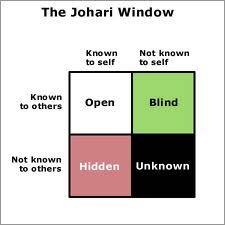
Several years ago a friend shared some feedback with me that we still laugh about. He told me that whenever he told a story, I usually followed up with a better one. I did not realize it – but watched myself for a few days and there it was – the proof.   It was funny, and I was unaware of it.   In JoHari Window language, it was a BLIND SPOT.Talent Management tool - JoHari Window

If you are not familiar with it, here is a link to a short YouTube video that explains it.

Talent management is about having great conversations.  When we talk, we develop relationships with the people around us, and at the core of those relationships is knowledge that we bring to every interaction.

Here are 3 tips to continually develop your team and teamwork.

TIP 1: As part of any team meeting spend 5 minutes asking/answering these questions:

  • This week – What are two wins?  What is keeping me up at night?

These questions are almost guaranteed to  keep a steady flow of HIDDEN items that will be valuable for the team to know.

TIP 2: When you have an off-site and you are looking for ways to get people sharing/laughing – have everyone answer the following questions for themselves and their teammates.  Next, go around the room and have others share first, seeing if they matched answers with the individual.

  • What is one thing I am really good at doing?
  • How do you know I am having a good day?
  • How do you know when I am stressed?
  • How do you know I am listening / not listening?

After this, watch the JoHari Window video and ask the questions:  What came out in our last discussion that could be considered HIDDEN? A BLIND SPOT?  What is the impact of having that information in the OPEN area for you?  For this team?  What is one way we can be more purposeful about these conversations?

TIP 3: I often use a tool called the Team Member Fact Sheet to get people talking.  Using it as a tool to get to know new teammates or test the knowledge of existing teams.

Talent management is about great conversations.  Go have one!

Succession Planning: Why We Don’t / 3 Reasons We Should

“I can do succession planning, but I am not going anywhere.”  These words were spoken to me by a senior leader 4 years ago.  A year after he said these words his job changed and he switched divisions.  More recently he left the organization for another role.  He was good with numbers, but not great at predicting the future.  Then again, who really is?

I added succession planning to the Talent Scorecard because it is a critical area to address in a talent management strategy within an organization.  However, it is not as important as performance conversations / one on ones / development plans.  Here is a link to trU Tips #11 where I introduced the scorecard and the online version I created for people to evaluate their own situation.

Single biggest barrier to succession planning: Our discomfort with the question “What is the plan after I am gone?”.  Talking about our mortality is uncomfortable and avoided.   Want proof?  How about the number only 45% of Americans have a will – which is the succession plan for an individual.  As it turns out, corporate succession plans must be more uncomfortable because only 35% of organization have a succession plan for their CEO.

Succession planning is not about us (ie: Our ego, power, wealth) – it is about others.  So here are three reasons to do it:

  1. It is part of being a leader: The ability to face a difficult situations and help a team work through it is a critical part of leadership.  Succession planning is about leadership.
  2. It says “You are more important than me” – the ultimate trust building action: Does this need more explanation?  Look at Jim Collins level 5 leader description in Good to Great.  There are lots of benefits for people feeling and SEEING this – email me if you want a list.
  3. It builds the same courage in others: What CEO would argue that it is not important to have plans for the most critical people and most critical roles in their organization?  The CEO going first removes one BIG excuse from the list other leaders will have not wanting to do it.

Much of talent management and the activities/processes that go with it fall under the description of simple, but not easy.

A parenting expert once gave me a line in response to a child telling me something is too hard.  The response.  Yes, it is hard.  But we can do hard. I think that same line fits with succession planning.  If we want people around us that do not shrink away from hard, then we need to be willing to go first.

What are some barriers you have experienced or compelling reasons you have used that you would add to this list?

Follower: How Often Should I Get Feedback?

I am in the process of reading/reviewing Jodi Glickman’s book Great On The Job – What To Say, How To Say It – The Secrets of Getting Ahead.  Jodi has an impressive list of college clients, two being Harvard and Cornell, that bring her in to prepare their students for success on the job.  As I go through it I will share some thoughts that make me go Hmmmm . . .  This posting is based on one of those moments.

I think our society is confused when it comes to feedback.  We lighten it with kids, with the intention of preserving their self esteem.  We worry about Millennials because the research says they need more.  In fact, at the height of the economic meltdown a study was done about what motivates people and managers said “positive feedback/thank you”, while their people said “making progress on my work”.  So what is the bottom line for feedback?

Jodi Glickman addresses the topic with new/soon to be new graduates in a way that anyone can benefit.

First, she shares a window – asking for it once a year is not enough and once a month is too often.

Secondly, she shares a very simple method for setting up the situation so the feedback can be given and has value for both the leader and the individual.  The two steps are:

  1. Phase I:  Preparation
  2. Phase II:  The Conversation

While both are good steps, I love Phase I.  Too often I see people jumping into a deep conversation with a peer or leader with no preparation for the person being asked to give it.  It usually ends with something generic like “It was great”.  Glickman’s quote about feedback that should be posted on cubicles everywhere is:

. . . the goal of the feedback is not to make you feel good.  The goal is to make you better at your job. (p. 129)

The author points out the best way to setup a good feedback session is to plant the seed before asking for feedback.  For example, if your focus is presentation skills, maybe planting the seed would sound like this:  “Julie, I am really trying to focus on my presentation skills, so could I ask a favor?  I’d welcome some feedback on my presentation after our client meeting next week.  If you could jot down some thoughts, I will setup some time for us to talk the following week.”

This builds off a core belief I have around Building Rhythm(from my trUPerformance™ model) in how we talk about our work, our priorities, and our needs.  Inherent in the one one one template I use with clients is the routine nature of our conversation and the predictable topics so feedback is continually mined (both positive and negative) without having to ask for it.

Talent management is about great conversations.  This book is loaded with tips on how, as a follower, to make those happen.

The final review of this book is coming next month, but so far I have really enjoyed the content and the way it is presented.

Laugh First – Then we can talk about importance of affirmation . . .

A friend sent me this video.  It is short, so spend 60 seconds and watch it.  http://www.youtube.com/watch?v=qR3rK0kZFkg

Many of you probably do not remember Senator Al Franken on Saturday Night Live, but he also did an affirming character called Stuart Smalley.  Here is the punch line to every Stuart Smalley bit – http://www.youtube.com/watch?v=-DIETlxquzY.

There are two things that hit me about the first video.

First, it is good to laugh.  It lowers blood pressure, decreases stress, and increases creativity – just to name a few benefits.  For a team, it helps reset the tone so individually we can be at our best going into a discussion, a big project, or a verbal battle to ensure we make a great decision.

Secondly, I am still amazed at the impact of any exercise where teammates share the things they value about each other.  I remember one individual after a 3 to 1 activity (receiving three positives from a teammate / 1 area to work on) say “I am a little shamed to admit it because it makes me sound like a %#*!&, but it felt good having people remind me what I am good at.”  Become the mirror for someone else.

Sometimes to be at our best and to get the best out of our team (ie.  talent management) – we just need to hit reset.  Enjoy the laughter, and find a way to make it contagious for a few minutes at your next team meeting.

Social Media, Relationships, and Leadership

Relationships are built through connections.  Connections happen when we have great conversations – – over and over again.  The numbers I preach to leaders and followers alike are:

  • 5 to 1: The optimal number of positive to negative interactions in a marriage
  • 3 to 1: The optimal number of positive to negative interactions in a work relationship
  • 3:  If we have this many close friends at work we are 96% more likely to be extremely satisfied with our life
  • If I were a smoker and a loner – I will live longer if I keep smoking and find some friends

Then comes social media.  Recently I was wondering if some day I would read a headline that would turn my world/beliefs upside down.  Something like:

  • Facebook changing the way we build close friends
  • The Tweets/day  = Happiness number is known:  14
  • Top 5 social media tools for creating healthy marriages and friendships
  • Keep Smoking, but open a Facebook account

My gut tells me that ignoring social media at work and in my life, in general, is the wrong move.  I also believe the fundamental things I preach to leaders and followers about success in work, building healthy relationships, building strong teams, and building strong companies will not change.

Then I stumbled upon a great TED talk that took on the topic of social media from Sherry Turkle called Connected, but alone? . I think I will stick with what my gut tells me – even as I continue to use Foursquare.  fyi – I just became Mayor of my street and no one treats me differently. 🙂

EXTRA:  An idea for using this video with high potentials/leadership groups: Watch the video (18 minutes) and explore the following questions:

  • How do I personally use social media tools?  What benefits do they provide me?
  • How do some of the important people in my life use them?
  • What comments from the video stand out for me?  Agree?  Disagree?
  • How can I use this to become better – Leaders?  Teammates?  Friends?  (Make one commitment)

Do You Know How to Start and End a Conversation?

I am in the process of reading/reviewing Jodi Glickman’s book Great On The Job – What To Say, How To Say It – The Secrets of Getting Ahead.  As I go through it I will share some thoughts that make me go Hmmmm . . .  This posting is based on one of those moments.

I watch the eyes, because they always tell the truth. 

Have you ever experienced the glazed, lifeless stare that happens within 10 seconds of starting a conversation with someone?  It is most often the result of them being in the middle of something and me being too urgent to simply ask “Is this a good time?”

Jodi Glickman shares her secrets to opening and closing a conversation under a section she refers to as The Basics.  How to avoid the lifeless stare is addressed up front.  It made me chuckle when she talked about the feedback she received initially from two trusted friends that this section was too basic.  I loved it!  When I talk to people about talent management I stress the partnership between a leader and a follower, and the transparency that has to exist for the relationship to work.  Being specific about What I need is critical, and recognizing that this is not the right time to talk is equally as critical.  In the era of open office doors/no doors at all and cell phones that make everyone accessible 24/7, it is important to be able to say not the right time.

One of the unique pieces of her approach was the ending.  In it she shares two steps:

  1. Thank you
  2. Forward momentum


I love the concept of forward momentum.  Think of it – we have talked and here is where I am going next.  Imagine if every interaction led to some sort of forward momentum?  In talent management: forward momentum = ownership = engagement = great followership

An exercise: What percent of your conversations today lead to forward momentum?


Leadership Rounding – A great example of how leading leaders is different

Going from a Director to a Vice President is a big jump – because all of the sudden how you lead becomes different.  It is often hard to explain this to people, but at some point they feel it through critcism for Never being around, and in their frustration they say something like I was just there last week or maybe even You never invite me!

I have blogged often about followership – which is knowing the priorities/challenges of your own leader and being purposeful about meeting those as you communicate and work towards meeting your own needs/priorities.  Here is a video from Quint Studer (The Studer Group) that talks about leadership rounding in healthcare.  Most of you are not in healthcare, but it is a great example of a message that needs to be heard by the executive and the leaders that report to them.  It does an amazing job of laying out the fears/frustrations of an executive and how some simple moves by front line leaders can help maximize the impact of a visit from a senior leader and help your own people connect with them in a way that will have lasting impact on your own team.

Check it out – and schedule a viewing with some leaders.  It is a great investment of 28 minutes.  Talent management is about having great conversations – this will start a great conversation.

Tracking My Happiness – Final Report

Several posts ago I gave an initial update on my commitment to join a happiness survey that was discussed in a recent Harvard Business Review article.  Here it the link to that post.

I have completed it after 50 entries and 17 days.  Here is what the data says:

  • Top activities for happiness:  restaurants, exercising, being with customers, vacation, parties.
  • Bottom activities for happiness: balancing checkbook, meetings, taking care of children, working alone, watching television.
  • I am 2x as happy on Saturdays vs Sunday.
  • Thursday is my top day of the week – 25% higher than Friday. (today is Thursday – so I am happy about that)
  • I am 4x happier doing activities I don’t have to do but want to do vs doing things I don’t want to do but have to do.
  • There is a direct correlation for me between high focus and high happiness.
  • There is a direct correlation for me between happiness and productivity.

Many things make me smile when I review these results – mainly because they tell a story.  For example, as a parent much of my attention (and this is MY choice) in the last 3 weeks hast focused on homework, transportation, and getting children to bed and up in the morning.  My takeaway – I need to work on my attitude – and create some fun moments for us (good timing – spring break is next week).  I can only imagine what their happiness report would say about me. 🙂  I am okay with not liking the checkbook, meetings, and working alone.  I also think I need a bigger television. 🙂

I mentioned in my first post that this would be a great activity for any company to do with high potentials or leaders.  For smaller companies it is nice because it is free (it works with straight email, but requires an iPhone for easy data collection when walking around).  I still think it is best done by groups of 3 people, and then having a general report out to the whole group.

Talent management is based on self awareness that feeds into a great conversation.  This activity has the potential to provide for both.

I will post next week on how our talent management processes (one on ones, performance conversations, etc.) actually create some of these reflective/conversation moments if done well.

If you tried this, what was your experience?  What questions would you ask me after seeing some of my results?  Here is your chance to coach me.