Leaders – The 4 Questions We Are Afraid To Ask

Are there any questions you do not ask because you don’t want to hear the answer? 

As a husband, one question that always makes me nervous is –  In a year from now, what do you hope has changed?  This question digs deeper than just uncovering any recent inconsiderate remarks I have made or recalling a stressful entry into the house from a long day of work.  The answer always reveals something significant and important.  I still fear this question.  t is hard to ask.

Here are the top 4 questions that leaders are afraid to ask:

  1. How am I doing?
  2. From your perspective, was I right or wrong?
  3. What should we be celebrating? 
  4. Imagine we are sitting here a year from now – What one thing do you hope has changed? (it is just not significant in relationships)

It is hard to ask questions that, when answered truthfully, will put us in a position to have to make a change.  You might be wondering about #3.  In a world where leaders strive to move things forward and often see problems piling up faster than problems going away, celebrations often become barriers to doing work.  Is fear the reason?  Maybe not.  But if the outcome is the question does not get asked, does the reason matter?  I thought it worth including.

It is hard to ask questions that will likely result in someone criticizing something we did or adding more work to an already full day.

It is easier to get lost in our work, to do lists, or superficial conversations.

To combat this, it is important for leaders and organizations to develop HABITS that provide an opportunity to listen.  Things like:

  • Yearly employee engagement surveys
  • One on one time every two  weeks.
  • Frequent Breakfast with the CEO events.
  • Yearly/Quarterly performance discussions.

Of course, you could ask the single question or do the employee engagement survey, then do nothing with the responses.  Is this more harmful than not asking the question?  I have an opinion, but what do you think? 

Do you have any other difficult questions to add to the list?

Four lessons from recruiting pastors – that any organization SHOULD use

For the last 18 months I have been fortunate to be working with and leading a fabulous group of people to fill two open roles for pastors.  While I have worked in the for-profit world doing this work before, it was a new experience doing this in a not-for-profit organization.  I learned that when talking with a person called to a profession of service, their passion is infectious.  It made the evenings go by quickly.  Here are 4 lessons that can and should be applied across any effort, whether it is for-profit or not-for-profit:

  1. Everyone deserves a response:  Responding to every inquiry with a timely response was a practice.  Every letter from a candidate received a letter back.  We also adopted a practice of providing a verbal response to every candidate we actually talked with, whether it was an actual interview or an exploratory phone call.  It was not always an easy call, but we did it because it gave us a chance to offer encouragement and prayers.  Remember, not-for-profit (especially church) leaders are not just pursuing a job, it is a calling.  NO has the potential to hurt more, and they deserve much more than silence.  I was surprised how many stories I heard of committees waiting several months to call back after an interview.
  2. Some “Just for them” Interviews:  When people are pursuing a calling, the interviewing process is often more of a discernment journey.  Many have left something else behind to pursue this career.  It is important to see these candidates (new grad, 2nd career, etc.) as great people on an amazing journey, and giving them 30 minutes to have a conversation with you is part of the process of equipping them with greater clarity on what path is right for them.  Make the interview more than your process, make it our process.
  3. It Still Needs to by Rigorous, without being Ruthless:  This is a sentence I use when describing goals of the process in front of a candidate so they understand how important it is to thoroughly explore if this is the right role for them at this point in their journey AND to get them the information they need to make a personal decision about us.  References, using personality assessments, multi-hour conversations, and maybe a personal appearance to demonstrate their skills / passions / beliefs are all part of it.  
  4. Be willing to celebrate a NO:  I remember the phone call vividly.  Listening to a candidate we loved read a well thought out letter why he felt called to another place.  I also remember smiling because of the soundness of his reasoning and the effort he put into being nice to us.  I did my best to turn the next 2 minutes into a party, even though it meant 7 more months of work for us.  Sometimes our needs don’t come first in a process, and believing that changes how you approach it to from the beginning.  Thinking of that call still makes me smile.

I agree with Peter Drucker, leading in a not-for-profit situation is one of the best leadership development opportunities for anyone in industry.  It is a good reminder of the basic things that still matter, and that a great process not only finds a great person, but allows you to lift up some others along the way.  We (for-profit world) have a lot we can learn from the not-for-profit wold

Approachability: A practice

I stumbled upon an article titled How to Get Anyone To Like You In Two Minutes or Less in my monthly edition of Bottom Line.  Admittedly some of these list articles can get kind of cheesy, but the first one hit me:  Use a slow-flooding smile.

I think back to a recent conversation about the onboarding of a new executive and after 9 months the feedback was “not approachable”.  We explored the reason why?, and the feedback was that when they are in the office they are on the run all day and do not stop by to say Hello.  Sound Familiar?

In my coaching practice, this is a very common area of focus.  As part of the coaching relationship, a client makes a commitment to a practice that will help them make a shift through a combination of self-observation and practicing some personal change.  So my quesiton:  How would a relationally challenged executive use a slow flooding smile practice?

First, recreate that feeling of a slow-flooding smile.  Allow your face to just relax. Now think of someone you really enjoy and imagine them approaching you in a hallway.  As you approach them, think of something funny they did or said, or one thing they always do that makes them unique.  Now allow your face to reflect what you are feeling inside – if it has not already.  What did you notice about yourself?  What happened inside?  What happened outside?  Without using a mirror, describe what parts of your body/face changed?

So here is what a practice might look like for someone addressing a need to connect with people more effectively:

  • Commit to leaving 2-3 minutes early for 1 meeting a day and take the long way and look for someone to run into.
  • When you see them , let your eyes focus on them and:
    • If you recognize them, think:  What about this person makes them special?  Think about a time when you saw them at their best?
    • If you don’t know them:  What does their face / pace / posture tell you about how their day is going?
  • When they make eye contact, say ehllow, and share with them what you were thinking.  As you talk, relax your face and allow the corners of your mouth to turn up a little.
    • It might sound  like:

Hi Mike.  Seeing you today jogged my memory about how great that visit was with customer x last week – and the way you rolled out the red carpet with lunch, the tour, and connecting them with some of the workers on the line made a huge difference.  What has you excited or energized this week?

  • It might also sound like this:  

 It looks like you are deep in thought about something important.   What has your brain working so hard?

  • As you part company, make a Thank you statement and offer an encouraging word.   Relax your face again and allow a smile.  It might sound like this:

Thanks for sharing what is going on.  I like to hear about our wins (or our challenges).

  • As you walk away, ask yourself:
    • What did I notice about the person?  Was I right?
    • What did I notice about them when I spoke to them?
    • What did I notice about them when I smiled?
    • How did the exchange/the smile make me feel?

Slow-flooding smiles come from the heart telling you to smile, not the brain.  People notice the difference, and we feel the difference.  Try this practice today.

Start: Performance Conversations Stop: Performance Evaluations Here is a template.

Evaluations too often end in a grade. The grade overshadows the richer part of the discussions like:

  • What does the next year look like?
  • What problems do I need your help to solve?
  • What things do you want to do more of?
  • What priorities would you set for our team?

trU Tips 13 is based on the feeling held by many that their performance evaluation is not working. In some cases it is just not being done because their is no raise to be given. Want to hear more? Interested in comparing your solution to a template I have successfully used with a client?  Read trU Tips 13.

Tweet

Leadership: 3 Keys To Building Culture

The  June 2011 issue of Inc. magazine recognizes top small company workplaces.  It is a great article for people thinking about culture and the start-up of new companies.  Here is the link.

Here are some thoughts that all leaders can take away.

Cultures are:

  1. Intentional:  Defining and writing down what you want to create is a must step.  Some start with what they want to avoid based on experiences at other organizations.  Whatever the start, in the end someone writes something down and uses that as the guide.
  2. Exclusive:  One example is how a company called TRX has a core value of Fitness.  People are encouraged and expected to workout. (coincidentally they company markets fitness products)  It would be difficult to fit into this organization unless you had a passion for exercise.  Values define who you are and will exclude people who do not share the same passions.
  3. Ideas backed by action:  All of the examples have established norms, interviewing techniques, goal setting in evaluations, or standard practices that promote a value.  The values/beliefs have come off the wall/out of the head of the entrepreneur and become an observable action that people see.  Spandex is often seen on employees at TRX as the go to or return from a workout.  An example of an acceptable norm and practice.

There is lots to worry about in a start-up.  Cash flow. Sales.  Product quality.  Hiring.  In my dealings with leaders 5-10 years after a start-up I have often heard the comment “I want work to be fun again.”  Part of fun is enjoying/participating in a culture you created. 

This is great lesson for any leader.

Tweet

Ego and Leadership: My story

On a recent trip my kids tired of looking for different license plates, so they decided to count the number of Prius’ that passed Dad.  They found it funny when a little 134 horsepower car passed a 310 horsepower truck.  I was reminded of the number 2 throughout our journey.  My way out was to exceed my limit of driving the speed limit +6 mph (avoiding risk of a ticket) to over take the Prius’ that zoomed by.  My ego said go faster, but the thought of a ticket vs pursuing the artificial win kept my ego in check.

Ego is a noun.  It is that thing within us that mediates between who we are inside and our external reality.  We often hear it used as a negative, especially when we talk about leaders.

  • His ego won’t let him admit that he was wrong. 
  • This decision was all about her ego and not about what was right for the organization.

Is ego bad?

Not always.  Too often we forget that ego is the driving force behind great accomplishments.  The DiSC profile talks about the D and the I styles seeing themselves as more powerful than their environment.  Their ego allows them to face big challenges, keep a clear focus, and find a way to persevere to a solution.  For many leaders, ego drives them to success.

Then what happens?  Flip Flippen and others talk about how strengths, when overused, become our constraints.  Ego is one of them.  Ego might provide stamina, but in a leader it can easily be perceived as ignoring needs/goals of others to satisfy self.  When their ego takes over and warning signs or boundaries are ignored to secure the victory or preserve power, it becomes a destructive force.

To finish my story, I am not an ego-less driver.  On the return home while entering Illinois a third Prius tried to overtake me.  For 31 miles my cruise was adjusted to speed limit + 11.  They exited for a stop, and I finished my trip:  Prius 2, Dad/Suburban 1.  It did not quiet the kids, but my ego was satisfied. 🙂

What part is ego playing in your decisions today?  How has it helped?  How would others see it?  What boundaries (values, beliefs, rules) do you have that guide your ego? (write them down)

Tweet

Great Teams are Like Great Family Vacations

I just returned from a two week family vacation spanning 3940 miles and 9 states – all in a car.  It was great! . . but not all the time.  Somewhere in the drive across one of our beautiful, but LONG western states it hit me what a great family/team I was traveling with.  It also hit me that successful family vacations and successful teams have lots of similarities.  Here are a few: 

  1. Commitment to make the best of it – When the car starts it has begun and no amount of complaining changes it.  Great teams and families disagree.  Debate, complain, argue, maybe scream . . but when the car starts, it is time to make it work. 
  2. Something for everyone – Asking the question in the beginning What would you like to do? changes the journey.  When people get to do certain activities they want to do, it makes non-grumbling participation easier for other have to do activities. (for our kids have to do = museums)  This also helps with #1.
  3. Find tasks that fit talents – Everyone has something to contribute.  Older kids carry more.  Planners do research and put shopping lists together.  Everyone helps pack and unpack.  The youngest makes people laugh.  Everyone having a role ensures everyone is working together.
  4. Accept imperfection – Even the greatest leader will have an If I have to stop this car! moment.  Don’t let it define the event.  Followers acknowledge it and leaders apologize for it.  Both work to get beyond it.
  5. Create quiet time for engagement – Emails, texting, and all the other distractions are ways to escape.  Turn things off and focus on being together.  It changes things for the better.

There are probably a few more, but every like every vacation – every blog must have an end.

Want to practice leading a team this summer.  How about leading a vacation differently.

Breathing Rate vs Talent Management: What is healthy?

I learned a new fact yesterday – On average, people in the US take 17 breaths a minute.  In Africa, that number is 6 breaths a minute.

Conclusion?  Our steady state is not a relaxed state.  Normal isn’t healthy.

How does this connect to how effectively companies leverage their greatest resource – people?  A trend I see is to begin to re-hire the talent management roles that were cut during the recent downturn.  A good thing – but reactive.  Use the statistics above to think about your organization right now:

Here is what talent management looks like at 17 breaths a minute:  

  • An employee engagement initiative is under way.
  • HR people hounding overworked leaders to get performance evaluations done.
  • Top performers getting generous conteroffers after announcing their intent to leave.
  • Poor performers stay in key roles > 4 months.
  • The most critical project happening is the implementation of a learning management system.

Here is what talent management looks like at 6 breaths a minute:

  • Performance Conversations happen with leader and follower input, no surprises, and follower leaves with a development plan they are ready and equipped to own.  (here is al ink to what I mean by follower)
  • CEO hears key people update(2x a year) from each leader and sees proof that they are being challenged, developed, supported, and cared for.
  • Regular one on ones are happening down to at least the manager level, preferably the professional contributor level.
  • No painful departures.

People initiatives happen because we forget about the healthy habits.  Talent management is about developing a homeostatic state.  It is about Building Rhythm.

How is your organization breathing?

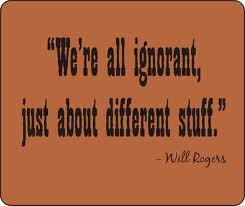
Can You Hire and Lead the Ignorant?

In a meeting recently I was with a group of people deliberating the hiring of a leader for a not for profit organization.  One observation was a lack of experience in a fairly important area.  A wise member of our group pointed out that it could be a good thing because ignorance = fresh eyes.  We all agreed that it was a good choice, but only if we all committed to supporting this new leader and connected her with a mentor.  We committed.

I like the word ignorance.  I like using it in front of groups because people snicker, almost like it is some sort of soft cussing word.  I have to remind people that it just means I don’t know.  Not I can’t know or I will never know . . . just I don’t know.

Here are some rules for hiring ignorance:

  1. DO IT if you see passion and gifts that get you excited about having this person thinking with you AND you are committed to #2.
  2. DO IT if you are ready to actively support (mentor/coach) for 6-12 months and forgive some mistakes.
  3. DON’T DO IT if your industry is too complex/specialized, you are too busy, and your team is too talented to be patient with a learner.  You might read this as sarcasm – but I really mean don’t do it.  If any of these three things are true or perceived to be true it is not a good place to shed ignorance.
  4. DON’T DO IT if you sense a comfort with the ignorance – if there is not hunger to leave that state.  Look somewhere else.

Ignorance is actually the basis of a good development question for leaders and followers alike. 

  • What do you feel ignorant about right now? 
  • What would it mean to have that feeling go away?
  • What is one thing I could do to help make it go away?

Carry that word around with you for a couple days and see what you notice.