3 Skills To Become a More Powerful Giver

3 Skills To Become a More Powerful Giver

Powerful Giver? As I wrote it, the word oxymoron came to mind…

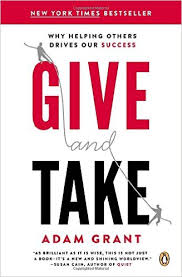
In my last post, I introduced you to Give and Take by Adam Grant and his presentation of the styles of giver, matcher, and taker. To conclude that givers will find more success is not accurate, because like any strength overused, it can become a weakness and negatively impact effectiveness. Here are the three traps for the giver style:

  • Too trusting
  • Too empathetic
  • Too timid

One of my favorite parts of Adam Grant’s book was his section on the learnings that will make givers more effective, based on the outcomes they and their businesses achieve.

Here they are:

  1. Sincerity screening: Givers need to keep trusting most of the people most of the time, and become skilled at recognizing fakers and takers. I am always looking for collaborators, and once I was connected with an individual with an idea and decided to partner with him to make the idea a reality. After four meetings a pattern emerged – we left every meeting with assignments, and every time we got back together he presented his work without ever asking for my input. Finally, after about 40 hours of work, I stopped following up with him and stepped away. He was a taker. I have learned to watch closely for someone to accept the ideas of others, as a test for recognizing fakers and takers. This is a key skill for givers, and I have learned it.
  2. Generous tit for tat: Givers do so without expecting anything back, and yet the strong empathy they possess can create a forgiving nature that gets in the way of accountability conversations. In this case, creating an environment where their roles and deliverables are clear is essential. This allows empathy (forgiveness) to be present, but it is balanced by clear expectations. Having clear deliverables helps temper the desire for endless second chances. It is one reason I love the EOS® (Entrepreneurial Operating System®) as a tool for leadership teams, because expectations stay clear.
  3. Learn to negotiate (assertiveness and advocacy paradox): Both this book and Lean In by Sheryl Sandberg share research that concludes women are less effective at negotiating than men, and this contributes to salary discrepancies with male counterparts. When you equip a giver with this skill, outcomes change. I am a giver, and recently two friends mentored me on my ability to negotiate project rates with clients. The simple skill we practiced together? State my normal rate – and stop talking. Seems simple, but I found myself trying to justify it or soften it because it felt awkward. The outcome? I am more assertive, and it increased my ability to get what I am worth. I still serve, and I do it more strategically and intentionally, instead of by accident.

Are you a giver? If you are (based on the assessment), which of these skills would make you more effective as a people-centered leader?

I believe that Learning + Doing  = Growth. Give and Take is a great book because it makes my value come alive, and this is a leadership lesson that will make you a more powerful giver.

Listen . . . Lead. Repeat often!

Are you a Giver or a Taker?

Are you a Giver or a Taker?

Great conversations start with a question, so here is one:

In approaching relationships with others, are you more of a Giver or a Taker?

I look forward to asking a group this question; I imagine a room full of leaders, and my prediction is 70% would identify themselves as givers. After all the talk of servant leadership – and Jim Collins’ research shared in Good to Great that connects an organization’s success with the presence of a level 5 leader (his term for servant leader) – a majority of leaders would put their hands up because we all know what we ought to do.

I’ve just finished Adam Grant’s book, Give and Take: Why Helping Others Drives Our Success. He shares two lists of values that he uses in his research to help identify a primary style. He considers how an individual rates the importance of each of the following:

List 1

  • Wealth (money, material possessions)
  • Power (dominance, control over others)
  • Pleasure (enjoying life)
  • Winning (doing better than others)

List 2

  • Helpfulness (working for the well-being of others)
  • Responsibility (being dependable)
  • Social justice (caring for the disadvantaged)
  • Compassion (responding to the needs of others)

As you look at these lists, does it change how you would answer this question? In the last evaluation where you received feedback, which list did it point to?

The two books that stand out for me on this topic are The Servant: A Simple Story About the True Essence of Leadership by James C. Hunter and The Go-Giver: A Little Story About a Powerful Business Idea by Bob Burg and John David Mann. While I loved both of these, the Adam Grant book I just finished stands out because of the academic approach the author takes in sharing the research behind givers and takers and, in the end, how he uses research to answer the question – Who achieves a higher level of performance and/or impact?

Of course he includes an assessment, with the option to get input from others. I scored a 66% Giver and 33% Taker on my self-assessment (Whew!). Now the hard-er part: asking others for their input. If you have seen my JoHari Window tutorial, this is the part where we ask for feedback to reveal blindspots. Look for that in another post . . .

So, are you a Giver or a Taker? Take 5 minutes to take the self-assessment.

People-centered leaders are not perfect, but they are purposeful about creating space where ‘List 2’ needs are mentioned and met.

Listen . . . Lead. Repeat often!

Final thought for EOS leaders – Look for a future post focused on the habits that are part of the EOS (Entrepreneurial Operating System) and how leaders can make certain behaviors habits.

3 Difficult Conversations that People-Centered Leaders Have Regularly

3 Difficult Conversations that People-Centered Leaders Have Regularly

Great conversations start with a question ~ Scott Patchin

When we ask questions of people and provide space for them to tell us about themselves and share their thoughts, it has the same neurological effect as feeding them or giving them money.

When we ask powerful questions of people, it fills up the OPEN part of the Johari Window. It lets us, as leaders, deal with tangible things in our decision-making, and takes the guess work out of what our team thinks of the change that is happening or the work they are doing.

People-centered leaders find ways to have these difficult conversations on a regular basis:

  1. How am I making your job harder? There are several ways to ask this. If you look in the one-on-one templates I have published, you will see this mining for frustrations is the focus of some of the questions.
  2. What is going well this week? This is a difficult conversation for people who are wired to solve problems and overwhelmed with a fast-paced business to manage. When we ask and answer this question, it forces us to pause and celebrate. It also reminds our team of the progress we have made.
  3. What do you want in the future from your work? Your life? Shifting perspective to the future is important and difficult. There are two questions on the development plan template I share. Having asked them to over one hundred people, I have seen emotions flow from fear to excitement.

Are you a people-centered leader? How regularly are you having these conversations, and how effective are you at having them?

Great conversations start with a question – and people-centered leaderships is about having honest conversations that lead to thoughtful conversations and improved performance.

Listen . . . Lead. Repeat often!

Documize: 1 Tip for creating and leading a safe environment for your team

Documize: 1 Tip for creating and leading a safe environment for your team

Documize.

Last week, I was leading an EOS® (Entrepreneurial Operating System®) session and this word came out of my mouth. I did not know I did it. Within a minute, one of the leaders I was working with said “Scott, what is documize? You just said it.” As I paused, another leader spoke up and said he heard it too.

Have you ever said something stupid, or uttered words that in hindsight did not accurately represent what you really meant?

That’s exactly where I was. One of the desired outcomes of my work with teams is to help them become healthy and smart together, which requires a high degree of trust. Since I teach it, I challenge myself to model the things that are the big contributors to trust and safety.

So, I held back the urge to say “I did not say that . . ” or “Yeah, but . . . . ” and just smiled and thanked them for making me aware of that. I then made up a fictitious definition that conjoined ‘document’ and ‘systemize’, and asked the team for the intellectual property rights. Then we moved on to a productive day of learning and planning.

In a world where people are increasingly attacked for what they say, and less emphasis is put on conversations around “What did you mean?” or “Just clarify and apologize and move on….” – safety is a gift. This leadership team provided it for me, and I accepted it.

How safe is the environment in your leadership team? Creating it takes some diligence, but the open debate and unmeasured/unedited comments that people share could be the difference between a successful year and a cash or quality emergency that takes months to fix.

Documize – It is my constant reminder that I get to work in special, safe places. Are you creating such spaces with your actions?

Listen . . . Lead. Repeat often!

Why learning TOGETHER is best – the data!

Why learning TOGETHER is best – the data!

I recently shared My 7 Favorite Books for a Leadership Book Study Group – and something great happened. A conversation started with a leader who wanted to help me (and you) get smarter faster.
An organization called the NTL Institute published their findings on the average retention rate of different teaching methods.
Here is the data:
  • Lecture – 5%
  • Reading – 10%
  • Audio/Visual – 20%
  • Discussion Group – 50%
  • Practice by Doing – 75%
  • Teaching Others – 90%

In other words – you will only remember about 5% of what you learn by lecture, while a full 90% of information will be retained when you are teaching others!

Read my tips for making a book group a very effective learning method, and you will see the tie to discussion/practice/teaching that will move you quickly from 10% to 50%+.

Recently, a CEO I work with to deliver a learning program (Paul Doyle – Leaderwork) shared some information he read: the annual spend in the United States on leadership training is between $14 and $50 billion each year – and there are approximately 15 million people in leadership roles in the US. How many of you have been to programs that largely focus on reading and lecture? I have spent two decades in companies of various sizes/industries and my experience is that lecture/reading is the norm.

I know many of my readers are leaders looking for tips to develop themselves and their teams. Make it a goal in 2017 to push for more conversations, practice, and learning in groups – even if it means slowing down the process to practice and reflect.

Listen . . . Lead. Repeat often!

Empathy 2.0: The power of leaders becoming students

Empathy 2.0: The power of leaders becoming students

I just ended a vacation where our four children were around a lot. One of my goals was to listen, and I also found myself reading one book they all recommended (Love Does: Discover a Secretly Incredible Life in an Ordinary World by Bob Goff) and starting a second book recommended by my oldest daughter (Give and Take: Why Helping Others Drives Our Success by Adam M. Grant). The reading focus was in-line with my listening strategy.  Let me explain . . .

Last month I published my 7 favorite books for a leadership book study. The last book was The CEO’s favorite book. I did that because picking someone else’s favorite books automatically puts you in a listening mode because they love it and `will want to talk about it. For leaders, when you hear someone talking about a book, especially one that is motivational or work related, it is your opportunity to listen.

Walking by the opportunity could be an indicator of what I call intellectual arrogance, which is simply defined as possessed intelligence to a level that blinds us from entertaining another truth.

Walking by the opportunity could also be an indicator of OBN leadership (defined in my book as the Ought, But Not leadership). I believe in the developing of my people, but when given the opportunity to join in their learning I chose not to. People-centered leaders see that an opportunity to listen and

Don’t walk by too many of these opportunities, whether you are leading at home or at work

When the student is ready the teacher will appear.

It is a powerful statement by a leader to become the student. Powerful things will happen in that space. Remember that I titled this post Empathy 2.0. People-centered leaders are committed to finding time to see the world through the eyes of their people.

As you think about development goals for 2017, what about adding Ask each person on my team to teach me something. Here is your goal for being taught:  Success is learning it and applying that learning successfully – and my teacher will judge ‘successfully’.

Listen . . Lead. Repeat often.

What’s your guarantee?

What’s your guarantee?

Every business does not have a guarantee. But should you?

Less than half of all businesses have a guarantee, and when I work with EOS® clients this is hard for them to do, because once you say it people might use it. Here are some guarantees that came to mind for me:

  • USPS has a guarantee on overnight shipments
  • Buffalo Wild Wings has a 15-minutes or it is free for lunch
  • Our local running shop, Gazelles, will accept shoes for return after you run on them if they don’t fit right
  • Bob Goff gives his phone number at the end of his book, Love Does, and guarantees he will answer

I use a strategic planning system my business called the Entrepreneurial Operating System® (EOS®) that I also use the clients. EOS® has a guarantee I use for the rest of my business – No contracts/No pay guarantee: If our work together does not meet your expectations don’t pay me. If it does, pay me when we are done.

Here is the thing about guarantees:

  • They tell people what you are serious about
  • The commitments make you better at what you do because you focus on meeting that pledge
  • It provides immediate feedback for something you need to fix

My personal experience is that I am focused on preparing with my client for planning sessions because bringing value for them is my guarantee, and it takes work. But it is work that I believe in, and making it fundamentally makes me work at improving my capacity to deliver excellence every time I work.

I think it is a question I will start asking all leaders – What do you guarantee to your team? Your peers? Your leader?

What are you willing to guarantee?

fyi – I called Bob Goff and he picked up. 🙂

Tip: Instead of asking your people what their guarantee is, ask:

  • What are the communication standards that guide you? (answer in terms of preferred method and timing of responses)  
  • When I work with you how will I know it is going well?
  • How will I know if it is not going well?

Imagine the power of everyone on the team answering these, putting them on the wall, and then determining a standard for working together? That is a guarantee.


One practice for a Happy-er Holiday

One practice for a Happy-er Holiday

There will be lots of gathering happening over the next few weeks. Here is a bit of advice to make that time have more impact on the important relationships in your life.

Listen

It is one of those simple things that is hard to do. Here is an example I experienced in the last few months where listening helped me make a personal shift that will have an impact on the people that matter most to me.

My wife and children have all read a book call Love Does by Bob Goff. They quote him, laugh about the fact that he shares his phone number in the book, watch his Facebook broadcasts, and my son went so far as to successfully book him for a speaking event as part of a class project. I have never read his book. My reasoning was simple – I have read a lot of motivational/self-help books and my cornerstones are Parker Palmer – Let Your Life Speak and a few others that speak to me. The problem that hit me was this book spoke to THEM, and they are very special to me, and seeing the world through their eyes is harder the older I get. I am on page 183 and I will be done by Christmas Eve – and I love the book. I can’t wait to talk about the book with my family and to call Bob directly!

I caught myself in what I name with clients as “intellectual arrogance” – which translates into I know enough to not listen to you. It took me a year of resisting to realize this, and I am thankful I did.

When I am asked to sign my book, I do so with the simple line – Listen . . Lead. Repeat often!

As we head off for the holidays I would like to leave you with the words I am going to try hard to live into over the holidays.  Listen . . . Love. Repeat often!

Many blessings to you, your teams, and your families.

Journey to Mastery – What’s in a name? #wordsmatter

I like the word Mastery. The definition (Merriam-Webster) = possession or display of great skill or technique. I love watching Mastery at work, whether it’s a Zamboni driver at an ice rink, a teacher managing a learning space, or an engineer sharing a process created for producing great parts. True Mastery energizes me because of the energy coming from the master.

I like the word so much I named my proven process for individual development Journey to Mastery. Here is why and how.

Mastery: George Leonard wrote a book called Mastery in 1991. I give a copy to every career planning client as the ultimate guide to finding success and fulfillment in life. When a friend challenged me on this book vs a few other more popular books on this topic, I shared my rule – I don’t recommend books where the author’s picture is on the cover. Mastery is work, and while it requires inspiration, it requires a whole lot of perspiration – so I look for people who are going to help create inner strength for the journey.

Journey: This word evokes a trip from one place to another. The special part of this journey is that we don’t know exactly where it ends, but we know what a journey takes: movement, ability to react to change, and endurance.

I outline the basic steps in my publication – Own It! 5 Tips for Managing Your Career and Performance.  This time of year is a good time to return to Step 5.5 – the check-in on your progress and resetting your direction/goals for the coming year. Mastery is not about wandering, and Step 5.5 helps reset the purpose of your journey.

Another great quote from Leonard also reminds us that the Journey to Mastery is inclusive; we just need to focus on reminding ALL people, especially those that need some extra help/support because they don’t believe it is for them.

It’s available to anyone who is willing to get on the path and stay on it – regardless of age, sex, or previous experience.

How are you doing on your Journey to Mastery? How are you promoting it and supporting it in your own organization?

2017 is a great year to start.

Wondering HOW to start?

My gift to you: An outline of my proven process, Journey to Mastery – and it comes without a picture of me. 🙂

3 Reasons Career Discussions Don’t Happen; 2.5 Steps to Start

3 Reasons Career Discussions Don’t Happen; 2.5 Steps to Start

I sat down with a leader to talk about succession, and her biggest concern was the age of two key people and the timing of their retirement. When I asked if she had initiated a conversation about their career plans, her answer was, “My lawyer told me not to because they could sue me for age discrimination.” When I asked what their counsel has told them they could do, she answered, “He never told me that.” I was tempted to ask if they had only paid half the standard hourly rate for that conversation, but held back.

This is not a post about age issues, but a conversation around the barriers I see in leaders around career conversations. The reality is there are risks in these conversations because plan <> promise, and yet having these conversations will make you stand out as a leader and will engage your best people even more.

Reason 1: Don’t know where to start (Ignorance) – When I lay out my proven process to leaders, you can see the tension release. They realize how simple it is and come to see their role as more guide/partner than a leader.

Reason 2: Bad past experience (Scared) – The example I shared above is a great example of scared. The other situation is a bad past experience with career plans because they were laid off in 2007-2009 and still see ‘keeping my job’ as a career goal. They are afraid to say it or assume that is what the answer is. One reason I start my own process with capturing strengths and successes is to energize people.

Reason 3: Too much other work (No time) – I received this from a leader, and when I asked, “How much of your time do you think this will take?” they started a list: meetings, having to fill out a bunch of forms, constantly monitor progress, schedule future meetings, and generally do lots of extra work. When I shared with them my process and their role of being present, asking questions, and giving the ownership to the individual, they were pleasantly surprised and this barrier disappeared. It is work, and the work is largely on the individual if it done correctly. Time is a concern, but it should not be a barrier.

In 2015, I wrote Own It! 5 Tips for Managing Your Career and Performance. This stemmed from my experiences helping leaders become more people-centered, in which I noticed them struggling with some of the basic performance conversations with their people. Own It! was written to be handed to someone so they saw their role and each tip becomes a step in the conversation between leader and team member.

Step 1: Ask if it would be of value? If they say yes, hand them Own It! and Peter Drucker’s Managing Oneself (Harvard Business Review) to read. If they say no, and you are okay that they have no plan, then focus your efforts on other people on your team.

Step 2: Have them pick the questions around long-term or short-term goals (p. 4 of Own It!). Make the first meeting about reviewing their answers. Ask questions to better understand their answers, and provide them with input on how those fit into some of the challenges you face as a leader and organization.

Step 2.5: Write down their answers and any goals/actions set because of the conversation; set a date to review them in 6-12 months. (Here is a template if you need one.) Around 80% of the time there will be some tangible things the individual can do, either start exploring their plan through gathering more information or actually doing work or start learning around a role they aspire to do.

One of my favorite quotes to frame this whole effort is:

A bird doesn’t sing because it has an answer, it sings because it has a song ~ Maya Angelou


How would it change your own journey if you saw your career plans as a song you wanted to sing instead of an answer you were trying to find/provide?

Go Own It!

My top blog posts on this topic: