Listening – Add This 360 Habit

Recently a leader asked me a question:  How can I know what my people think about how I am leading?

My response – ask.  Then I filled in the blanks.

This leader had a very strong habit of weekly one on ones with their team (the 2nd question on the Talent Scorecard).  Building off that habit, at the end of each conversation ask the question: What is one thing that I can do (or stop doing) that would help you the most?

First, deal with the actions associated with the answer.  Secondly, write down what people share in a single place – and make it a personal habit review the list every couple of months, maybe in your own one on one with your leader.  Here is an example of how this would work.

If your recent input is centered around comments like:  “Give me a heads up when a leadership change is happening in another group.  I have been surprised lately and received some questions from my own team that caught me off guard.” or “Let me know what you are thinking.  You have seemed distracted lately and I often wonder what I can do to help.”  Action plan – Need to focus/refocus on communication with your team and keeping them in the loop.  Maybe add weekly phone call/stand-up on Monday am for 5-7 minutes to check-in or carve out a 3 minute update from you at your team meetings.

Talent management is about great conversations.  We use 360 evaluations as a tool to help leaders get feedback from others on what they could do to be more effective.  Making this one question a habit integrates the 360 process into your conversations.
Process Trumps Solution – If relationships matter . . .

If relationships matter, then the process trumps the solution.

At a recent Family Business Alliance event in Grand Rapids, Michigan, family business expert Greg McCann shared this quote in the context of a story.  The story was of a older business owner who had just put together a plan for passing his business on to his wife and two sons after his death.  The plan assembled by his lawyer and accountants put one son in charge who was part of the business and desired the top job, and make the other two financially comfortable.  When McCann asked him when he was going to share the plan, his response was “when I die it will be part of my will.”  McCann’s only advice was simple – if you want this to work, they need to know about it now so that they can work out the details and any disagreements or problems can be addressed while you are here.  If relationships matter (this is a family, so this IS the goal), then process trumps the solution.

We can learn a lot in talent management and leadership about building relationships from family business.  I created a talent calendar with the single goal of defining the events (process) that produced the best opportunity to talk, listen, support, and problem solve throughout the year for a leader and a follower. While content is important, presence and process is the goal.

I am reminded of a study shared in the book SWAY by Ori and Ram Brafman.  A survey given to convicted felons about the judicial process and how fairly they were treated.  In the end, two factors emerged as significant on their perception of fairness.  As was expected, the inmates placed a lot of importance on the outcome, which was the sentence they received.  But almost equally weighted was how much time their lawyer spent with them.  Process matters.

If relationships matter, then open and honest dialogue during process of setting the goal is more important than the goal being set.  Talent management is about process and the relationships that happen when it is done well.

Leadership – Keeping it Simple

I started a session with a leadership team by asking them the first four questions on the Talent Scorecard.  The results were less than impressive for questions 1, 3, and 4, but everyone nailed question #2 – I have one on ones with my people at least once a month. Their question for me was:  Is this good?

My answer:  Remember the perfect balance of talent management conversations is 30-30-40 (30% focus on past, 30% focus on present, 40% on the future).  Regular conversations with your people makes up for lots of deficiencies.  I believe the performance conversation once a year is critical to help establish goals, document/revise career plans, and help cascade organizational strategies throughout the ranks of leadership.  So missing/being late is not positive, but if I was given a choice of being late for those or missing one on ones, I would rather see people struggle with timely yearly performance conversations.

No group has ever asked me that question or had those specific results.  It was a great conversation and I left it feeling wiser.  I hope they had the same experience. 🙂

Talent management is about great conversations, and seeing a score on the habits that create the conversations is eye opening.  The great thing about critiquing ourselves is the action plan is built into the answer.  If you are not doing it, then do it.  Within the conversations, the improvement plan is as simple.  First, share with your team member your goal of having a 30-30-40 balance in terms of focus and their ownership of the agenda -then work towards those goals.  Secondly, at the end of each conversation ask –  “What are you thoughts on what we can do to make this more valuable for you?”  Over the course of 3-6 months it will just get better.

I will leave you with Ken Blanchard’s definition of leadership – “Leadership is an influence process.  It is about working with people to accomplish their goals and the goals of the organization.” With is only possible if there is a conversation – with equal parts of listening and talking.

Wonder how your habits are promoting great talent management on your team?  The scorecard is free – here is the link.

How to get better at delivering feedback? First, get better at receiving it.

I am in the process of reading/reviewing Jodi Glickman’s book Great On The Job – What To Say, How To Say It – The Secrets of Getting Ahead.  As I go through it I will share some thoughts that make me go Hmmmm . . .  This posting is based on one of those moments.

What is the secret to speaking what you feel about someones performance and having it end up in a place where the relationship is still intact (or stronger) and your thoughts are heard?

The first and only tip – Focus on how you request and receive feedback from others.

I read Jodi Glickman’s book Great on the Job, and one quote is stuck in my head.  It is under the chapter of Ask for Feedback and the heading of Say Thank You.  The quote is (p. 129):

The goal, however, is continuous improvement and learning, not just feeling good.  If you have a tough feedback session, remind yourself that the goal of the session is not to make you feel good.  The goal is to make you better at your job.


Talent management is about great conversations, and the definition of a conversation is a form of interactive, spontaneous communication between two or more people who are following rules of etiquette. (wikipedia)  We all need to hear what is going well, but we have to be able to hear what we can do better.  At the heart of this conversation is a lot of smaller conversations around –  How am I doing?  What is going well and where do I need to improve?

How can we use this as individuals?

First, recognize that giving feedback is a lost art for many leaders who are, themselves, caught in a spot where nobody is telling them what they are doing well (when is the last time you told your leader about something they did well?) and the list of to do’s is only getting longer.  So, our job as individuals is to ask for it well,  stay calm in the moment of receiving it, and respond by saying thank you without our faces getting red or our jaws tightening.  Then do something with it that creates momentum for you and the organization.

Second, put extra focus into defining your role/objectives and own the one on one time with your leader.  This makes talking about performance  easier.  Here is a template if you want an example of what that looks like.

Getting and giving good feedback is not easy, but it is pretty simple.  I wonder what would happen if both leaders and followers read this one chapter together and tried it for a couple of months.  My guess is some great conversations would happen.

What tips do you have for giving/getting good feedback?

The Hidden(and not so hidden) Impact Of A Question

A recent WSJ article highlighted the impact on the brain of being able to talk about ourselves.  Talking about ourselves (which we spend 40% of our conversations doing) triggers the same sensation of pleasure in the brain as food or money.  It is a great article – here is the link.

Talent management is about having great conversations.  Sure the processes (interview/selection, onboarding, performance, succession planning, one on ones, etc) are important, but the impact of being present in that time and having both parties open to sharing, questioning, and listening makes the biggest impact.  I like this article because it provides some science behind what we know – it is healthy for us if someone is there to listen.

So what to do with this?  Here are two ways to enable more listening as a leader and one as a follower:

For the leader:

  1. Make the one on one the responsibility of the your team member.  Their agenda (with imput from you) to cover what they need to and what they want to.  (Here is a link to a template and calendar for this)  There should be a time limit – but let them talk, and you listen.
  2. Make a habit to get groups of employees together monthly to celebrate something (birthdays, employment anniversaries, etc.) and listen.

For the Follower:

  1. When your leader comes around or asks “Are their any questions?”, be ready to ask.  Here are two to keep around:  What is one thing that has been keeping you up at night lately?  What have you learned lately?

In the book Bowling Alone by Robert Putnam he makes the case that if someone is a smoker and a loner it will have a greater impact on their life expectancy if they kept smoking and found some friends.  It is healthy to be listened to, and we need to remember to return the favor.

Your Story – Are You Writing It?

One revelation I’ve had over the past three years in business for myself and in volunteering to work with people trying to get back into the job market is how easy it is to stop living purposefully.  This becomes apparent when someone loses a job and has to sit down and write a resume.  Too often it becomes a narrative of activity, but lacks clarifying themes of what we are passionate about and how we have continued to reflect on, refine, and apply our gifts to the world around us.

What are the themes to your story? I captured the key pieces into something I call trUYou™, which is a model to focus people on defining their Talents, Passions, Rewards, and Realities.trUYou: our model for developing self-awareness

How have your themes made a difference at work and outside of work for you?  What are some of those successes?  Where have you failed and learned?

I partnered with Sara Kay Clark of Footlocker.com to create an experience at Mightybell.com that will take people through a 6 step process to be purposeful about sharing and building their U.  We define U as the personal brand the world sees, and we use the single letter U because we want to get away from the advertising/Madision Avenue imagery that the word brand often evokes.  Interested?  Here is a link to the experience – go see for yourself and join other travelers (a Mightybell term).

This Mightybell experience is a cross between a social experiment and a passionate charge to help people live purposefully.  I often say talent management is a great conversation.  As you will see in the Mightybell experience, we encourage you to have a conversation with yourself (ie: self reflection), a friend, and your manager.  The goal is to more purposefully apply our talents and passions in such a way that it makes a difference in the organizations/communities where we are and writes a story that can be told later.   That is our U.

Do you know someone who is working on defining and applying their U? Pass on this link and let them join other travelers in the journey.

Here is to living and working purposefully. 🙂

3 Simple Habits To Help Strengthen Teams

Are there things about you that people do not know?  We all know the answer to that question – but is anything on that list that others need to know?  Maybe you love to problem solve.  Maybe you led a team of 20 people at one point in your career.  Maybe there is some part of the business you want to learn more about.  Maybe you get 150 emails a day and prefer phone calls.

Are there things about you that others see and you do not?

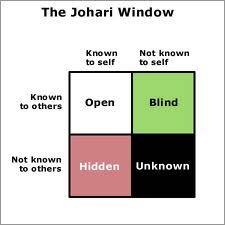
Several years ago a friend shared some feedback with me that we still laugh about. He told me that whenever he told a story, I usually followed up with a better one. I did not realize it – but watched myself for a few days and there it was – the proof.   It was funny, and I was unaware of it.   In JoHari Window language, it was a BLIND SPOT.Talent Management tool - JoHari Window

If you are not familiar with it, here is a link to a short YouTube video that explains it.

Talent management is about having great conversations.  When we talk, we develop relationships with the people around us, and at the core of those relationships is knowledge that we bring to every interaction.

Here are 3 tips to continually develop your team and teamwork.

TIP 1: As part of any team meeting spend 5 minutes asking/answering these questions:

  • This week – What are two wins?  What is keeping me up at night?

These questions are almost guaranteed to  keep a steady flow of HIDDEN items that will be valuable for the team to know.

TIP 2: When you have an off-site and you are looking for ways to get people sharing/laughing – have everyone answer the following questions for themselves and their teammates.  Next, go around the room and have others share first, seeing if they matched answers with the individual.

  • What is one thing I am really good at doing?
  • How do you know I am having a good day?
  • How do you know when I am stressed?
  • How do you know I am listening / not listening?

After this, watch the JoHari Window video and ask the questions:  What came out in our last discussion that could be considered HIDDEN? A BLIND SPOT?  What is the impact of having that information in the OPEN area for you?  For this team?  What is one way we can be more purposeful about these conversations?

TIP 3: I often use a tool called the Team Member Fact Sheet to get people talking.  Using it as a tool to get to know new teammates or test the knowledge of existing teams.

Talent management is about great conversations.  Go have one!

Follower: How Often Should I Get Feedback?

I am in the process of reading/reviewing Jodi Glickman’s book Great On The Job – What To Say, How To Say It – The Secrets of Getting Ahead.  Jodi has an impressive list of college clients, two being Harvard and Cornell, that bring her in to prepare their students for success on the job.  As I go through it I will share some thoughts that make me go Hmmmm . . .  This posting is based on one of those moments.

I think our society is confused when it comes to feedback.  We lighten it with kids, with the intention of preserving their self esteem.  We worry about Millennials because the research says they need more.  In fact, at the height of the economic meltdown a study was done about what motivates people and managers said “positive feedback/thank you”, while their people said “making progress on my work”.  So what is the bottom line for feedback?

Jodi Glickman addresses the topic with new/soon to be new graduates in a way that anyone can benefit.

First, she shares a window – asking for it once a year is not enough and once a month is too often.

Secondly, she shares a very simple method for setting up the situation so the feedback can be given and has value for both the leader and the individual.  The two steps are:

  1. Phase I:  Preparation
  2. Phase II:  The Conversation

While both are good steps, I love Phase I.  Too often I see people jumping into a deep conversation with a peer or leader with no preparation for the person being asked to give it.  It usually ends with something generic like “It was great”.  Glickman’s quote about feedback that should be posted on cubicles everywhere is:

. . . the goal of the feedback is not to make you feel good.  The goal is to make you better at your job. (p. 129)

The author points out the best way to setup a good feedback session is to plant the seed before asking for feedback.  For example, if your focus is presentation skills, maybe planting the seed would sound like this:  “Julie, I am really trying to focus on my presentation skills, so could I ask a favor?  I’d welcome some feedback on my presentation after our client meeting next week.  If you could jot down some thoughts, I will setup some time for us to talk the following week.”

This builds off a core belief I have around Building Rhythm(from my trUPerformance™ model) in how we talk about our work, our priorities, and our needs.  Inherent in the one one one template I use with clients is the routine nature of our conversation and the predictable topics so feedback is continually mined (both positive and negative) without having to ask for it.

Talent management is about great conversations.  This book is loaded with tips on how, as a follower, to make those happen.

The final review of this book is coming next month, but so far I have really enjoyed the content and the way it is presented.

Social Media, Relationships, and Leadership

Relationships are built through connections.  Connections happen when we have great conversations – – over and over again.  The numbers I preach to leaders and followers alike are:

  • 5 to 1: The optimal number of positive to negative interactions in a marriage
  • 3 to 1: The optimal number of positive to negative interactions in a work relationship
  • 3:  If we have this many close friends at work we are 96% more likely to be extremely satisfied with our life
  • If I were a smoker and a loner – I will live longer if I keep smoking and find some friends

Then comes social media.  Recently I was wondering if some day I would read a headline that would turn my world/beliefs upside down.  Something like:

  • Facebook changing the way we build close friends
  • The Tweets/day  = Happiness number is known:  14
  • Top 5 social media tools for creating healthy marriages and friendships
  • Keep Smoking, but open a Facebook account

My gut tells me that ignoring social media at work and in my life, in general, is the wrong move.  I also believe the fundamental things I preach to leaders and followers about success in work, building healthy relationships, building strong teams, and building strong companies will not change.

Then I stumbled upon a great TED talk that took on the topic of social media from Sherry Turkle called Connected, but alone? . I think I will stick with what my gut tells me – even as I continue to use Foursquare.  fyi – I just became Mayor of my street and no one treats me differently. 🙂

EXTRA:  An idea for using this video with high potentials/leadership groups: Watch the video (18 minutes) and explore the following questions:

  • How do I personally use social media tools?  What benefits do they provide me?
  • How do some of the important people in my life use them?
  • What comments from the video stand out for me?  Agree?  Disagree?
  • How can I use this to become better – Leaders?  Teammates?  Friends?  (Make one commitment)

Do You Know How to Start and End a Conversation?

I am in the process of reading/reviewing Jodi Glickman’s book Great On The Job – What To Say, How To Say It – The Secrets of Getting Ahead.  As I go through it I will share some thoughts that make me go Hmmmm . . .  This posting is based on one of those moments.

I watch the eyes, because they always tell the truth. 

Have you ever experienced the glazed, lifeless stare that happens within 10 seconds of starting a conversation with someone?  It is most often the result of them being in the middle of something and me being too urgent to simply ask “Is this a good time?”

Jodi Glickman shares her secrets to opening and closing a conversation under a section she refers to as The Basics.  How to avoid the lifeless stare is addressed up front.  It made me chuckle when she talked about the feedback she received initially from two trusted friends that this section was too basic.  I loved it!  When I talk to people about talent management I stress the partnership between a leader and a follower, and the transparency that has to exist for the relationship to work.  Being specific about What I need is critical, and recognizing that this is not the right time to talk is equally as critical.  In the era of open office doors/no doors at all and cell phones that make everyone accessible 24/7, it is important to be able to say not the right time.

One of the unique pieces of her approach was the ending.  In it she shares two steps:

  1. Thank you
  2. Forward momentum


I love the concept of forward momentum.  Think of it – we have talked and here is where I am going next.  Imagine if every interaction led to some sort of forward momentum?  In talent management: forward momentum = ownership = engagement = great followership

An exercise: What percent of your conversations today lead to forward momentum?