Hidden leadership secret? Showing Up

Hidden leadership secret? Showing Up

I spent a day with a group of leaders last week, and one of our topics in management was walking around. Each person was given an assignment to go do it daily for a week and journal about it. Only a third of the class did it, but those who did had some great stories of what they heard and observed.

The rest missed an opportunity. If you believe in people-centered leadership and the basic belief that people work harder when they feel cared for/listened to (and when they care about/listen to the people around them), then showing up is what you do – always. Do any of these statements reflect your commitment to show up?

  • You show up for potlucks or any event organized by your team around food
  • You show up at wakes and funerals
  • You send hand-written notes when there is a birth, death, or marriage
  • You walk around the office routinely, with the single goal to listen to and learn what your people are thinking about
  • You tell people what you are thinking about – both celebration and sorrows
  • You show up at the fundraisers your people care deeply for
  • You show up in the lunch room/break room and talk
  • You complete evaluations on-time
  • You show up for one-on-ones, or reschedule quickly

Showing up always starts as a physical presence. When it is done well, at some point it moves to a more emotional presence. This is where agape love kicks in. What is agape love? Read about it in People-Centered Performance.

I lost my father a couple of weeks ago after 90 years of life. As I thought about what I admired about him as a father, the top on the list was he showed up. Once I was challenged by a coach that showing up was not enough. I believe he was wrong, because when we show up consistently relationships are changed. When I look around at broken friendships, failed leaders, dysfunctional teams, and lonely people – it always seemed to start when someone stopped showing up.

I hope somebody writes the same thing about me someday. What about you?

Why don’t you try management by walking around for a week or so. Be part of the 33% that get it.

When you are ready – why don’t you try parenting by walking around and marriage by walking around?

Listen . . . Lead. Repeat often!

The key to a long journey? Focus on the next town. (Thanks, Gary.)

Yesterday on my daily run with my golden-doodle, I ended up walking with a guy named Gary. We have passed each other on the trail for two years and never really spoken. Sometimes I realize it is time to walk and listen, and this was one of those moments.

As Gary told me about his journey across the 2000+ mile Appalachian Trail in 2008, I asked him this question (remember – great conversations start with a question):

“What is the trick to successfully completing the Appalachian Trail?”

Without much thought he answered,

“You just have to focus on the next town and not think about how far away Maine is.”

I thought of my EOS® (Entrepreneurial Operating System™) clients and how creating a vision for a company is critical, but establishing smaller goals and the disciplined execution of those goals is most critical.

Successful leaders learn to help their teams understand and stay focused on the next town. People-centered leaders invite their people into the process vs just sharing the goals.

Sometimes you just have to slow down and talk to the Gary’s you run into – they have a lot to share.

Listen . . . Lead. Repeat often.

What’s on people’s minds? Clicks and questions…

What’s on people’s minds? Clicks and questions…

We were moving into a new building, and created sessions with the CEO for all employees to learn about the move and ask questions. We told our CEO to go around and collect questions BEFORE answering any.

His agenda was architecture, timelines, space for growth, and decorations; their agenda was storage, kitchen areas, and noise/privacy. It was hard for him to not jump in with answers right away, but when each session ended he was excited about the time with his team and made better decisions around the change because of what he heard. The outcome was an amazingly effective move that provided the business with a momentum bump.

When we really listen…people tell us what’s on their mind. My #1 saying to new leaders is, “Mind reader is not in your job description. Focus on listening well, making leadership decisions based on what you hear, and repeat often.”

Listen . . . Lead. Repeat often!

Clicks are like questions. At my monthly business review with my marketing lead, we reviewed what you clicked on the most in the last 28 days. Here is what your clicks told me:

  1. Rock Planning Sheet – EOS template
  2. 5 Key Outcomes – Individual Development Plan Conversation
  3. Talent Management Templates

Your clicks show me a high concern for defining the bigger work you and your people are doing so it can be managed. They also show a desire to manage the longer-term development of your people. Based on many other conversations, I know most of your organizations are doing the evaluations but have never completed the formal development planning with your people.

In two weeks, I will facilitate a day of learning with a group of leaders in a leadership development program I helped create (LeaderWork). Your clicks have given me some great material to share as I help leaders work on connecting strategy to actions for their teams. That is the way good listening works.

Do any of these topics make you want to click? How are you gathering questions from your team this week? If you look at all the questions you are hearing, what new questions get generated for you?

Listen . . . Lead. Repeat often!

If you would like a different perspective on listening and leading, take a look at my JoHari Window video.

Wanted: Passionate, Hope-Filled Leaders

Wanted: Passionate, Hope-Filled Leaders

In the last three weeks, I have received two random requests for help from leadership teams. Have you ever been in a situation where you were asked to do something and you felt obligated to say yes? When a paying customer walks in, as a small business owner I am always looking for reasons to say yes. Here is my internal filter for requests, and since I use EOS (Entrepreneurial Operating System®), it is called my Core Focus™:

Passion: Maximizing individual growth and eliminating needless pain – moving to and past the tipping point of success.

Niche: Organizations with passionate, hope-filled leaders who are over-challenged and under-supported.

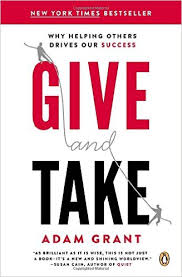
In my last two posts about Give and Take by Adam Grant, I shared the research around being a giver and the core skills all givers need to develop to be more effective. A second way to look at the Core Focus™ is that it helps you negotiate more effectively and be intentional about building relationships with Givers/Matchers in your life, offering a tit-for-tat by thinking through the challenge being offered. (see post to understand these)

In your role, what is your Core Focus™ and does it align with what you do well?

For your team, what is your Core Focus™ and does everyone agree with it?

In the end, I said yes to each opportunity. Each team is going to start by generating absolute clarity in their roles, creating absolute clarity around what the team needs to accomplish, and having an open discussion around the right seat for those people taking on leadership roles. Inherent in each of these discussions is the question, “What support do you need from your leader? Your teammates?” For each team, I am asking for help from the leaders involved. Without their willingness to be 70%-90% transparent about their own Core Focus™ and life priorities, this process will only set them and the team up for short-term failure.

Do you know your own Core Focus™? (read my whitepaper if you need to think that through)

Does your team have a Core Focus™?

You can do work without one, but you can’t achieve healthy growth as an individual or organization without one. That is where my passion of eliminating needless pain comes in – which is one of the main reasons I looked these two clients in the eye and said yes. It is that simple, and I know the work will not be that easy. But if they help, and I bring my best, we can figure it out.

(Note: People-centered leaders work on this with their teams and themselves often!)

If you missed it – watch Simon Sinek’s TEDTalk, How Great Leaders Inspire Action. Do you see the tie between why and Core Focus™?

3 Skills To Become a More Powerful Giver

3 Skills To Become a More Powerful Giver

Powerful Giver? As I wrote it, the word oxymoron came to mind…

In my last post, I introduced you to Give and Take by Adam Grant and his presentation of the styles of giver, matcher, and taker. To conclude that givers will find more success is not accurate, because like any strength overused, it can become a weakness and negatively impact effectiveness. Here are the three traps for the giver style:

  • Too trusting
  • Too empathetic
  • Too timid

One of my favorite parts of Adam Grant’s book was his section on the learnings that will make givers more effective, based on the outcomes they and their businesses achieve.

Here they are:

  1. Sincerity screening: Givers need to keep trusting most of the people most of the time, and become skilled at recognizing fakers and takers. I am always looking for collaborators, and once I was connected with an individual with an idea and decided to partner with him to make the idea a reality. After four meetings a pattern emerged – we left every meeting with assignments, and every time we got back together he presented his work without ever asking for my input. Finally, after about 40 hours of work, I stopped following up with him and stepped away. He was a taker. I have learned to watch closely for someone to accept the ideas of others, as a test for recognizing fakers and takers. This is a key skill for givers, and I have learned it.
  2. Generous tit for tat: Givers do so without expecting anything back, and yet the strong empathy they possess can create a forgiving nature that gets in the way of accountability conversations. In this case, creating an environment where their roles and deliverables are clear is essential. This allows empathy (forgiveness) to be present, but it is balanced by clear expectations. Having clear deliverables helps temper the desire for endless second chances. It is one reason I love the EOS® (Entrepreneurial Operating System®) as a tool for leadership teams, because expectations stay clear.
  3. Learn to negotiate (assertiveness and advocacy paradox): Both this book and Lean In by Sheryl Sandberg share research that concludes women are less effective at negotiating than men, and this contributes to salary discrepancies with male counterparts. When you equip a giver with this skill, outcomes change. I am a giver, and recently two friends mentored me on my ability to negotiate project rates with clients. The simple skill we practiced together? State my normal rate – and stop talking. Seems simple, but I found myself trying to justify it or soften it because it felt awkward. The outcome? I am more assertive, and it increased my ability to get what I am worth. I still serve, and I do it more strategically and intentionally, instead of by accident.

Are you a giver? If you are (based on the assessment), which of these skills would make you more effective as a people-centered leader?

I believe that Learning + Doing  = Growth. Give and Take is a great book because it makes my value come alive, and this is a leadership lesson that will make you a more powerful giver.

Listen . . . Lead. Repeat often!

Documize: 1 Tip for creating and leading a safe environment for your team

Documize: 1 Tip for creating and leading a safe environment for your team

Documize.

Last week, I was leading an EOS® (Entrepreneurial Operating System®) session and this word came out of my mouth. I did not know I did it. Within a minute, one of the leaders I was working with said “Scott, what is documize? You just said it.” As I paused, another leader spoke up and said he heard it too.

Have you ever said something stupid, or uttered words that in hindsight did not accurately represent what you really meant?

That’s exactly where I was. One of the desired outcomes of my work with teams is to help them become healthy and smart together, which requires a high degree of trust. Since I teach it, I challenge myself to model the things that are the big contributors to trust and safety.

So, I held back the urge to say “I did not say that . . ” or “Yeah, but . . . . ” and just smiled and thanked them for making me aware of that. I then made up a fictitious definition that conjoined ‘document’ and ‘systemize’, and asked the team for the intellectual property rights. Then we moved on to a productive day of learning and planning.

In a world where people are increasingly attacked for what they say, and less emphasis is put on conversations around “What did you mean?” or “Just clarify and apologize and move on….” – safety is a gift. This leadership team provided it for me, and I accepted it.

How safe is the environment in your leadership team? Creating it takes some diligence, but the open debate and unmeasured/unedited comments that people share could be the difference between a successful year and a cash or quality emergency that takes months to fix.

Documize – It is my constant reminder that I get to work in special, safe places. Are you creating such spaces with your actions?

Listen . . . Lead. Repeat often!

A Friday thought for parents/leaders – Thank you Bob Goff

A Friday thought for parents/leaders – Thank you Bob Goff

I shared in my last blog about Bob Goff’s guarantee of answering his phone when called. I called and here is what it said “You have reached Bob Goff. I am sorry but I am in a place where I don’t have cell service. Please email me at bob@bobgoff.com and I will get back with you promptly.” So I did and here is what I asked:

I asked:

Your final call to action was Love Does – So what do I do?  Our oldest son graduates in the spring and my wife and I have been coming along side him to support him in making a successful jump to work and life after college. I know you have been in this situation, so what advice would you give us about what we can do to help his transition?

Bob’s response:

Our son is just out of college too. We keep telling him about who he is, and I bite my lip before telling him what to do.  There’s a lot of “You’ve got this!” happening, and not a lot of “Here’s what you need to do.” It’s kind of hard because you and I do know what our kids should do, but having the confidence of a father is better than all the advice.

For leaders – What if, as leaders, we focused on showing confidence and providing support vs direction and oversight?

For parents – What if we practiced some of the same things at home that we do at work?

Finally, Bob provided a guarantee that he did not hit, after all, he did not answer the phone like he promised. Yet he gave me a reasonable option and followed up as promised (< 5 minutes). I could have called out his error, maybe even went so far as to point out the hypocrisy of his promise. That would have taken energy and framed my relationship with Bob as an adversary. The cost of doing that would have been in missing some good advice that has the potential to take me much farther in a role that I cherish – father.

Don’t be afraid of what guarantees might cost you, but have the courage to move the balance of your focus on what they tell the world about you. There will always be ‘gothch’ customers, and over time a guarantee could be a way to ask them to go away.

I am still a fan of guarantees, and I have EOS® (entrepreneurial operating system® to thank for that.  I am now a huge fan of Bob Goff, and it is because of a guarantee and the conversation that happened because of it. Thank you Bob!

Listen . . . Lead/Parent. Repeat often!

(ps. Bob Goff approved me sharing his advice – and responded to my request within an hour. 🙂 He gets it!)

What’s your guarantee?

What’s your guarantee?

Every business does not have a guarantee. But should you?

Less than half of all businesses have a guarantee, and when I work with EOS® clients this is hard for them to do, because once you say it people might use it. Here are some guarantees that came to mind for me:

  • USPS has a guarantee on overnight shipments
  • Buffalo Wild Wings has a 15-minutes or it is free for lunch
  • Our local running shop, Gazelles, will accept shoes for return after you run on them if they don’t fit right
  • Bob Goff gives his phone number at the end of his book, Love Does, and guarantees he will answer

I use a strategic planning system my business called the Entrepreneurial Operating System® (EOS®) that I also use the clients. EOS® has a guarantee I use for the rest of my business – No contracts/No pay guarantee: If our work together does not meet your expectations don’t pay me. If it does, pay me when we are done.

Here is the thing about guarantees:

  • They tell people what you are serious about
  • The commitments make you better at what you do because you focus on meeting that pledge
  • It provides immediate feedback for something you need to fix

My personal experience is that I am focused on preparing with my client for planning sessions because bringing value for them is my guarantee, and it takes work. But it is work that I believe in, and making it fundamentally makes me work at improving my capacity to deliver excellence every time I work.

I think it is a question I will start asking all leaders – What do you guarantee to your team? Your peers? Your leader?

What are you willing to guarantee?

fyi – I called Bob Goff and he picked up. 🙂

Tip: Instead of asking your people what their guarantee is, ask:

  • What are the communication standards that guide you? (answer in terms of preferred method and timing of responses)  
  • When I work with you how will I know it is going well?
  • How will I know if it is not going well?

Imagine the power of everyone on the team answering these, putting them on the wall, and then determining a standard for working together? That is a guarantee.


Micro-manager or Micro-supporter? One tip for starting the change.

Are you a micro-manager or micro-supporter?

A leader recently admitted that she did not stay close enough to a new leader and let them make decisions that were harmful to the business.  Her thought was that she needed to direct the next person more in the beginning. Expensive lesson, and one that will make her a more effective leader.

Micro-managers . . .

  • Direct the work even if the person has (or should have) the capacity to do it.
  • Sometimes say (and always think) “If I want it done right, I need do it myself.”
  • Consistently lose the people who want to lead and keep the people who want to be told what to do.
  • Are either over-involved or not involved – they have no self-control for meddling.

Micro-supporters . . .

  • Ask for the details of the plan because they either, a) Are building confidence in someone’s decision or, b) Want to see the details so they know how they can help.
  • Frequently meet with their people to brainstorm, problem solve, and delegate.
  • Know when to say “I need to take this,” and don’t do it often.
  • More often say – “Let’s work close on this one because it will be good learning for you and me, and it is important enough that two brains should be working on it.”
  • Have teams of loyal, hard-working, energized people that know they have a great leader and don’t want to leave.

If you are not sure which one you are, just look at your teams and the significance of the problems that get solved when you are not there.

The good news is, you can change.  Pick someone who gets their job, wants their job, and has the capacity to do it and do more.  Tell them what your intent is (support vs do their job) and ask for help.  Then start practicing.

If you don’t get what it looks like, read the New One-Minute Manager by Ken Blanchard.  Then start practicing.

Wait Not – Waste Not

Wait Not – Waste Not

I attended a leadership team meeting for a company that started 15 minutes late.   Half the team was there on time and the ninety minute meeting ended up taking two hours.  The team laughed about it, and yet during the meeting they spent a considerable amount of time talking about waste around spending and labor costs.   The leaders all scampered off talking about the meetings they were now 30 minutes late to.

In the age of lean thinking waste has become a focus.  While the focus is often financial and physical waste, the waste to our organization of waiting is often overlooked.  Think about the impact of waiting on your organization and the opportunity generate waste in the minds of the people around you.  Ever thought this?

  • John is late again, his department must still be a mess. Is he the right leader?
  • Well, if the boss does not view this as important why should I?
  • We can’t make a decision until she arrives – another example of her micromanaging style.
  • All I can think about is being late to my 2pm stand-up with my team – I would vote for any solution now so I can leave.
  • If I share my opinion it will just make this meeting longer.
  • Just another reason why we should only meet once a month.

While it might seem counter intuitive, the biggest part of an effective strategy is building the discipline to meet weekly and manage all the change that is associated with a short term (90 day) goal.  One reason the Entrepreneurial Operating System (EOS) focuses on starting and ending every meeting on time is to harness and focus the energy of everyone on the needs of the people and the business.  Think about “start and end on time” as is not as a military leadership philosophy, but the commitment to being a team that values the person next to them above all else.

No hugs needed.  Just be on time.