10 Daily Questions to Assess and Reset Your WORK as a Leader

10 Daily Questions to Assess and Reset Your WORK as a Leader

Today’s guest blogger is Paul Doyle. Paul is an accomplished CEO and has a great passion for developing leaders. I asked Paul to contribute to this series because his advice is both practical and powerful. His focus is equipping leaders with skills they can use tomorrow. The ten powerful questions he shares are connected to the LeaderWork 10, and are the foundation of a ten-month leadership program that I collaborate with Paul to deliver. We just celebrated our third cohort graduation, and I have seen firsthand the impact these questions have on leaders that use them. Paul shares the habit that has enabled him to lead large, small, and medium-sized growing businesses and keep his actions and beliefs aligned amidst the chaos so his team could be successful.

The following content is the property of Paul Doyle and Leaderwork LLC and is shared on this blog with his full approval. Any reproduction or use of this material without his consent is not lawful. If you like it and want to use it somewhere else, just ask him directly using the link at the bottom of the post.

I’ve always viewed my responsibility as a leader is to create the environment in which others can achieve. Over the years, I have developed a list of questions that I ask myself at the end of each day (or at least I try to).  In working through the daily set of challenges, changes, and chaos that is the life of every leader, this list has served as a check list to remind me of the work I should be doing as a leader.

Q1:  Does my team know I am here for them? It is my responsibility to serve; know them, listen, support, coach, and help them.

Q2:  Is my team inspired by a vision for their work? A cool and challenging purpose will pull effort from people. Clarity about the finish line will allow them to self-manage to a great extent.

Q3:  Do the team members care about each other’s success?  Do they have a shared fate? Are they working as a true team, not just a group of people reporting to me?

Q4:  Is the work and the methods of working bringing out my team’s best effort?  I can’t motivate anyone, that comes from inside, fear can come from outside, but it doesn’t last. Is every member of the team doing work they know and feel is important and are they clear they have the opportunity and freedom to affect how the work is done?

Q5:  Does every member of the team know, all the time, if they are winning or losing?  A scoreboard is a powerful tool. People want to be successful and when performance data is available most people use it to make things better.

Q6: Is the work organized such that it is easier for the team to succeed than to fail? My team needs the work to be structured and supported in ways that help them be productive. They want good tools, good information, a good plan, and good support.

Q7: Does each member of my team know their priorities?  People prefer to be goal directed not just busy.  People like the comfort from knowing they are working on the right things. It is my responsibility to provide a plan and communicate a set of priorities, so team members can get after it and feel confident that their work matters.

Q8: Is my team well informed? Communication, both inside the team and in the company, is critical for people to make a connection. People are more loyal, productive, and creative when they know what is going on.  I need to connect team mates to one another and connect each team member to the company overall.

Q9: Have I challenged each team member to grow and learn more?  People must continue to learn more every day so they can do a better job and most people want to continue to learn so they can get a better job. I am responsible to guide both questions for all team members.

Q10: Does every team member feel the creative tension to do better? Continuous improvement is not an option. Whatever we are doing today will be done better tomorrow by someone.  If it is us – we win. If it is not us, we could be out of work.  My team needs to feel that stretch.

Thinking through the list at the end of each day usually results in me realizing that some individual needs help in an area, and sometimes it reminds me that there is a big omission.  Either way, a daily run through these questions helps me break out of the chaos and stay on top of what is my most significant responsibility – that is the work of leading.


Did Paul’s words and the questions he asks himself daily resonate with you? Learn more about the LeaderWork leadership development program by visiting the LeaderWork website or emailing Paul directly at paul.doyle@leader-work.com.

They’ll Love Your Questions – by my friend/mentor Mary Jo Asmus

They’ll Love Your Questions – by my friend/mentor Mary Jo Asmus

Today’s guest blogger is Mary Jo Asmus. Mary Jo is a friend and mentor, and I invited her to be part of this series because she is a highly skilled coach and has a gift for asking powerful questions. She has been a great influence on my own coaching approach and practice, and I am excited to connect you with her. For leaders committed to people-centered leadership, you need Mary Jo on the journey with you.

The following content is the property of Mary Jo Asmus and Aspire Collaborative Services LLC and is shared on this blog with her full approval. Any reproduction or use of this material without her consent is not lawful. If you like it and want to use it somewhere else, just ask her directly using the link at the bottom of the post.

They’ll love your questions

Someone who reports to you has a problem they want to solve, and they say they need your help solving it. A little bit of adrenaline kicks into your brain because you love to solve problems, and you can’t wait to hear more.

Stop and think deeply now. How will solving their problem help THEM over the long haul?

You might notice that the really smart and talented people who report to you don’t want your advice, even when they ask for it. How many times have you given your solutions and watched them walk away and actually use the recommendations you gave them? Ok, maybe they have, but they do so with little enthusiasm.

They really don’t want your advice. Even if they accept it, they do so begrudgingly. If they use it, they will use it reluctantly.

Do you really want those talented people who are brimming with oodles of untapped potential to go about their days doing what you tell them because you’re the boss (and they feel like they have to)?

Consider this: If you ask the right questions in the right way, they can figure out what they need to figure out for themselves. They’ll like their own solutions so much more than yours. Their creativity and intuition will kick in. They’ll become motivated. They’ll learn.

They’ll love your questions. If they are driven, smart, talented and want to learn, give them questions instead of solutions.

If you see the sense in this, you’ll need to exercise that question-asking part of your brain because you’ve been solving everyone’s problems all these years.

The way to start is to keep a few questions handy that seem to work to get people’s thinking juices started. Here are some you can start with.

To help them brainstorm solutions:

  • What will that look like when you’re done?
  • Where are you at with that right now?
  • What’s the gap between where you are at right now and where you want this to be?
  • How will you fill that gap?

To get them thinking about taking action:

  • What’s the first step you will take?
  • What’s your next step?
  • What are you willing to try?
  • What will keep you from doing that?
  • When can you start?
  • If you were courageous, what would you do?

To get them to commit:

  • What are you committing to over the next (hour, day, week, etc.)?
  • When can you do that?
  • What will keep you from doing that?
  • How can I help?
  • When should we assess your progress?

When they are really stuck:

  • What’s stopping you?
  • What does your (head or heart) tell you to do?
  • What assumptions are you making about that?

When they did what they said they’d do with great success:

  • What did you do well?
  • What surprised you about what you did?
  • What did you learn from that experience?
  • What’s your next step?

When you don’t have enough information to even ask a question:

  • Can you say more about that?

Try questions in place of problem solving and watch how smart and driven your employees (and you) become!

Did Mary Jo’s words resonate with you? Here is how you can continue to benefit from her wisdom on your leadership journey. Learn more about her executive coaching and leadership development services at www.aspire-cs.com and when you sign-up for her leadership blog/newsletter you receive a copy of her free ebook, Working with Your Executive Coach. Mary Jo is an award-winning blogger and a Professional Certified Coach.

Let’s call it Trust Building, not Team Building

Let’s call it Trust Building, not Team Building

When I say team building, how many of you roll your eyes or audibly groan? It is a common response. I once had a leader refuse to participate. His displeasure included the statement, “I have done a ton of these and they are a waste of time.” I used to get mad and secretly dreaded the response after I introduced our next team building activity. I have grown to appreciate the transparency, which has allowed me to step back from the situation and ask the question, “What can I do as a facilitator to set up this team building time so it is a productive conversation for all involved?”

I see my role as a facilitator to create the conditions in which teams can have a productive conversation. Recently, I received an answer to the above question which challenged me to make team building time productive and inclusive.

As part of my strategic planning process (Entrepreneurial Operating System®), we spend 2-3 hours on team health during annual planning. We start with a conversation centered on the pyramid from Five Dysfunctions of a Team, by Patrick Lencioni. We end with time for team members to share some information about themselves and give/receive feedback on observed strengths as well as one thing they could do differently to increase the effectiveness and health of the team. (Here is the form I use.) We frame all the activities that the teams do together as trust building time focused on team health.

My answer came during the wrap-up, when leaders offered feedback by answering the question: “What was the highlight for me?” The answer that created a sacred moment for me was, “Every year I look forward to that exercise and the feedback that I receive from it.”

Imagine, an activity where we receive feedback and love it!

As I wrapped it up, the thought hit me that I call the time together trust building time focused on team health, not team building.  A simple change in name paved the way for an amazing experience for leaders who had done similar activities dozens of times in their careers. 

What if you became more intentional about trust building time focused on building team health? It could be as simple as creating time at your next planning session. What if you provided a list to the team titled Trust Building Activities and included things like a meal together, taking an assessment as a team, meeting regularly as a team, or a ninety-minute escape from work for a little fun? If all agree team health is important, make it a priority to do something monthly from the list.

Based on my experience, eye rolls go away and even the often-cynical 50+ year old white male dives in.

Team health:  Let’s call it what it’s intended to be and challenge people to own their part of it by diving in and helping to build and maintain it. Words matter, and the response I see from leaders is proof that a simple change creates conditions where all engage.

Lead well.

Some next steps:

  1. Email me at scott@thetrugroup.com if you want a list of team health exercises
  2. Watch my Johari Window video for some trust building tips you can do daily with your team
Social Media and Relationships: 3 headlines you will never see (for Leaders AND Parents)

Social Media and Relationships: 3 headlines you will never see (for Leaders AND Parents)

When I begin EOS® (Entrepreneurial Operating System®) with a client, we talk about how being an effective leader is like being a good parent. The key is having a few rules, repeating them often, and being consistent (i.e., demonstrating them through your actions). We do this because most leaders are also parents/aunts/uncles/etc., and the powerful correlation helps make it easier to remember this critical message.

Those of you who have spent time with me in keynotes or classes know that I bring in parenting stories often because I believe the skills we use to lead at work are the same ones we use to lead at home.

So here is my story . . .

We have a rule in our house that you don’t get a cell phone until you are going into ninth grade. This summer, our youngest child received her first phone. My wife is very good about starting intentional conversations around important topics for all of us to learn and talk about as a family. She does not dictate the family reading list often, so when the book The Tech-Wise Family: Everyday Steps for Putting Technology in Its Proper Place by Andy Crouch showed up, our summer conversation was clear. Then, when a printed copy of the The Atlantic’s article, Have Smartphones Destroyed a Generation?, showed up the conversation went up a notch.

A note to parent leaders: The Atlantic article provides some powerful statistics around children and time with parents, timing of driver’s license, # of hours of sleep, dating activity, sexual activity, and rate of depression/feeling lonely since the introduction of the iPhone. At the very least, go to the article and review the graphs. It is a must-read.

For business leaders: I believe we do not have to wait for a study to come out and tell us the impact of social media on our key relationships as leaders. Do you honestly believe any of the following will ever appear as a headline that is backed by credible research?

  • Facebook Credited With Decreasing Divorce Rate
  • 24/7 Access to Email = Increased Employee Engagement
  • Instagram Rebuilding Families Around The Globe

Don’t wait for the data. Healthy relationships at home mirror healthy relationships at work. Time together talking, listening, laughing, and sometimes crying is how relationships are built. I will not offer web-friendly “5 Habits To  . . . ” or “3 Things To Do . . .” lists. Each of us has to figure that out, and the resources I linked to above are a good place to start.

Remember the mantra about being an effective leader = being an effective parent:

  • Have a few rules
  • Repeat them often
  • Be consistent (Walk the Talk)

Lead well – at home and at work . . .


Facilitating Commitment: 5 Words to Listen for and 2 Powerful Questions to Use

Facilitating Commitment: 5 Words to Listen for and 2 Powerful Questions to Use

We were at the end of an EOS® quarterly, and as we went around matching owners to each rock one leader was reluctant to take on a rock that seemed to align with her talents and accountabilities. As the team asked her to own the rock she reluctantly agreed by saying “If you want to assign me that rock, I guess I will take it.” I stopped the session and said – “the words assign and guess are not words that make me believe want to take on this rock.  Leadership of a rock takes commitment, so let’s spend some time talking this through before we move ahead.”

Powerful Question™ #1: What is making this rock an assignment for you?

Powerful Question™ #2: On a scale of 1(none) to 10(extremely strong) – what is your commitment to this rock? If you are at x, what would it take to get to an 8, 9, or 10? (note: The answer probably becomes a to do, because the answer is likely more thought or a chance to review it with their team)

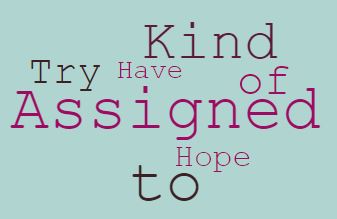
As a facilitator, especially around goal setting, language is critical.  I listen for the words, and call the ones out that reveal feelings that indicate conditions are present that will get in the way of successful completion of the work. The key is to name the words and the assumptions I make around commitment, and allow space for people to confirm how they are feeling and get the team to talk about it.  My trigger words are:

  1. Kind of
  2. Assigned
  3. Have to
  4. Hope
  5. Try

hint: For the action oriented leaders their language will always be positive, so watch for body language with these leaders.

Great conversations start with a question, and the question I always ask is Do you commit to owning this rock?

Whether you are in a quarterly pulsing session, a leadership team meeting, or any other situation where actions have to be owned, develop the leadership skill of listening and calling out the language that tells you “we need to keep discussing this”.

Listen . . Lead. Repeat often!

Why do your 3-year old and 18-year old drive you crazy? A graph to make you laugh and think . . .

Why do your 3-year old and 18-year old drive you crazy? A graph to make you laugh and think . . .

I am beginning a series on powerful questions, starting with my trUTips coming out tomorrow. (sign-up for the mailing list here)

It’s based on a study that shows how children change the tools they use to learn over time. (fyi – 4-year old girls ask 390 questions a day!)

Here is the rub – what are we doing as parents and leaders to drive the behavior that is driving us nuts? As a parent, uncle, and friend, here is what I see myself doing: I don’t listen consistently.

Two summers ago, I read Lean In by Sheryl Sandberg with my then-18-year old daughter. We ended our reading group by going to lunch to discuss our reactions to the book. At the end of our conversation, I asked the simple question, “What is the one thing you need me to know as a father of an 18-year old woman?” She did not even pause with the answer, “Dad, when I state my opinion on something, just listen to me.” The message was clear. While my ongoing performance is a different matter, I did hear and I am trying.

Many times, key parenting skills are also key leadership skills. When we develop them in one role we find ourselves being more effective in the other.

Listen . . . Lead (including parenting). Repeat often!

Extra tip: Entrepreneurial Operating System® leaders – if you are not doing 5-5-5™, can you see where listening is built into this template?

Two questions to assess mindset; One question to invite a shift

Two questions to assess mindset; One question to invite a shift

We were ending our day, and I used a tool from the Entrepreneurial Operating System® to get feedback about our time together and actions to improve it for the next group. The simple question was:

How would you rate our time together from 1 (not valuable) to 10 (extremely valuable)?

When we got to Eric, he said 7.5.  My follow-up question is standard, “Thanks for the feedback Eric. What could be done to make it an 8.5?” His response was quick, “I have been to a lot of these types of sessions and they can never be above a 7.5.”

In her book Mindset: The New Psychology of Success, author Carol Dweck shares her research that has identified fixed and growth mindsets. A fixed-mindset person is focused on looking good and proving their worth with effort. They excel at protecting and criticizing. A growth-mindset person is someone who sees potential as something that continues to be stretched and grown through challenges, learning through the difficult journey of delivering on a commitment. This person perceives a negative outcome as the first step to doing it better next time.

If you want to grow as an organization, fixed-mindset thinkers will be like an anchor to your ideas. It is a key leadership skill to accurately assess the mindset of your team. I use these two questions on the back of my team member fact sheet to help provide a glimpse into their mindset:

  1. What is the biggest behavioral change you ever made?
  2. What is the biggest mistake you have ever made and what did it teach you?

These are hard questions, but a growth-mindset person will appreciate the challenge. In my experience, a fixed-mindset person will either not answer or create a  diversion through sarcasm or anger/frustration to allow the question to move on without providing a thoughtful answer.

The next key leadership skill is inviting a shift (fixed-mindset) or increasing the wisdom within the team (growth-mindset). Here is the question to invite that shift and increase the team wisdom:

  1. What wisdom would you be willing to share from that experience to help all of us get a little wiser?

Fixed-mindset people focus on protecting and proving, which ends up making them largely inward focused in their work. It is especially important in EOS® (Entrepreneurial Operating System®) companies to limit or eliminate fixed-mindset thinkers. Traction requires a growth-mindset.

Do you have any on your team?

What is your mindset?

My final point is that fixed-mindset is not equal to bad/mean person. Eric and I had a great conversation after the day together because we shared some professional experiences, and I found him easy to talk with. But if I am charged with growing or improving an organization, it is critical to have people who get excited about continuously improving work and creating stretch goals. The teams will be more successful without the Eric’s of the world.

What questions would you ask?

Tip: Read trUTips #8 to read about how to handle B players (or in this case, a B-player)

Communication: One reality and three healthy habits

Communication: One reality and three healthy habits

Great conversations start with a question.  Let’s have one on communication.

  • How is the communication in your team?
  • How does your team feel about the flow of information?

In a recent post, Why Growing Past 20 Employees is so Damn Hard (and what you can do about it) by Eric Jorgenson, the author makes the point that a 10-person company can have 45 different 1:1 relationships while a 20-person company can have 190. Think about these numbers – we increase the size of the team by 100% and we increase the communication complexity by over 300%.

The reality of communication, especially for growing organizations, is that complexity grows exponentially as we add people to our team. Layer on top of that the complexity of building trust with new teammates and with you as the leader, and it might make you want to curl up in a ball in the corner.

People-centered leaders face realities like this and overcome them, because effective communication unleashes the talents and skills of people. The other opportunity is having help to do the work, solve the problems that arise everyday, and celebrate the successes that will inevitably happen. If leaders do this well, the health of the business will follow. The other truth is that these do not depend on your leadership style; they are leadership skills that can be learned.

Here are three healthy habits that will help achieve healthy growth using communication:

  • Company gatherings – Quarterly (monthly if you can): What are the key messages that have to be shared and the key questions bubbling through the organization which need to be answered by you? Make this a priority and NEVER cancel it! A best practice is to record it so everyone has a chance to see it.
  • Team gatherings – Weekly (direct reporting team): Review progress, revisit commitments from the last meeting, get aligned as a team, and solve the biggest problems facing the team. If you do these 4 things every week the teamwork and culture will thrive.
  • Individual meetings with your team – (One-on-Ones or 5-5-5™ if you are an EOS® company): I see too many executive teams ignore this because of their calendar, their ego (“I am an executive and don’t need the coddling”), or their fear of sharing they are scared and confused. People must need this, because it is the #1 download from my website.

Listen . . . Lead. Repeat often!

. . . and do your organization a favor by passing this on to a few peers and/or teams so you can critique your own performance at your next leadership meeting and fill in the gaps that exist in your own habits!

Notes:

TGIM

TGIM

TGIM – Thank God It’s Monday!

A friend shared with me this saying that they credit with starting their week well. They say it every week and now others at work have adopted the habit. The team’s energy has increased and it has been noticed by their peers. Proof that culture starts with the people who lead with attitude.

It will most certainly never be the name of a restaurant, but TGIM has one team energized for the most underappreciated day of the week.

Try it this summer!

Listen . . . Lead.  Repeat often!

2 Free Resources to Learn and Grow as a leader

2 Free Resources to Learn and Grow as a leader

As many of my US readers head into the Fourth of July weekend, I am hoping there will be time to relax and reflect. I have a goal to increase the learning material available around people-centered leadership, and wanted to let you know of my two whitepapers that are now available as a free download on Amazon/kindle, iBooks, and most other popular formats.  I also made them FREE. Here are the links to the first two volumes of my People-Centered Leadership Series:

Volume 1: Don’t Avoid the Gaps, Lead Through Them: A view on leadership as creating gaps and managing through their closure – Includes a self-assessment at the end to help you assess your habits and your own gaps. Master these three gaps and good things will happen with your team.

Volume 2: Demystifying Strategic Planning: How to create one and effectively lead through the gap – Includes tips, techniques, and resources to help you become an effective strategic leader regardless of where you sit in an organization.

One of my core values is Learning + Doing = Growth. If you have leaders you work with that are looking to develop their own effectiveness as a leader, please forward this on to them and, even better, read one of the whitepapers together and support each other in the action plans that result. Would you also be willing to help others understand the value of the articles by leaving a review? I would appreciate it if you did.

Listen . . . Lead. Repeat often! . . . . and for those of you in the northern hemisphere – enjoy the summer!

EXTRAS:

If you are looking for a good read this summer, here are past lists that include some of my favorites:

fyi – If you are part of the Kindleunlimited program my book, People-Centered Performance: Bringing Out Our Best Through Honest Conversation is free.