Two questions to assess mindset; One question to invite a shift

Two questions to assess mindset; One question to invite a shift

We were ending our day, and I used a tool from the Entrepreneurial Operating System® to get feedback about our time together and actions to improve it for the next group. The simple question was:

How would you rate our time together from 1 (not valuable) to 10 (extremely valuable)?

When we got to Eric, he said 7.5.  My follow-up question is standard, “Thanks for the feedback Eric. What could be done to make it an 8.5?” His response was quick, “I have been to a lot of these types of sessions and they can never be above a 7.5.”

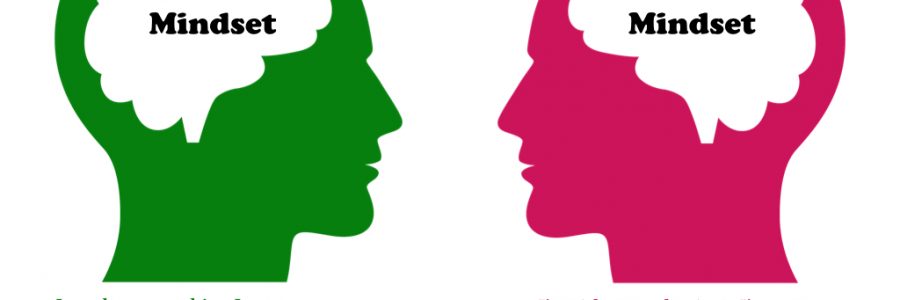
In her book Mindset: The New Psychology of Success, author Carol Dweck shares her research that has identified fixed and growth mindsets. A fixed-mindset person is focused on looking good and proving their worth with effort. They excel at protecting and criticizing. A growth-mindset person is someone who sees potential as something that continues to be stretched and grown through challenges, learning through the difficult journey of delivering on a commitment. This person perceives a negative outcome as the first step to doing it better next time.

If you want to grow as an organization, fixed-mindset thinkers will be like an anchor to your ideas. It is a key leadership skill to accurately assess the mindset of your team. I use these two questions on the back of my team member fact sheet to help provide a glimpse into their mindset:

  1. What is the biggest behavioral change you ever made?
  2. What is the biggest mistake you have ever made and what did it teach you?

These are hard questions, but a growth-mindset person will appreciate the challenge. In my experience, a fixed-mindset person will either not answer or create a  diversion through sarcasm or anger/frustration to allow the question to move on without providing a thoughtful answer.

The next key leadership skill is inviting a shift (fixed-mindset) or increasing the wisdom within the team (growth-mindset). Here is the question to invite that shift and increase the team wisdom:

  1. What wisdom would you be willing to share from that experience to help all of us get a little wiser?

Fixed-mindset people focus on protecting and proving, which ends up making them largely inward focused in their work. It is especially important in EOS® (Entrepreneurial Operating System®) companies to limit or eliminate fixed-mindset thinkers. Traction requires a growth-mindset.

Do you have any on your team?

What is your mindset?

My final point is that fixed-mindset is not equal to bad/mean person. Eric and I had a great conversation after the day together because we shared some professional experiences, and I found him easy to talk with. But if I am charged with growing or improving an organization, it is critical to have people who get excited about continuously improving work and creating stretch goals. The teams will be more successful without the Eric’s of the world.

What questions would you ask?

Tip: Read trUTips #8 to read about how to handle B players (or in this case, a B-player)

Communication: One reality and three healthy habits

Communication: One reality and three healthy habits

Great conversations start with a question.  Let’s have one on communication.

  • How is the communication in your team?
  • How does your team feel about the flow of information?

In a recent post, Why Growing Past 20 Employees is so Damn Hard (and what you can do about it) by Eric Jorgenson, the author makes the point that a 10-person company can have 45 different 1:1 relationships while a 20-person company can have 190. Think about these numbers – we increase the size of the team by 100% and we increase the communication complexity by over 300%.

The reality of communication, especially for growing organizations, is that complexity grows exponentially as we add people to our team. Layer on top of that the complexity of building trust with new teammates and with you as the leader, and it might make you want to curl up in a ball in the corner.

People-centered leaders face realities like this and overcome them, because effective communication unleashes the talents and skills of people. The other opportunity is having help to do the work, solve the problems that arise everyday, and celebrate the successes that will inevitably happen. If leaders do this well, the health of the business will follow. The other truth is that these do not depend on your leadership style; they are leadership skills that can be learned.

Here are three healthy habits that will help achieve healthy growth using communication:

  • Company gatherings – Quarterly (monthly if you can): What are the key messages that have to be shared and the key questions bubbling through the organization which need to be answered by you? Make this a priority and NEVER cancel it! A best practice is to record it so everyone has a chance to see it.
  • Team gatherings – Weekly (direct reporting team): Review progress, revisit commitments from the last meeting, get aligned as a team, and solve the biggest problems facing the team. If you do these 4 things every week the teamwork and culture will thrive.
  • Individual meetings with your team – (One-on-Ones or 5-5-5™ if you are an EOS® company): I see too many executive teams ignore this because of their calendar, their ego (“I am an executive and don’t need the coddling”), or their fear of sharing they are scared and confused. People must need this, because it is the #1 download from my website.

Listen . . . Lead. Repeat often!

. . . and do your organization a favor by passing this on to a few peers and/or teams so you can critique your own performance at your next leadership meeting and fill in the gaps that exist in your own habits!

Notes:

TGIM

TGIM

TGIM – Thank God It’s Monday!

A friend shared with me this saying that they credit with starting their week well. They say it every week and now others at work have adopted the habit. The team’s energy has increased and it has been noticed by their peers. Proof that culture starts with the people who lead with attitude.

It will most certainly never be the name of a restaurant, but TGIM has one team energized for the most underappreciated day of the week.

Try it this summer!

Listen . . . Lead.  Repeat often!

2 Free Resources to Learn and Grow as a leader

2 Free Resources to Learn and Grow as a leader

As many of my US readers head into the Fourth of July weekend, I am hoping there will be time to relax and reflect. I have a goal to increase the learning material available around people-centered leadership, and wanted to let you know of my two whitepapers that are now available as a free download on Amazon/kindle, iBooks, and most other popular formats.  I also made them FREE. Here are the links to the first two volumes of my People-Centered Leadership Series:

Volume 1: Don’t Avoid the Gaps, Lead Through Them: A view on leadership as creating gaps and managing through their closure – Includes a self-assessment at the end to help you assess your habits and your own gaps. Master these three gaps and good things will happen with your team.

Volume 2: Demystifying Strategic Planning: How to create one and effectively lead through the gap – Includes tips, techniques, and resources to help you become an effective strategic leader regardless of where you sit in an organization.

One of my core values is Learning + Doing = Growth. If you have leaders you work with that are looking to develop their own effectiveness as a leader, please forward this on to them and, even better, read one of the whitepapers together and support each other in the action plans that result. Would you also be willing to help others understand the value of the articles by leaving a review? I would appreciate it if you did.

Listen . . . Lead. Repeat often! . . . . and for those of you in the northern hemisphere – enjoy the summer!

EXTRAS:

If you are looking for a good read this summer, here are past lists that include some of my favorites:

fyi – If you are part of the Kindleunlimited program my book, People-Centered Performance: Bringing Out Our Best Through Honest Conversation is free.

Getting beyond the superficial as leaders: 2 Tips

Getting beyond the superficial as leaders: 2 Tips

Doug Fields, a blogger I follow, recently shared the statement, “Superficial relationships tend to focus on the obvious and inspire nothing new.” Recently a coachee shared some appreciation of our time together when he said, “It is nice to have a place where I can be myself and feel safe to share the things that are weighing on me.”

Leadership can be lonely. Leadership can also be a series of superficial relationships because we are busy, and going from meeting to meeting tends to keep us focused on the work while the relationships stay superficial. In leading and working with leaders, getting beyond the superficial requires the sharing of feelings. These cannot be seen as readily and are too often assumed or misinterpreted. Here are two techniques for doing this safely and effectively as a leader:

Tip #1: Getting beyond the superficial with others – One-on-one form

Great conversations start with a question. In my one-on-one form, I start and end with questions that invite people to share what is working and not working. The key to using this is to let people answer the questions they want and keep asking them so that, over time, people will get used to sharing what they are feeling. One leader confided that it took 3 months to get someone to start sharing their frustrations and giving the leader honest feedback about how the leader was making their job harder. For a deeper dive into this conversation, watch my JoHari Window video.

Tip #2: Getting beyond the superficial with ourselves – The Wheel of Life

This tool is designed for leaders to do some self-reflection on the balance in their own lives and what they can do to reset their priorities for areas that are important to them. Balance is a moving target, and doing this exercise and sharing it with someone else moves way beyond the superficial and into what really matters to us – and what is not working so well.

Superficial relationships tend to focus on the obvious and inspire nothing new. 

Make some opportunities to move beyond the superficial this week.

Listen . . . Lead. Repeat often!

The power of PAUSE: Two tips for practicing it today

The power of PAUSE: Two tips for practicing it today

The summary of our coaching work told a powerful, yet simple, story. “Scott, the biggest impact our time had was to take a deep breath when things got heated and keep my emotions more level so the conversation could continue towards a mutually agreed upon solution.”  Breath = Pause. What situations do you get in where your emotion takes over and the pause button is needed for you to effectively manage your contribution to the conversation?

  • Parenting?
  • Home improvement project with your spouse?
  • Summer canoe trip where you are NOT in the back steering?
  • Riding a tandem bicycle where you ARE in the back and not steering?

The brain is actually wired to react first and think secondly; it is called the amygdala, which is at the base of the brain and controls the fight/flight response. It is supposed to kick in to keep you alive. When humans lived in caves and were outnumbered by animals big enough to eat them, it was critical for survival. Since we have moved into dwellings with locks and walls and work in offices, it is not as critical, but it is still there.

Seth Godin calls the amygdala the lizard brain, and says this in his book Linchpin:

The lizard brain is here to keep you alive, the rest of your brain merely makes you a happy, successful, connected member of society.

People-centered leaders still speak up and disagree, and the reason for having meetings with agendas and frequent one-on-ones with their people is to create space where disagreements can happen and be managed.

Here are two tips for practicing the pause:

  1. Bring water to the meeting and drink when you get irritated or feel the need to offer a quick rebuttle to a comment.
  2. Commit to using the comment “Tell me a little more about that?” at least once in your next meeting.

Where can you practice the pause today? When you practice the pause, how effective are you at restarting the conversation and channeling that emotion into a better solution to the issue you are addressing? When you fail at the pause, how quickly do you apologize and restart?

Listen . . Lead. Repeat often!

People-Centered Leaders – Read this article!

People-Centered Leaders – Read this article!

I have come to believe that there are two key sources of learning for leaders that will have the greatest impact on their performance: Harvard Business Review and TED Talks. There are certainly many places to learn, but the two of these provide quality, depth, and breadth that will ground you in key fundamentals of being a good person and stretch you in productive ways.

Here is a summary of an HBR article that grounded me in some timeless truths – The Neuroscience of Trust: Management behaviors that foster employee engagement by Paul Zak.

Key points:

  • Leaders know low engagement hurts the bottom line of their business (Gallup and others proved that) but don’t know how to fix it.
  • There are eight behaviors that stimulate the generation of oxytocin, which is a brain chemical that facilitates teamwork. (I will have to trust the author on this one – I missed that class in college. 🙂 )

Be ready to NOT be blown away by these behaviors:

  • Recognize excellence – When you see someone doing great work, tell them!
  • Induce “challenge stress” – Provide people with challenging assignments and/or invite them to help you solve a significant problem.
  • Give people discretion on how to do their work – Focus on defining the outcome of the project and give people space to get there (for my EOS® clients, this is when I ask “What does success look like for this rock?”)
  • Enable job crafting – Allow people to volunteer for work, or add an accountability to their job that the organization needs if they have a passion for it; also allow them to delegate work they don’t like and depend on the team to do it.
  • Share information broadly – Have a defined weekly, monthly, quarterly, annual rhythm of meetings where you talk to and listen to people beyond your immediate team.  Protect that time like it is sacred, and especially don’t allow the customer to cause you to cancel it.
  • Intentionally build relationships – See my Team Member Fact Sheet post . . . .
  • Facilitate whole person growth – See my Development Plan post . . .
  • Show vulnerability – See my Vulnerability post . . .

I appreciate the article because it provides the why behind all of the actions I promote as part of being a People-Centered Leader. The last chapter in my book is devoted to actions that hit most of these directly. I also recognize that teaching leaders the why – in this case, the science – behind trust-building leadership creates a higher level of commitment to the right behaviors.

If you are looking for a summer leadership book study, start here – and if you add my book to the second half of it, I would be glad to talk about showing up one or two times to help enhance your learning. The reason I say add my book is because leaders will all immediately agree these are the right actions to take, and yet we don’t do them – that is where my book kicks in.

This points out that leadership is that simple, and yet not that easy. Leadership is a journey that is best taken with company.

Listen . . . Lead. Repeat often!

Hidden leadership secret? Showing Up

Hidden leadership secret? Showing Up

I spent a day with a group of leaders last week, and one of our topics in management was walking around. Each person was given an assignment to go do it daily for a week and journal about it. Only a third of the class did it, but those who did had some great stories of what they heard and observed.

The rest missed an opportunity. If you believe in people-centered leadership and the basic belief that people work harder when they feel cared for/listened to (and when they care about/listen to the people around them), then showing up is what you do – always. Do any of these statements reflect your commitment to show up?

  • You show up for potlucks or any event organized by your team around food
  • You show up at wakes and funerals
  • You send hand-written notes when there is a birth, death, or marriage
  • You walk around the office routinely, with the single goal to listen to and learn what your people are thinking about
  • You tell people what you are thinking about – both celebration and sorrows
  • You show up at the fundraisers your people care deeply for
  • You show up in the lunch room/break room and talk
  • You complete evaluations on-time
  • You show up for one-on-ones, or reschedule quickly

Showing up always starts as a physical presence. When it is done well, at some point it moves to a more emotional presence. This is where agape love kicks in. What is agape love? Read about it in People-Centered Performance.

I lost my father a couple of weeks ago after 90 years of life. As I thought about what I admired about him as a father, the top on the list was he showed up. Once I was challenged by a coach that showing up was not enough. I believe he was wrong, because when we show up consistently relationships are changed. When I look around at broken friendships, failed leaders, dysfunctional teams, and lonely people – it always seemed to start when someone stopped showing up.

I hope somebody writes the same thing about me someday. What about you?

Why don’t you try management by walking around for a week or so. Be part of the 33% that get it.

When you are ready – why don’t you try parenting by walking around and marriage by walking around?

Listen . . . Lead. Repeat often!

The key to a long journey? Focus on the next town. (Thanks, Gary.)

Yesterday on my daily run with my golden-doodle, I ended up walking with a guy named Gary. We have passed each other on the trail for two years and never really spoken. Sometimes I realize it is time to walk and listen, and this was one of those moments.

As Gary told me about his journey across the 2000+ mile Appalachian Trail in 2008, I asked him this question (remember – great conversations start with a question):

“What is the trick to successfully completing the Appalachian Trail?”

Without much thought he answered,

“You just have to focus on the next town and not think about how far away Maine is.”

I thought of my EOS® (Entrepreneurial Operating System™) clients and how creating a vision for a company is critical, but establishing smaller goals and the disciplined execution of those goals is most critical.

Successful leaders learn to help their teams understand and stay focused on the next town. People-centered leaders invite their people into the process vs just sharing the goals.

Sometimes you just have to slow down and talk to the Gary’s you run into – they have a lot to share.

Listen . . . Lead. Repeat often.

What’s on people’s minds? Clicks and questions…

What’s on people’s minds? Clicks and questions…

We were moving into a new building, and created sessions with the CEO for all employees to learn about the move and ask questions. We told our CEO to go around and collect questions BEFORE answering any.

His agenda was architecture, timelines, space for growth, and decorations; their agenda was storage, kitchen areas, and noise/privacy. It was hard for him to not jump in with answers right away, but when each session ended he was excited about the time with his team and made better decisions around the change because of what he heard. The outcome was an amazingly effective move that provided the business with a momentum bump.

When we really listen…people tell us what’s on their mind. My #1 saying to new leaders is, “Mind reader is not in your job description. Focus on listening well, making leadership decisions based on what you hear, and repeat often.”

Listen . . . Lead. Repeat often!

Clicks are like questions. At my monthly business review with my marketing lead, we reviewed what you clicked on the most in the last 28 days. Here is what your clicks told me:

  1. Rock Planning Sheet – EOS template
  2. 5 Key Outcomes – Individual Development Plan Conversation
  3. Talent Management Templates

Your clicks show me a high concern for defining the bigger work you and your people are doing so it can be managed. They also show a desire to manage the longer-term development of your people. Based on many other conversations, I know most of your organizations are doing the evaluations but have never completed the formal development planning with your people.

In two weeks, I will facilitate a day of learning with a group of leaders in a leadership development program I helped create (LeaderWork). Your clicks have given me some great material to share as I help leaders work on connecting strategy to actions for their teams. That is the way good listening works.

Do any of these topics make you want to click? How are you gathering questions from your team this week? If you look at all the questions you are hearing, what new questions get generated for you?

Listen . . . Lead. Repeat often!

If you would like a different perspective on listening and leading, take a look at my JoHari Window video.